
Humble Acres is reader-supported. When you buy through links on our site, we may earn an affiliate commission at no extra cost to you — we only recommend products we’d use ourselves. See our affiliate disclosure.
The planted tank starter kit
- API ROOT TABS Freshwater Aquarium Plant Fertilizer 0.4-Ounce 10-Count… — aquarium root tabs
- Aquarium Aquascape Tools Kit, Long 15 Inch Stainless Steel Aquatic… — aquascaping tool set with long tweezers…
- Aquarium Super Glue Gel Fish Safe for Coral, Moss and Plants — aquarium-safe cyanoacrylate gel
- hygger Auto On Off LED Aquarium Light 24-30 Inches Dimmable 7 Colors… — dimmable full-spectrum planted-tank LED…
- Aqueon Plant and Shrimp Aquarium Substrate, Aqua Soil for Fish Tanks,… — aquasoil plant substrate
Opens Amazon’s cart confirmation page — you review the list and prices there, and nothing is added until you approve it. Prefer to pick and choose? Every item above links to its own product page.
Choosing aquascape plants is a design decision before it is a horticultural one. The species that make a tank look deliberate are not necessarily the prettiest ones in the shop — they are the ones that grow to the right height, in the right place, at a speed you can keep up with. Get that mapping right and a beginner tank looks composed within a month. Get it wrong and you spend a year fighting a jungle that swallowed its own foreground.
What aquascaping actually asks of your plants
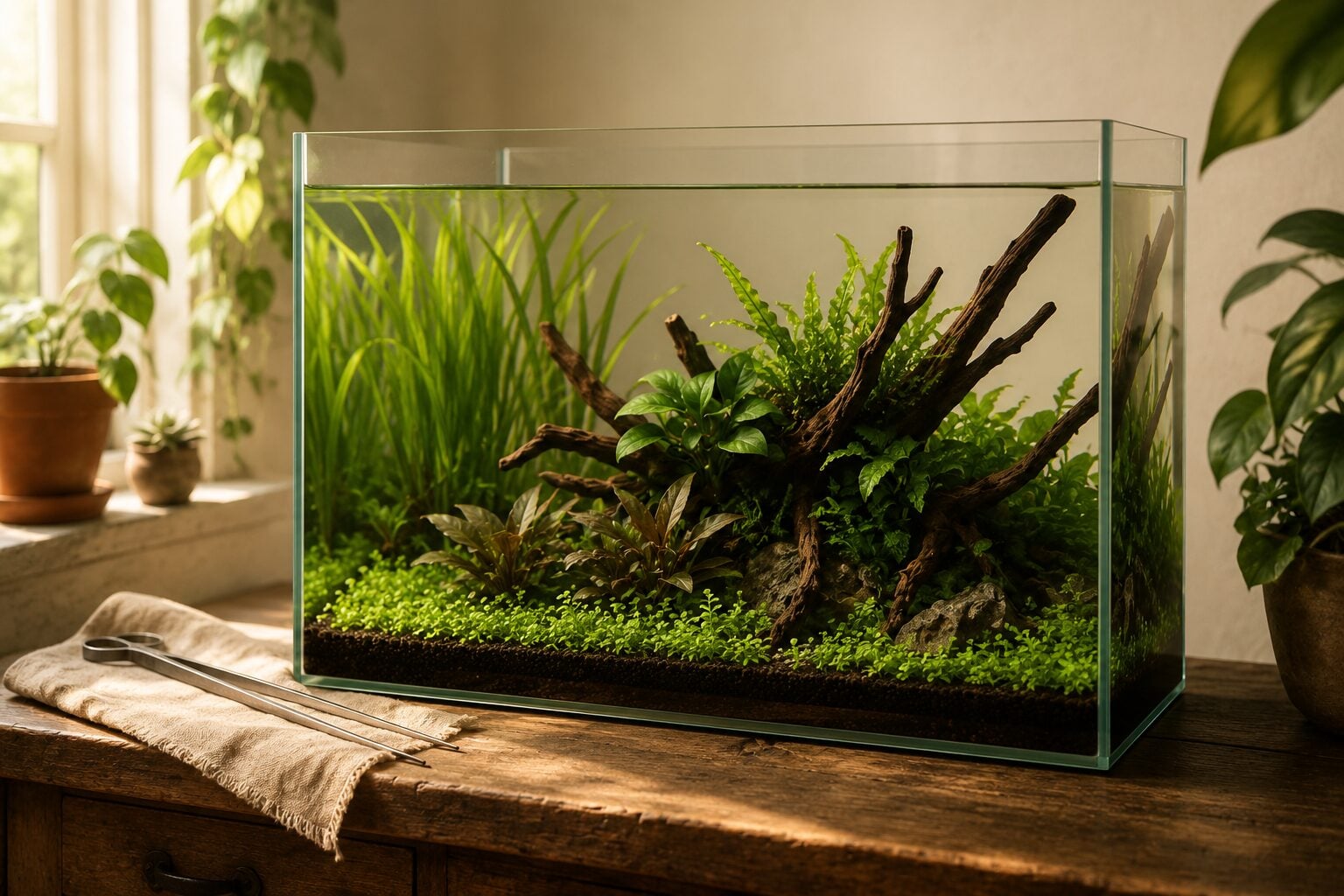
Aquascaping is the arrangement of plants, hardscape, and substrate into a deliberate underwater composition. The layout comes first, and the planting list follows from it. That is the reversal most beginners miss: they buy a cart of plants, then try to build a scene around whatever arrived.
The professional habit is to classify plants by growth habit before anything else. Purdue Extension’s guide to aquatic vegetation sorts aquatic plants into submersed, floating, and emergent groups by exactly this logic, and the same thinking maps cleanly onto an aquascape’s foreground, midground, and background. Penn State Extension organizes the same four habits for pond plants. Habit predicts behavior; family does not.
The four layout schools worth knowing
Nature aquarium. Asymmetric, built on the rule of thirds, mixing wood and stone with a moderate species count. The most forgiving style for a first attempt.
Iwagumi. Stone-dominant and minimal, often with only one or two plant species carpeting around a main rock. Beautiful, unforgiving, and usually CO2-dependent — not a beginner project despite how simple it looks.
Dutch. No hardscape focal point at all; instead, terraced “streets” of contrasting stem plants. It is essentially a formal flower border underwater, and it demands weekly trimming discipline.
Jungle. Dense, tall, loosely arranged, deliberately overgrown. The lowest-maintenance style and the best match for large easy aquascape plants like vallisneria and Amazon sword.
The four planting layers
Foreground and carpet plants stay under about four inches and spread sideways. Dwarf sagittaria and Marsilea hirsuta are the forgiving options; Micranthemum ‘Monte Carlo’ is a step up; Hemianthus callitrichoides ‘Cuba’ produces the finest carpet in the hobby and reliably fails without injected CO2. Start with the forgiving ones.
Midground plants run roughly four to ten inches and do the connective work — they hide the transition between carpet and background and supply most of a scape’s texture. Cryptocoryne wendtii, Staurogyne repens, Bucephalandra, and Anubias barteri var. nana are the reliable four.
Background plants exceed ten inches, hide heaters and filter intakes, and set the scale of the whole tank. Vallisneria, Amazon sword (Echinodorus), Rotala rotundifolia, Ludwigia repens, water sprite, and hygrophila cover almost every need.
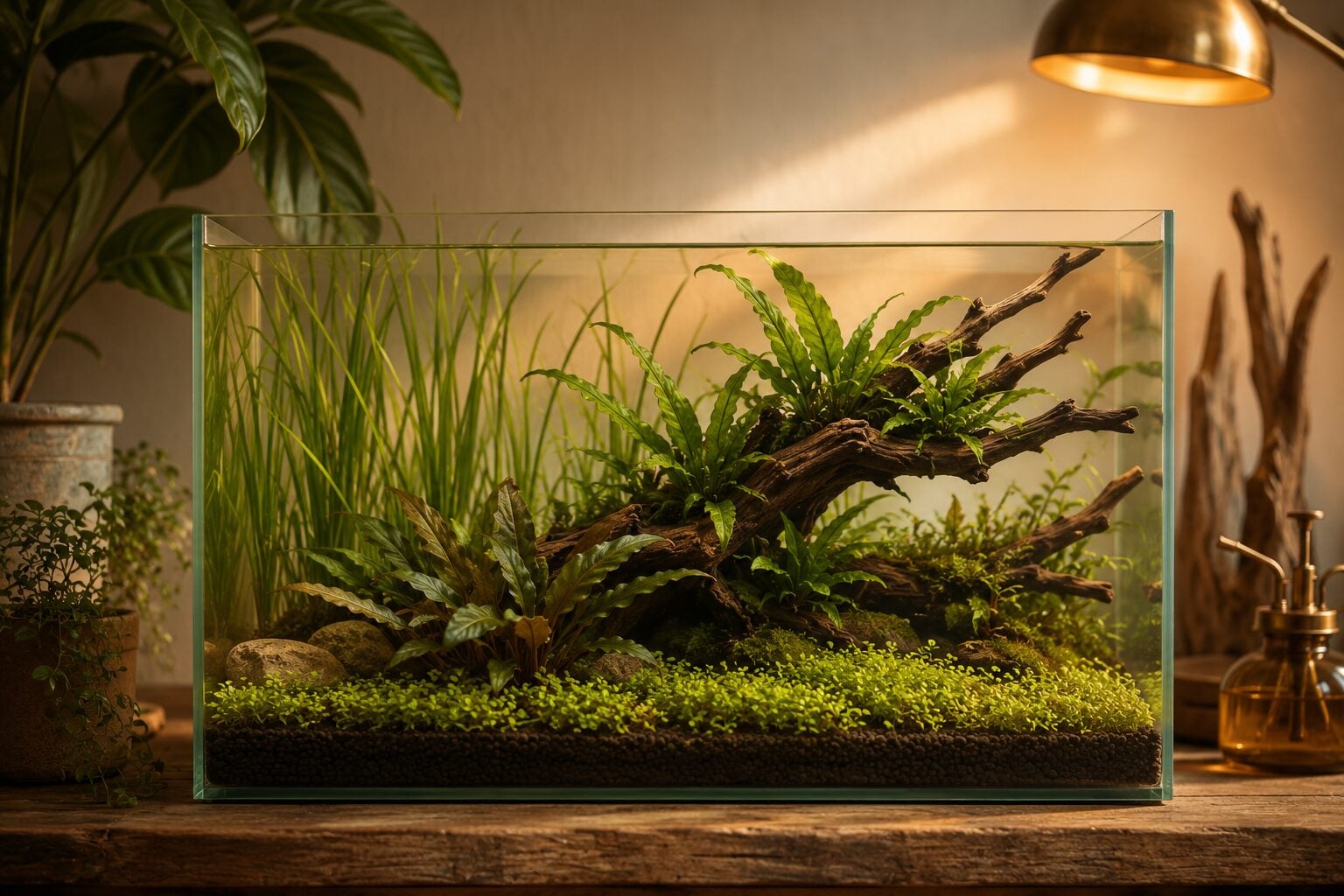
Epiphytes are the fourth layer and the one that makes an aquascape look grown rather than planted. Anubias, Java fern (Microsorum pteropus), Bucephalandra, and mosses like Taxiphyllum barbieri attach to hardscape instead of substrate, softening every hard edge in the tank.
The rhizome rule
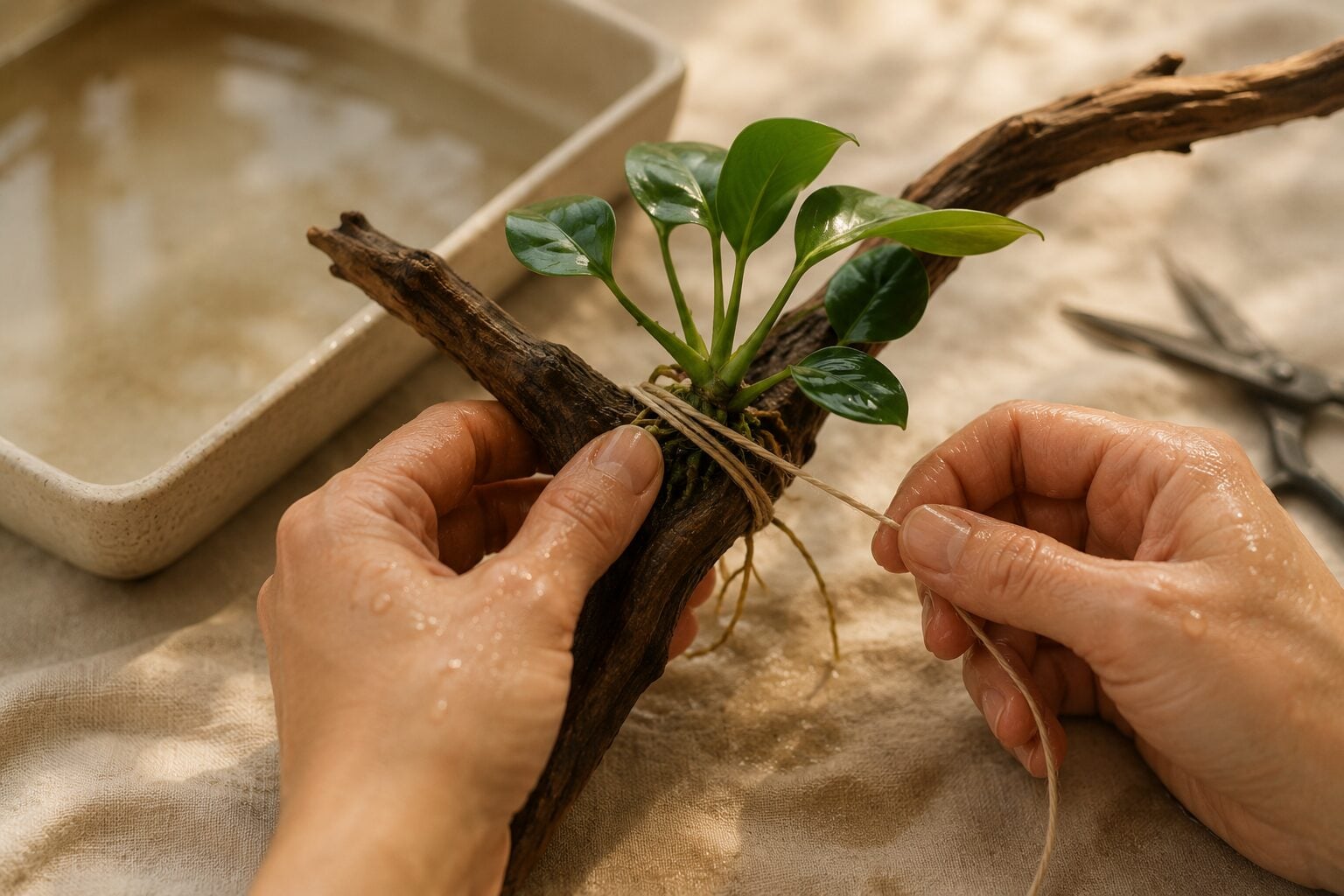
Anubias, Java fern, and Bucephalandra grow from a thick horizontal rhizome that rots if you push it into the substrate. The rhizome must sit fully above the gravel, tied or glued to wood or stone with only the roots touching anything. This is the single most common way beginners kill otherwise indestructible aquascape plants.
Attach with cotton thread, fishing line, or a dab of cyanoacrylate gel. Thread rots away on its own once the roots have gripped, and gel bonds instantly underwater. A tube of aquarium-safe cyanoacrylate gel is worth keeping in the maintenance kit for every future trim and re-mount.
Low-tech versus high-tech
A low-tech tank runs a six to eight hour photoperiod at roughly 20 to 40 PAR with no injected carbon dioxide. Growth is slow and steady, trimming is monthly rather than weekly, and algae pressure stays low because plants are never asked to outrun light they cannot fuel. Most people should build this tank first.
Medium-light setups run about eight hours. High-tech CO2-injected scapes push eight to ten hours maximum, paired with daily fertilizer dosing and weekly trims. The extra light buys growth speed and red coloration — and buys algae just as efficiently if dosing slips. A dimmable full-spectrum planted-tank LED with a built-in timer lets you start conservative and raise intensity deliberately rather than by accident.
The low-tech-proof species list is short and worth memorizing: Anubias, Java fern, cryptocoryne, vallisneria, Amazon sword, mosses, water sprite, and hygrophila. Everything on that list grows without CO2, propagates itself, and tolerates a wide hardness and temperature range. Our freshwater plants care guide covers each of them species by species.
The difficult list is equally worth knowing before you spend money: ‘Cuba’ carpets, dwarf hairgrass lawns, most red-stem rotalas and ludwigias in their vivid forms, and anything sold as “high light, high CO2” on the label. These are not beginner aquascape plants no matter how good the tank photo looked.
Substrate, feeding, and slope
Lay two to three inches of substrate overall, sloped deeper at the back — three to four inches there, an inch and a half to two at the front. The slope is a perspective trick borrowed from landscape painting, and it does more for perceived depth than any single plant choice. An aquasoil plant substrate also buffers pH slightly and holds nutrients where root feeders can reach them.
Feeding splits along root-versus-column lines. Swords, crypts, and vallisneria are heavy root feeders: push aquarium root tabs one to two inches into the substrate, spaced four to six inches apart, and replace them roughly quarterly. Stem plants and epiphytes feed from the water column instead and want a liquid comprehensive fertilizer dosed on a schedule.
Hardscape affects both. Some stone raises carbonate hardness enough to shift which plants thrive, and some wood leaches tannins that tint the water and drop pH. Our notes on aquarium plants and rocks cover which stone stays inert and which does not.
Composition rules that make a scape look intentional
Use the rule of thirds. Put your tallest plant mass or main stone about a third of the way across the tank, never dead center. Centered compositions read as symmetrical dioramas; offset ones read as landscapes.
Limit your species count. Iwagumi scapes often use one or two species and look better for it. Beginners generally do best under six. A tank with fourteen species of aquascape plants looks like a plant collection, not a scene — and it is far harder to keep balanced because every species wants slightly different trimming.
Group, do not scatter. Plant the same species in odd-numbered clusters — three, five, seven — rather than dotting singles across the tank. Repetition of texture is what the eye reads as natural.
Protect the negative space. Leave open substrate at the front. The instinct is to fill it, and filling it is exactly what flattens the sense of depth you built with the slope. Open foreground is also where fish display, which is half the point of the tank. If you have not chosen livestock yet, picking species that will not uproot your work is the next decision.
Planting day, step by step
Set hardscape on bare, dry substrate first and live with the arrangement for an hour before committing. Once plants are in, moving a rock means starting over. Photograph the layout from the front at eye level — a photo shows composition problems that the eye standing over the tank forgives.
Fill the tank only about a third of the way before planting. Damp substrate holds stems where you put them, and the shallow water keeps buoyant plants from floating away every time you reach in. Long tweezers make this trivial; fingers make it maddening. A basic aquascaping tool set with long tweezers and curved scissors is the one purchase that changes how the work feels.
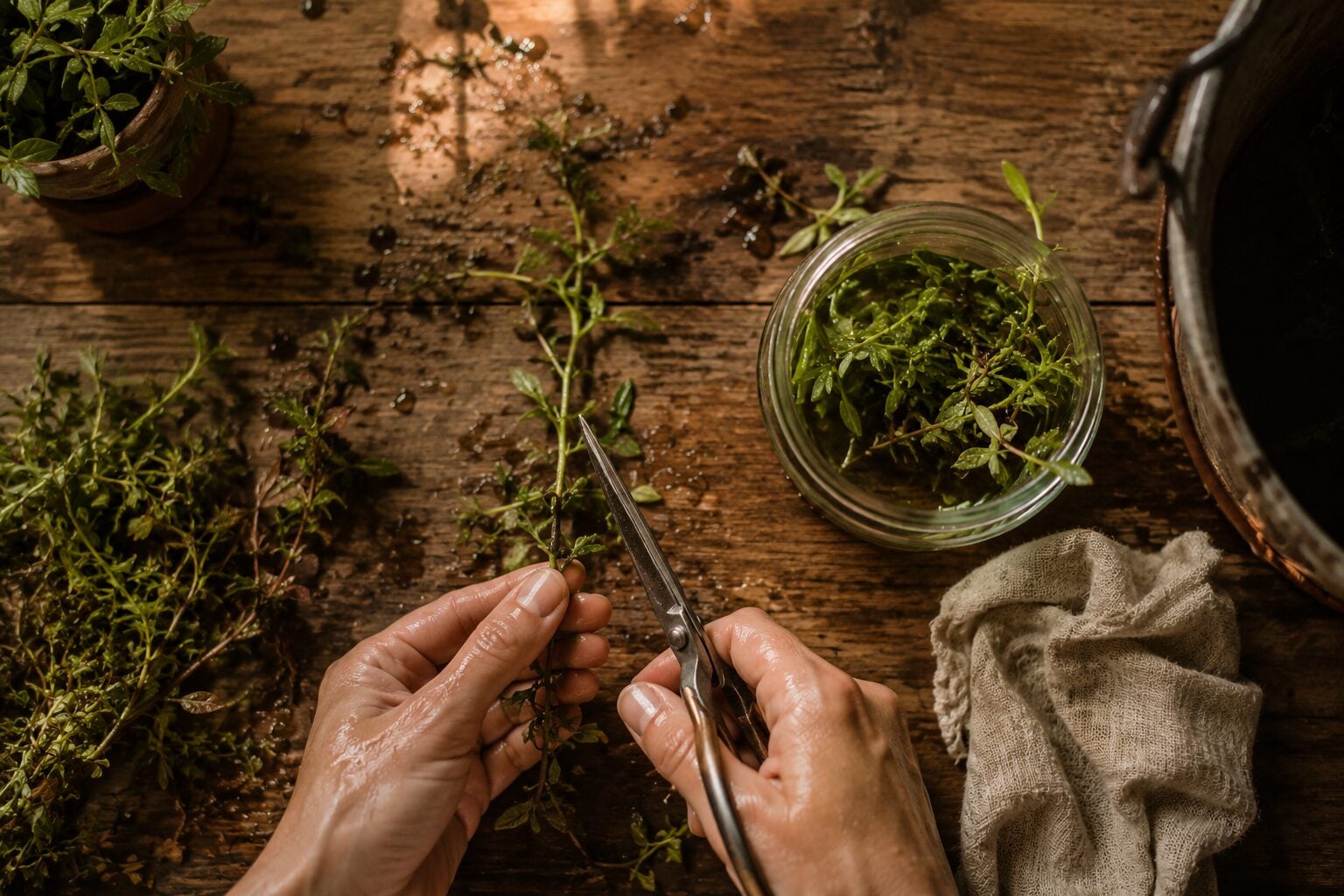
Prepare each plant before it goes in. Strip the rockwool off nursery roots and rinse thoroughly, cut the rubber band off bunched stems — leaving it on rots the stems it squeezes — and trim damaged leaves. Then plant stems individually, one to two inches apart, pushing each into the substrate at a slight angle so it holds.
Then expect melt. Nearly all nursery plants are grown emersed, above water, and cryptocorynes in particular drop their entire set of leaves when they convert to submerged growth. This looks like death and is not. Leave the roots undisturbed and new submerged foliage appears within two to four weeks.
Trimming and the first eight weeks
Stem plants are trimmed by topping: cut the stem, replant the healthy top, and the remaining base branches into two or three new shoots. That is how a sparse back row becomes a thicket in a month, and it is why buying twenty stems is rarely necessary.
Carpets need trimming before they get thick, not after. Once a mat passes roughly an inch and a half, light stops reaching the bottom layer, the base rots, and eventually the whole sheet detaches and floats up. Curved scissors held flat, a light pass every few weeks, and the carpet stays anchored.
Water changes matter most early. Run 25 to 50 percent weekly for the first two months while the substrate leaches ammonia and the biofilter matures, then settle into 25 to 30 percent weekly. Always remove trimmings from the tank immediately — decaying clippings release ammonia and feed exactly the algae you are trying to avoid. The full cycling routine is covered in our tropical fishtank setup walkthrough.
Algae, and why it is really a light problem
Algae wins whenever available light exceeds what your plants can actually use with the carbon and nutrients on hand. That is the whole mechanism. So the first correction is always to shorten the photoperiod, not to add fertilizer — adding nutrients to an over-lit tank feeds the algae faster than the plants.
The same imbalance drives algal blooms at ecosystem scale, where excess nitrogen and phosphorus loading tips waterbodies toward algal dominance, as UF/IFAS describes in its review of aquatic eutrophication. A planted tank is that system in miniature, with you as the nutrient source.
Two specific patterns are worth naming. Brown dusty diatoms on glass and leaves are normal in a tank under three months old and clear on their own as silicates deplete. Black beard algae on leaf edges and hardscape almost always points to unstable CO2 or dead spots in flow, so check your circulation before buying any treatment.
Care stats for the fifteen easiest species
Anubias barteri var. nana — low to medium light, no CO2, 3–6 in tall, very slow growth, 72–82°F, attached to hardscape. Its slowness is a feature: it holds its shape for years.
Java fern (Microsorum pteropus) — low light, no CO2, 8–13 in, slow, 68–82°F, epiphyte. Propagates by producing plantlets on older leaf tips that you simply detach and re-tie.
Bucephalandra — low to medium light, 2–6 in, very slow, epiphyte, prized for iridescent leaves. Expensive per plant but multiplies steadily by rhizome division.
Cryptocoryne wendtii — low light, no CO2, 4–10 in depending on variety, moderate growth, root feeder. Green, bronze, and brown forms all behave identically; pick by color.
Staurogyne repens — medium light, 3–5 in, moderate, root feeder. The best midground bridge plant for low-tech aquascape plants because it stays compact without CO2.
Vallisneria — low to medium light, 12–30 in, fast, spreads aggressively by runners. Plant it in a back corner and expect to thin runners monthly once established.
Amazon sword (Echinodorus) — medium light, 12–20 in, moderate, very heavy root feeder. One mature specimen fills the back third of a 20-gallon tank on its own.
Water sprite (Ceratopteris) — medium light, 6–13 in, fast, grows planted or floating. Useful as a temporary nutrient sponge while a new tank stabilizes.
Hygrophila polysperma — low to medium light, 8–20 in, fast, column feeder. Restricted in some states as a noxious weed, so check before ordering.
Rotala rotundifolia — medium to high light, 6–16 in, fast, column feeder. Green in low light, pink-orange under high light and lean nitrogen.
Ludwigia repens — medium light, 8–16 in, moderate, benefits from iron. The most reliable red stem plant without CO2.
Dwarf sagittaria — medium light, 2–6 in, moderate, spreads by runners. The most beginner-tolerant carpet available.
Marsilea hirsuta — medium light, 1–4 in, slow, carpet. Grows clover-shaped leaves in low light and flattens into single-leaf form as light increases.
Java moss (Taxiphyllum barbieri) — low light, mat-forming, attaches to anything. Ideal shrimp habitat and the easiest way to age new hardscape visually.
Micranthemum ‘Monte Carlo’ — medium to high light, 1–2 in, moderate, carpet. The realistic ceiling for a low-tech carpet if flow and light are strong.
How many plants to buy
Underplanting is the most expensive mistake in the hobby, because a sparsely planted tank hands algae the nutrients the plants are not using. Plant heavily from day one and thin later — that is the reverse of how most people shop.
As a rough guide for a 20-gallon tank: one or two epiphytes on hardscape, five to seven midground plants in a cluster, ten to fifteen background stems, and enough carpet portions to cover about a third of the area you eventually want filled. Runners and topping do the rest within two months.
Water parameters are wider than shop advice suggests. Nearly all the species above tolerate 68–82°F, pH 6.5–7.8, and moderate hardness. Stability matters far more than hitting a specific number, so resist chasing parameters with additives.
Sourcing plants responsibly
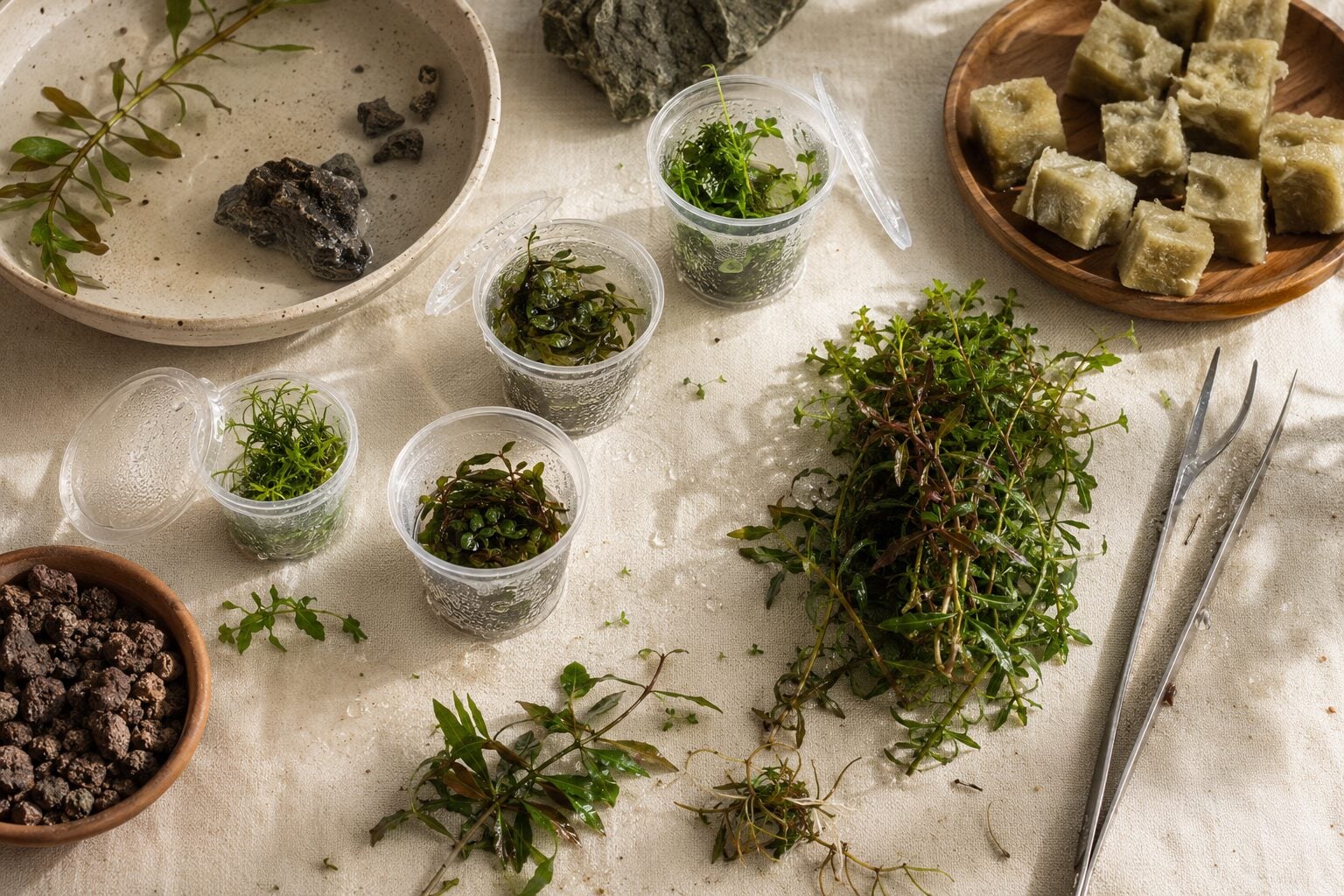
Tissue-culture plants arrive sealed in gel, free of snails, algae spores, and pesticide residue that can kill shrimp. They cost slightly more and are the safest possible starting stock. Buce Plant and Aquarium Co-Op both ship tissue-culture and rhizome aquascape plants in good condition, and small Etsy sellers are a reasonable source for mounted hardscape pieces.
Disposal carries real legal weight. Illinois-Indiana Sea Grant’s guidance is to bag unwanted aquarium plants and trimmings for the trash or compost them well away from water — never a stream, ditch, or storm drain. Hydrilla, once sold routinely to aquarists, and giant salvinia are now federally listed noxious weeds, and moving them across state lines without a USDA permit is illegal. Check your state’s restricted list before ordering anything unfamiliar.
Troubleshooting aquascape plants
| What you see | Likely cause | Fix |
|---|---|---|
| Carpet lifting off the substrate in sheets | Mat grew too thick; the base rotted from lack of light | Trim flat before it exceeds ~1.5 in; replant healthy sections |
| Pinholes and yellowing in Amazon sword leaves | Potassium or iron deficiency in a root feeder | Add root tabs; supplement liquid comprehensive fertilizer |
| Stems long, pale, and leggy with wide leaf gaps | Insufficient light intensity, or plant is shaded | Raise intensity slightly or move the plant forward |
| Cryptocoryne drops every leaf in week one | Normal conversion melt from emersed nursery growth | Leave the roots alone; new leaves in 2–4 weeks |
| Anubias rhizome soft, brown, leaves falling off | Rhizome buried in substrate and rotting | Lift out, cut away rot, tie the rhizome to wood or stone |
| Black tufted algae on leaf margins and wood | Unstable CO2 or dead spots in flow | Improve circulation, stabilize dosing, spot-treat affected leaves |
A starter list that works
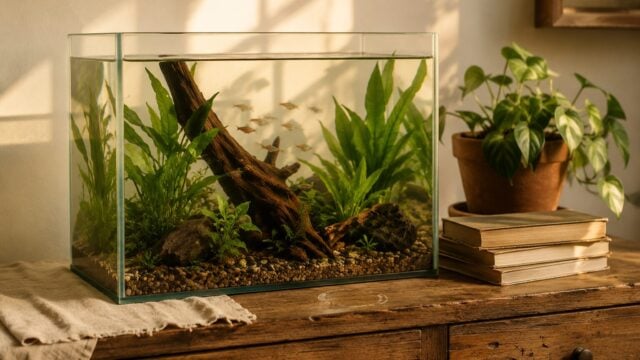
For a first scape in a 20-gallon tank: one piece of wood with Java fern and anubias attached, a cluster of five Cryptocoryne wendtii in the midground, a stand of vallisneria along the back third, and dwarf sagittaria left to spread across the open front. Five species, no CO2, a six-hour timer, and root tabs quarterly.
That tank will look better at month three than at week one, which is the honest truth about every aquascape ever built. Browse the rest of our aquatic plants guides while it fills in — patience is the one tool you cannot buy.
The planted tank starter kit
- API ROOT TABS Freshwater Aquarium Plant Fertilizer 0.4-Ounce 10-Count… — aquarium root tabs
- Aquarium Aquascape Tools Kit, Long 15 Inch Stainless Steel Aquatic… — aquascaping tool set with long tweezers…
- Aquarium Super Glue Gel Fish Safe for Coral, Moss and Plants — aquarium-safe cyanoacrylate gel
- hygger Auto On Off LED Aquarium Light 24-30 Inches Dimmable 7 Colors… — dimmable full-spectrum planted-tank LED…
- Aqueon Plant and Shrimp Aquarium Substrate, Aqua Soil for Fish Tanks,… — aquasoil plant substrate
Opens Amazon’s cart confirmation page — you review the list and prices there, and nothing is added until you approve it. Prefer to pick and choose? Every item above links to its own product page.

Leave a Reply