
Humble Acres is reader-supported. When you buy through links on our site, we may earn an affiliate commission at no extra cost to you — we only recommend products we’d use ourselves. See our affiliate disclosure.
The terrarium build kit
- Mkono Plant Terrarium Display Glass Tabletop Succulent Air Plant… — lidded glass terrarium vessel
- Doter Horticultural Charcoal for Plants 1 qt, All Natural Hardwood… — horticultural activated charcoal
- Soil Sunrise Terrarium Potting Soil Mix (4 Quarts) w/Blended Filtering… — soilless potting mix
- Esschert Design GT163 Telescoping Terrarium Rake and Trowel Tool Set,… — long terrarium tool kit
- Spray Bottle for Plants 2 Pack, 16oz – Ultra Fine Mist, Plant Mister… — spray bottle
Add all 5 to your Amazon cart →
Opens Amazon’s cart confirmation page — you review the list and prices there, and nothing is added until you approve it. Prefer to pick and choose? Every item above links to its own product page.
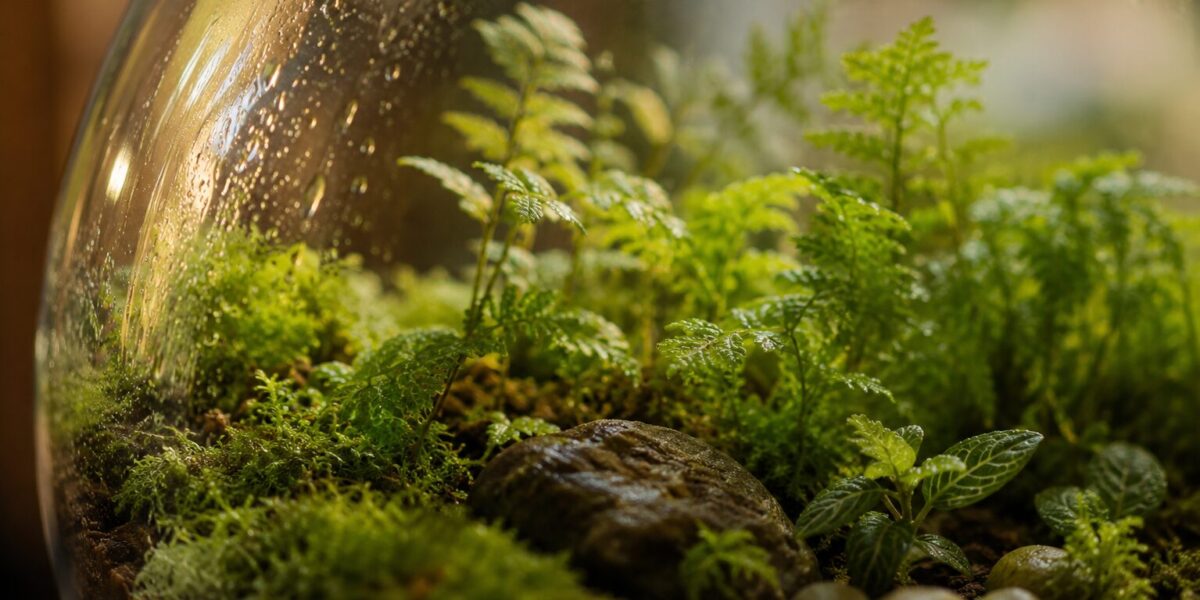
A plant house terrarium is exactly what it sounds like: a tiny glasshouse for plants, small enough to live on your bookshelf. Seal a few humidity-loving plants inside clear glass and something quietly miraculous happens — the water you added on day one keeps cycling from soil to leaf to glass and back again, and the garden essentially waters itself for months. I’ve had a sealed jar running on my north windowsill for over two years, opened only a handful of times. If you’ve killed your share of ferns in dry indoor air, a plant house terrarium is the workaround the Victorians figured out nearly two centuries ago, and building one takes a single afternoon. Here’s the full build, step by step, with plant lists that actually work.
What Is a Plant House Terrarium, and Why Does It Work?
Iowa State University Extension defines a terrarium as a closed, transparent glass or plastic container used to create a mini-environment for plants — a self-contained ecosystem under glass. The magic is a miniature water cycle. As ISU’s horticulturists explain, moisture in the soil moves up through the plants and is released from the leaves as vapor. That vapor condenses on the cool glass, runs back down into the soil, and gets used all over again. Because nothing escapes, a well-built sealed garden can go months between waterings.
Just as valuable is what the glass keeps in: humidity. Inside the vessel you get a jungle-like pocket of moist, warm, draft-free air — precisely what tropical houseplants crave and what the average heated living room brutally lacks. The University of Missouri Extension notes the term has stretched over time to include open, lidless glass gardens too, and both styles have their place. But the closed version is the true “plant house” — a sealed indoor terrarium garden that largely looks after itself.
A Discovery Made by Accident: The Wardian Case
The terrarium in your house has a wonderful origin story. Missouri Extension credits the invention to Dr. Nathaniel B. Ward, a 19th-century London physician and frustrated fern grower. While studying a sphinx moth chrysalis he’d buried in moist earth inside a closed bottle, Ward noticed a seedling fern and a blade of grass sprouting in the sealed jar. He watched them grow for four years without adding a single drop of water — and in 1842 published On the Growth of Plants in Closely Glazed Cases.
His “Wardian cases” went on to protect delicate plants on months-long sea voyages, and by the 1850s parlor terrariums housing exotic tropicals were a full-blown craze in Europe and North America. Iowa State notes terrarium keeping has never quite recaptured its Victorian peak — though scrolling through today’s moss-jar corners of the internet, I’d say we’re giving the 1850s a run for their money.
Closed, Open, or Dish Garden: Pick Your Style First
Before you buy a single plant, decide how sealed your terrarium in the house will be, because everything downstream follows from it. Missouri Extension ranks the three styles by humidity: closed terrariums hold the most, open (lidless, high-sided) containers hold less, and shallow dish gardens hold the least. More humidity means less watering but a higher risk of disease; more airflow means more watering and less rot.
- Closed: the self-sustaining plant house. Best for ferns, mosses, nerve plants, and other humidity lovers. Waterings months apart.
- Open: a happy middle ground for plants that like moisture but appreciate airflow. Water occasionally — still far less than ordinary pots.
- Dish garden: low, uncovered, essentially normal room conditions. This is where desert plants belong.
One rule both universities agree on: never mix desert plants with moisture-loving tropicals, and keep succulents and cacti out of closed glass entirely — ISU is blunt that the humid environment suits nearly any houseplant except cacti and succulents, which rot in the damp. If your heart is set on an echeveria landscape, build an open succulent dish garden instead and everyone will be happier.
Choosing the Glass: Almost Anything Clear Works
Here’s the liberating part — you likely own a suitable vessel already. Iowa State’s list includes an old 10-gallon fish tank, a big glass jar, or a glass bowl topped with a beveled glass lid; Missouri adds brandy snifters, jugs, bottles, and canning jars. Any closed or semi-closed transparent container is a candidate. The one hard requirement is clarity: tinted or cloudy glass chokes off light and, per Missouri Extension, genuinely interferes with plant growth.
If you’d rather start with something purpose-built, a lidded glass terrarium vessel with a wide mouth makes planting dramatically easier than working through a bottleneck — worth it for a first build. Wide, squat shapes also give roots more soil area than tall narrow ones. Etsy sellers offer lovely complete terrarium kits too, if you want vessel, substrate, and plants curated in one box.
The 7-Step Build: Layers Matter
Because a sealed jar has no drainage holes, the layers underneath the soil do the job a pot’s drainage hole normally would. Both extension services teach essentially the same stack, bottom to top. Budget roughly a quarter of the container’s volume for these foundation layers plus soil, per Missouri’s guideline.
Step 1 — Clean everything. Wash the vessel with hot, soapy water and rinse well; let it dry completely. A closed terrarium is a paradise for microbes, so start sterile.
Step 2 — Drainage layer. Add about two inches of clean gravel, pebbles, or perlite. This is the reservoir where excess water collects safely below the roots.
Step 3 — Charcoal. Scatter a quarter- to half-inch layer of horticultural activated charcoal over the gravel. Missouri Extension calls charcoal especially important in closed vessels: it filters the chemicals and odors that can’t otherwise escape a sealed system.
Step 4 — Moss barrier. A thin blanket of sphagnum moss over the charcoal stops soil from sifting down and clogging your drainage — a small step that keeps the layers crisp for years.
Step 5 — Soil. Add one to four inches of light, sterile, well-drained soilless potting mix — a peat-lite blend is Missouri’s top pick, and 1½ inches is the practical minimum. Skip garden soil unless you sterilize it in the oven, and skip added fertilizer: slow growth is the goal under glass.
Step 6 — Sculpt. In larger vessels, shape hills and valleys rather than a flat plain, and slope the soil toward the side you’ll view from, taller terrain at the back. ISU’s designers are right that the undulation is what makes a tiny landscape read as a landscape.
Step 7 — Plant — which deserves its own section.
Growing Terrarium Plants: The Cast of Characters
The best indoor terrarium plants share three traits, per Iowa State: slow growth, small leaves, and a love of high humidity. Every plant in one vessel must also want the same light and moisture — a closed jar has one climate, no exceptions. ISU’s classic design formula is to pick one upright plant, one trailing plant, and one intermediate, which instantly gives a composition three heights and three textures.
From the university lists, these are proven performers for growing terrarium plants under glass:
- Upright anchors: bird’s nest fern, holly fern, dwarf sweet flag (Acorus gramineus), peacock plant (Calathea), parlor palm kept trimmed.
- Mid-height fillers: nerve plant (Fittonia) with its pink-and-white veined leaves, flame violet (Episcia), table fern, maidenhair fern, prayer plant, peperomia, miniature African violets, small begonias.
- Low creepers: creeping moss (Selaginella), baby’s tears, creeping fig, strawberry vine, silver sparkles plant (Pilea glauca), earth star (Cryptanthus).
- The fun stuff: carnivorous sundews, Venus fly traps, and pitcher plants thrive in the humidity, and even air plants appear on ISU’s terrarium list — just set tillandsias on top of the landscape, never buried in soil.
Iowa State offers one piece of editorial advice I’ve come to agree with completely: a terrarium is not the place for a common philodendron or spider plant. The sealed jar is your chance to grow the delicate, exotic things — the ferns and fittonias — that would sulk and crisp in the open air of an average houseplant collection. Save the glass for plants that need it.
Planting Day: Tools and Technique
Gather a few humble tools before you start — Missouri’s list is a chopstick-length dowel for digging and tamping, household scissors for pruning, a kitchen spoon (plus a paper funnel for narrow necks), and an atomizer for misting. For deep or narrow vessels, a long terrarium tool kit with extended tweezers and scissors saves both your knuckles and your plants. Arrange the plants outside the vessel first, in a space roughly the container’s size, until the composition clicks.
Then, plant by plant: slip it from its pot, shake off the excess soil, and loosen or trim away part of the root ball so it fits its small home — trimming pot-bound roots also conveniently slows future growth. Remove any yellowed or damaged leaves. Dig a hole with your stick, lower the plant in, backfill, and tamp gently. Two university cautions worth honoring: work quickly so bare roots don’t dry out, and keep foliage from touching the glass — Missouri notes leaves against the wall collect condensation and become rot’s front door.
Finish the scene with rocks, pebbles, shells, or a small figure if whimsy strikes — but heed Iowa State’s firm warning to leave out wood. Driftwood and bark break down fast in the humid interior and can smuggle in insects and fungi that will adore the conditions even more than your ferns do. When the hardscape is set, mist everything well with a spray bottle to settle the soil and rinse stray dirt off the glass. Leave the vessel open until every leaf is bone dry — a day is typical — then seal the lid.
Where to Put a Plant House Terrarium (Light Rules)
Placement is where beginners most often cook their new creation — literally. Glass traps heat fast, so both universities say the same thing in bold letters: never put a closed terrarium in direct sun. Iowa State recommends medium to bright indirect light, calling out east and north windows as good homes; Missouri suggests keeping it within several feet of a bright window but out of the beam. On a sunny sill, a sealed jar becomes a greenhouse in the worst sense, steaming its contents in an afternoon.
Dim room? Missouri Extension’s fix is supplemental light — a fluorescent tube or bright LED above the vessel, run 16 to 18 hours a day, lets a terrarium garden thrive even in a windowless corner. One more habit worth borrowing: give the vessel a quarter-turn every week or two. Plants lean toward their light source, and rotating keeps the little landscape growing evenly instead of listing like a ship.
Watering: The Art of Leaving It Alone
Here’s the counterintuitive part of owning a plant house terrarium: the discipline isn’t remembering to water, it’s resisting the urge. Missouri Extension says a properly built closed terrarium normally needs no water at all for four to six months; Iowa State pegs many at every three to six months, varying with soil, plants, and light. The glass itself tells you the schedule. Light condensation that comes and goes is the water cycle working. If condensation stops appearing altogether, or plants wilt, add a little water. If the glass fogs heavily and constantly, crack the lid for an hour or a day until the excess evaporates, then close it again.
When you do water, go light — a few spoonfuls or a gentle misting, never a pour. With no drainage hole, every excess drop sits in the gravel forever, and standing water breeds root disease. Missouri’s warning deserves framing on the wall: “Never overwater. Excess water is almost impossible to remove. Better a little too dry than too wet.” Fertilizer follows the same restraint — none at all for the first year, and after that only a quarter-strength dose if plants look genuinely pale and starved. Feeding a terrarium is pressing the fast-forward button on overcrowding.
Pruning, Problems, and the Occasional Refresh
Under glass, success creates its own problem: growth. Pinch back tips before plants press against the lid — Missouri notes pinching promotes bushy side growth and beats hacking things back later — and always remove every clipping from the vessel, since fallen leaves rot fast in the humidity. Iowa State’s philosophy takes the pressure off: no plant is a permanent resident. When something outgrows the space or simply fails, pull it, replace it, and treat the change as a fresh design opportunity rather than a defeat.
Watch closely for the first few weeks after planting — that’s when disease shows up if it’s coming. Remove any wilting or decaying leaves immediately, scoop out and replace a patch of soil if fungus spreads through it, and open the lid to dry things out if rot appears. Prevention beats all of it: start with visibly healthy plants, and if you’re unsure about a new arrival, use Missouri’s quarantine trick — seal it in a plastic bag in bright light for two weeks first, and any lurking disease will announce itself before it enters your glass ecosystem. More troubleshooting lives in our plant care guides.
Pets and the Plant House: A Quick Safety Note
A lidded vessel is decent armor against a curious cat, but lids get left off and jars get knocked over, so choose plants as if they’ll be nibbled. Happily, most terrarium classics pass the test: the ASPCA’s toxic and non-toxic plant lists rate nerve plant, prayer plant, peperomia, baby’s tears, and the common terrarium ferns as non-toxic to cats and dogs. The notable villain on the traditional lists is English ivy — toxic to both — so in a pet household, swap it for creeping fig or Selaginella and lose nothing.
Plant House Terrarium FAQ
How long can a sealed terrarium really last? With occasional airing and pruning, years. Ward’s original case famously went four years without water, and well-tended jars routinely outlive the houseplants around them.
Why is my glass always foggy? Morning condensation that clears is normal and healthy. Permanent heavy fog means too much water — leave the lid off until the glass clears, and go lighter next time.
Can I put succulents in a closed jar? No — both ISU and Missouri agree the humidity rots them. Give succulents an open dish garden in bright light instead.
Do I need a grow light? Only if your spot is dim. Near a bright east or north window, a plant house terrarium needs no equipment at all — which is rather the point of a garden that runs itself.
Build one slow afternoon’s worth of layers and plants, seal the lid, and you’ve made the rarest thing in indoor gardening: a garden that mostly asks to be admired. For vessel styles, plant pairings, and more builds, browse the rest of our terrarium guides.
The terrarium build kit
- Mkono Plant Terrarium Display Glass Tabletop Succulent Air Plant… — lidded glass terrarium vessel
- Doter Horticultural Charcoal for Plants 1 qt, All Natural Hardwood… — horticultural activated charcoal
- Soil Sunrise Terrarium Potting Soil Mix (4 Quarts) w/Blended Filtering… — soilless potting mix
- Esschert Design GT163 Telescoping Terrarium Rake and Trowel Tool Set,… — long terrarium tool kit
- Spray Bottle for Plants 2 Pack, 16oz – Ultra Fine Mist, Plant Mister… — spray bottle
Add all 5 to your Amazon cart →
Opens Amazon’s cart confirmation page — you review the list and prices there, and nothing is added until you approve it. Prefer to pick and choose? Every item above links to its own product page.
Leave a Reply