
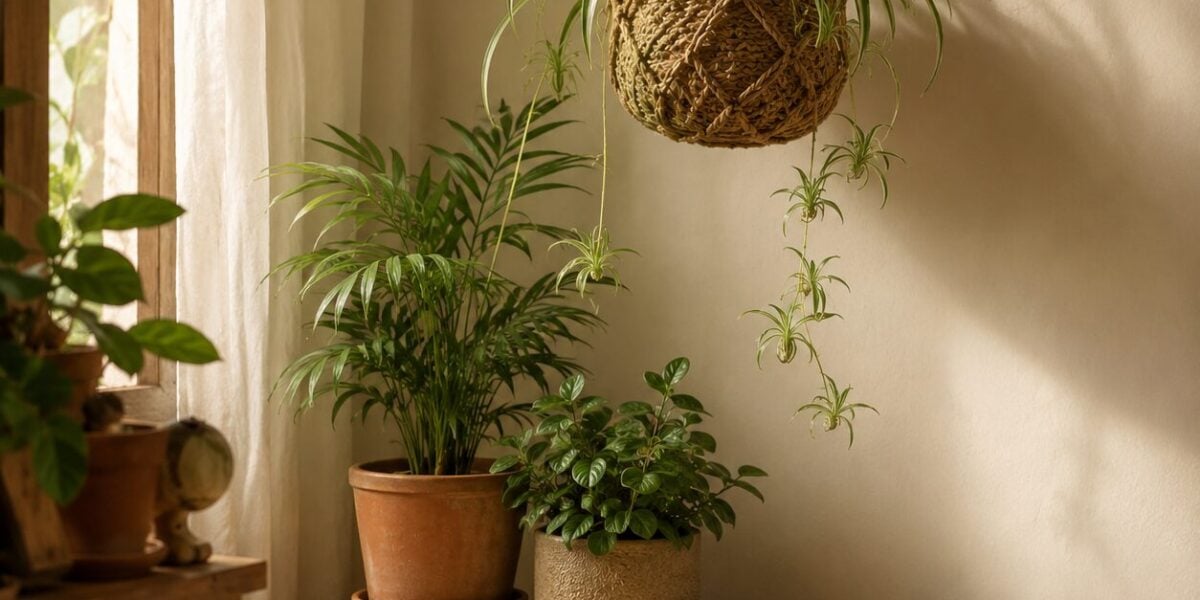
Cats and houseplants can coexist — but it requires some research upfront. Many popular houseplants are toxic to cats, sometimes seriously so. Lilies in particular can cause acute kidney failure in cats with even minimal exposure. The good news is that there are dozens of beautiful, easy-to-grow plants that are completely safe for cats, and many of them are widely available and easy to care for.
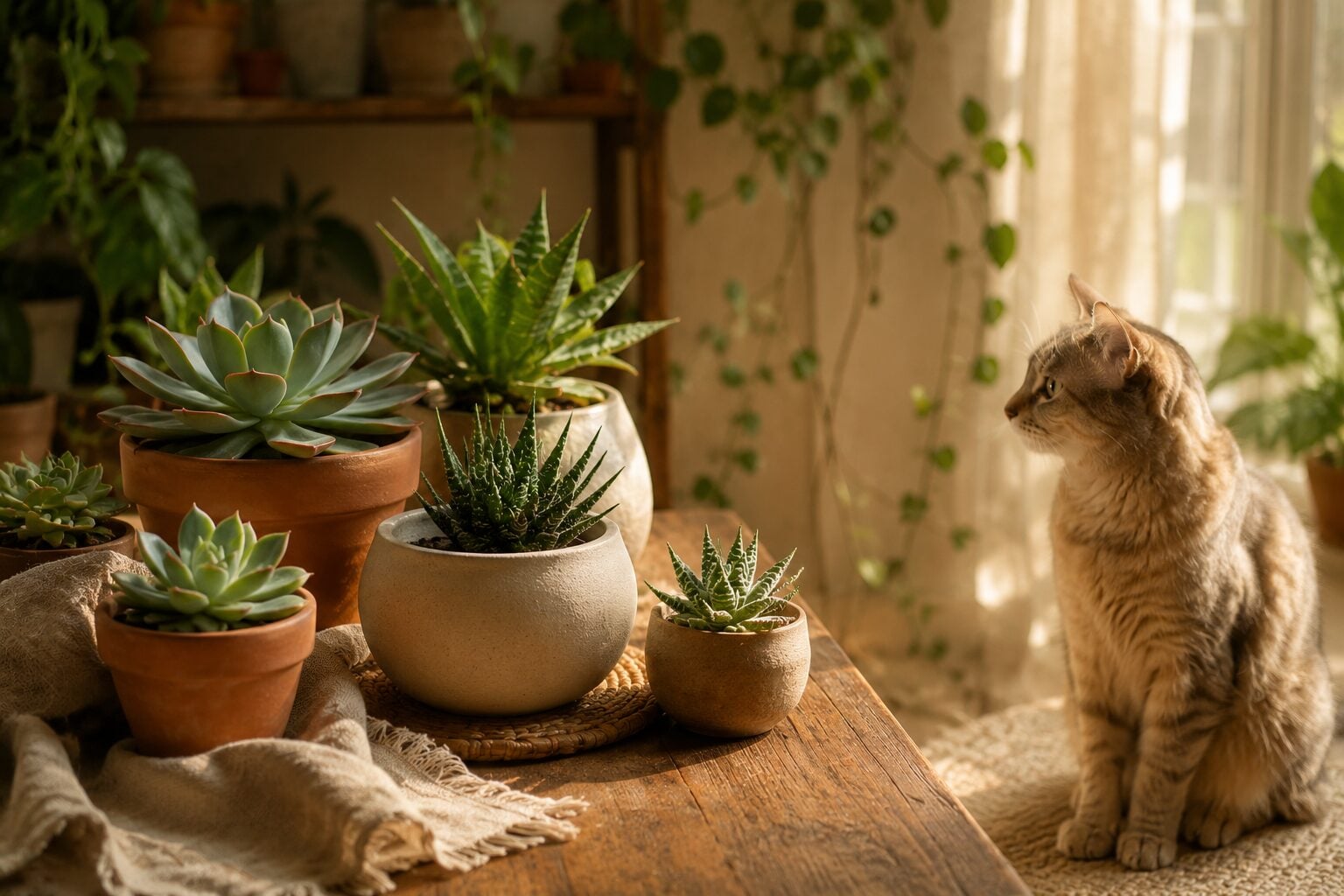
This guide covers the best air purifying plants safe for cats — greenery that filters your indoor air without putting curious paws at risk, organized by type with care notes for each.
Humble Acres is reader-supported. When you buy through links on our site, we may earn an affiliate commission at no extra cost to you — we only recommend products we’d use ourselves. See our affiliate disclosure.
The cat-safe plant kit
- ONIKK Ceiling Hooks for Hanging Plants, Heavy Duty Metal Plant Hooks… — ceiling planter hooks
- The Cat Ladies Cat Grass for Indoor Cats – Growing Kit – Organic Cat… — cat grass grow kits
- Victorian Parlor Palm (Neanthe Bella Palm) – 4'' from California… — parlor palms
- Bamworld Hanging Planters for Indoor Plants Wall Decor Living Room — wall hanging planters
- Variety Pack of Small Tillandsia Air Plants, Assortment of Exotic, Low… — tillandsia air plant assortments
Opens Amazon’s cart confirmation page — you review the list and prices there, and nothing is added until you approve it. Prefer to pick and choose? Every item above links to its own product page.
Important Note on Plant Toxicity
The ASPCA maintains the most comprehensive database of plant toxicity for pets. When in doubt, always cross-reference a plant at aspca.org before bringing it home. “Non-toxic” means a plant won’t cause serious harm, but some non-toxic plants can still cause mild stomach upset if eaten in quantity — which is common with cats who chew on leaves.
Do Houseplants Really Purify Air? An Honest Answer
You’ll see the famous NASA Clean Air Study cited on nearly every plant blog. It’s real — in sealed laboratory chambers, plants measurably removed volatile organic compounds from the air. But follow-up research has been clear that in a normal home, with doors opening and air circulating, you’d need an impractical number of plants to match what ordinary ventilation does. So we won’t oversell it: a spider plant will not scrub your living room.
What houseplants genuinely do: release moisture that buffers dry indoor air, host beneficial leaf-surface microbes, and — this is the well-documented part — measurably improve mood, focus, and stress levels for the people living among them. Add “completely safe for the cat,” and every plant below earns its spot regardless of how many air-quality studies you believe.
The Best Air Purifying Plants Safe for Cats
1. Spider Plant (Chlorophytum comosum)
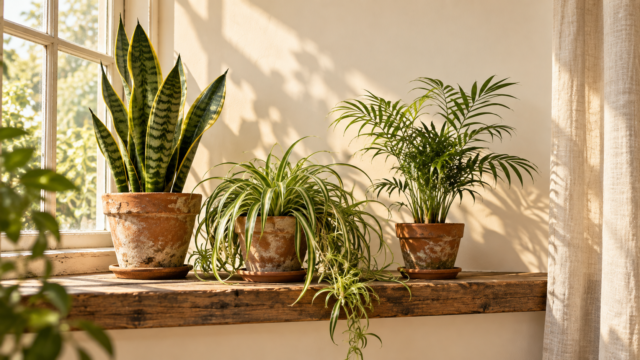
Spider plants are one of the most cat-friendly houseplants available. They’re non-toxic, nearly indestructible, and one of the best air-purifying plants you can own. They produce arching green-and-white leaves and long runners with small “spiderettes” at the tips that can be propagated easily. They tolerate low light, irregular watering, and thrive in hanging baskets — which also keeps them somewhat out of reach of determined cats.

Note: spider plants have a mild hallucinogenic effect on cats similar to catnip, which is why some cats find them irresistible. If your cat is obsessed with chewing the leaves, hang the plant higher.
2. Boston Fern (Nephrolepis exaltata)
Boston ferns are lush, feathery, and completely safe for cats. They’re one of the most effective air-purifying plants available and love humidity — making them excellent for bathrooms. They do need consistent moisture and bright indirect light to thrive, which makes them slightly more demanding than other options on this list. Let the soil dry slightly between waterings, but don’t let it dry completely.
3. Areca Palm (Dypsis lutescens)
If you want a dramatic, floor-standing plant that’s safe for cats, the areca palm is one of the best choices available. It produces elegant, feathery fronds and can grow several feet tall indoors. It prefers bright indirect light and slightly moist soil. It’s also an excellent air humidifier — the fronds release moisture and improve indoor air quality.
4. Calathea / Maranta (Prayer Plants)
Prayer plants are named for their habit of folding their leaves upward at night. They come in stunning varieties — Calathea orbifolia, Calathea zebrina, Maranta leuconeura — with bold patterns of green, white, pink, and purple. All are non-toxic to cats. They prefer indirect light and consistent moisture, and will tell you they need humidity by getting crispy leaf edges.
5. Haworthia
Haworthias are small, architectural succulents that look similar to aloe but are completely non-toxic to cats (unlike aloe, which is toxic). They’re slow-growing, need minimal water, and tolerate lower light than most succulents. Perfect for windowsills and shelves where curious cats might explore. See our low light houseplants guide for other shelf-friendly options.
6. Orchids (Phalaenopsis)
Phalaenopsis orchids — the most common orchid sold in grocery stores and garden centers — are non-toxic to cats. They’re elegant, long-blooming (often months per bloom cycle), and more resilient than their reputation suggests. They need bright indirect light, weekly watering (soak and drain — never let them sit in water), and a potting mix of bark chips rather than soil. When the blooms drop, cut the spike and wait — a new one often emerges.
7. Air Plants (Tillandsia)
All Tillandsia species are non-toxic to cats, making them ideal for cat households. Since they need no soil, they can be mounted on walls, placed on shelves, or displayed in open terrariums — well away from curious paws. See our full air plant care guide for everything you need to know.

8. Money Tree (Pachira aquatica)
The money tree is a popular, braided-trunk houseplant that’s completely safe for cats. It tolerates low light (though it prefers bright indirect light), infrequent watering, and average humidity. The distinctive braided trunk is created by weaving multiple young stems together while they’re pliable — giving it a sculptural quality unlike most houseplants.
9. Parlor Palm (Chamaedorea elegans)
A Victorian classic that’s been furnishing dim parlors for 150 years, and completely safe for cats. Parlor palms tolerate low light better than nearly any other palm, stay a manageable 2–4 feet indoors, and forgive missed waterings. Soft, feathery fronds at cat height are an invitation to batting, but a nibble carries no risk.

10. African Violet (Saintpaulia)
For color without risk, African violets are the answer. Non-toxic to cats, compact enough for any windowsill, and capable of blooming nearly year-round in bright indirect light. Water from the bottom to keep the fuzzy leaves dry, and they’ll flower through the winter months when everything else has gone dormant.
11. Ponytail Palm (Beaucarnea recurvata)
Not a true palm — it’s a succulent with a swollen, water-storing trunk and a fountain of ribbon-like leaves cats find fascinating and can safely ignore their fascination with. It wants bright light and very little water, shrugging off weeks of neglect. A slow grower that can live for decades.
Plants to Avoid in Cat Households
For reference, here are some of the most commonly kept houseplants that are toxic to cats — the ASPCA’s plants toxic to cats list covers hundreds more:
- All true lilies (Lilium and Hemerocallis species) — extremely toxic, can cause kidney failure. Keep these out of any home with cats entirely.
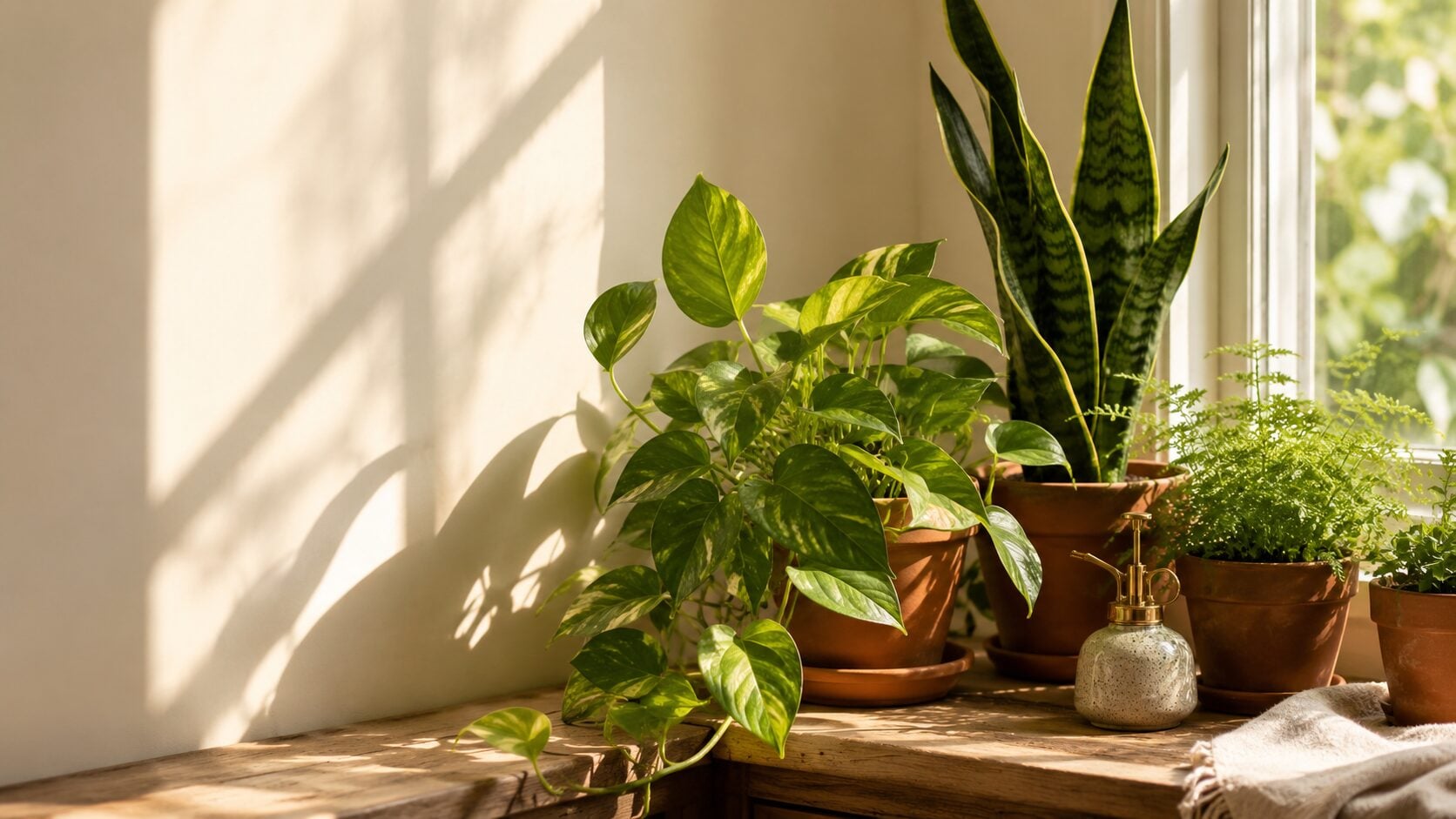
- Pothos — causes oral irritation and vomiting. Very common and very toxic to cats despite being practically indestructible.
- Philodendron — similar toxicity to pothos.
- ZZ plant — toxic if ingested.
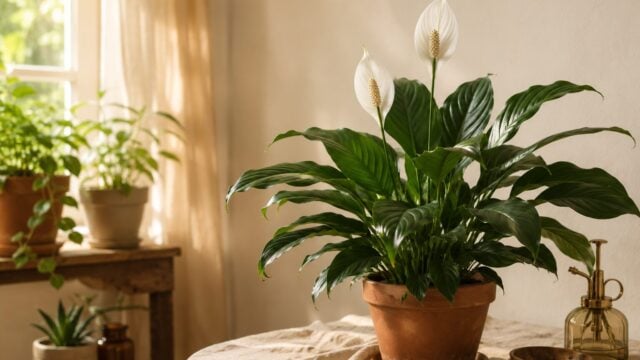
- Peace lily — causes oral irritation, excessive drooling, and vomiting.
- Snake plant — mildly toxic, causes nausea and vomiting.
- Aloe vera — toxic to cats despite being useful for humans.
Many of the most popular and easy-to-grow houseplants appear on this toxic list. The safe alternatives in the first section of this guide are chosen specifically to fill the same decorative roles without the risk.
What If Your Cat Eats a Plant Anyway?
Even in a carefully curated home, cats find a way. Know the difference between a shrug and an emergency:
- Ate a plant from the safe list: mild drooling or a single episode of vomiting can still happen — plant matter is simply hard on feline stomachs. Watch and offer water; no action needed unless symptoms persist past a day.
- Ate a mildly toxic plant (snake plant, pothos): expect drooling, pawing at the mouth, vomiting, or reduced appetite. Call your vet for guidance, especially for kittens, seniors, or repeat snackers.
- Any contact with a lily — including pollen on fur: this is an emergency. Kidney damage begins within hours and is treatable only if caught early. Go to a vet immediately, even if your cat seems fine.
When in doubt, call the ASPCA Animal Poison Control Center at (888) 426-4435 — available 24/7 (a consultation fee applies). Take a photo of the plant, or bring a leaf; identification is the first thing they’ll ask about.
Practical Tips for Plant-Owning Cat Households
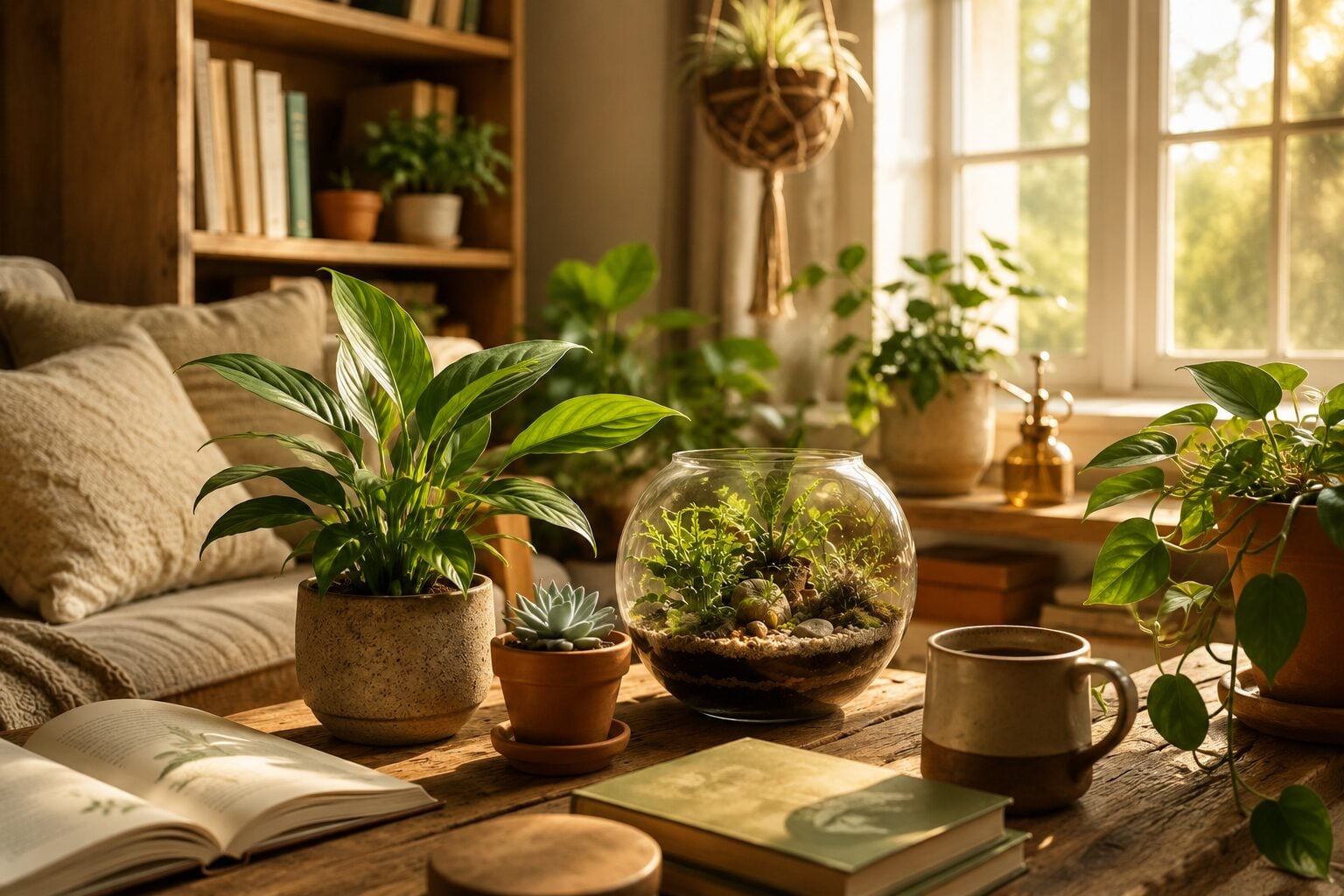
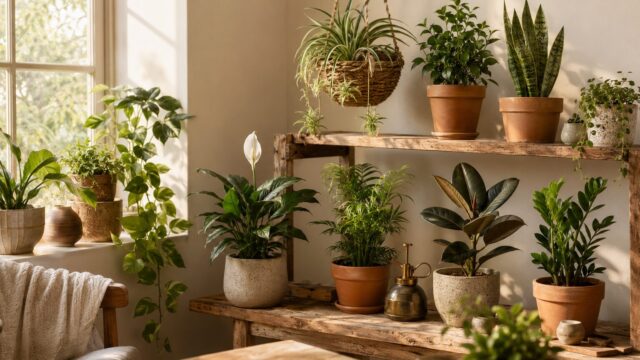
- Elevation helps — cats are curious but often don’t bother with plants they can’t reach. Wall-mounted planters, high shelves, and hanging baskets put toxic plants out of reach while keeping your décor intact.
- Give cats their own plants — a pot of cat grass or catnip redirects chewing behavior away from your houseplants.
- Lemon or orange peels — citrus scents deter most cats naturally. Place peel in the soil around plants you want to protect.
- Know the ASPCA number — if your cat does eat something concerning, the ASPCA Animal Poison Control Center is available 24/7 at (888) 426-4435 (a consultation fee applies).


Cat-Safe Plant FAQ
Is spider plant really safe if my cat won’t stop eating it?
The plant itself is non-toxic, but large amounts of any plant material can upset a cat’s stomach. If your cat treats the spider plant as a salad bar, hang it out of reach and offer cat grass as the sanctioned alternative — most cats accept the trade.
Are “pet-friendly” labels at garden centers reliable?
Treat them as a starting point, not a guarantee. Labels vary by retailer and are sometimes generic. The two minutes it takes to check the species name against the ASPCA database is the reliable version of that label.
What about bouquets and cut flowers?
Bouquets are the most common way lilies enter cat households — often as gifts. Check every mixed bouquet before it comes inside, and ask florists to omit lilies. Roses, sunflowers, snapdragons, and orchids are all cat-safe alternatives.
Which safe plant is best for a beginner?
Spider plant, no contest — forgiving of every beginner mistake, quick to show recovery, free replacements via its spiderettes, and safe for the cat that will inevitably investigate it. Parlor palm is the runner-up if you want something that reads more like furniture.
For more safe plant options that work well in smaller spaces, see our guides to low light houseplants and terrarium plants — many terrarium plants are also pet-safe.
The cat-safe plant kit
- ONIKK Ceiling Hooks for Hanging Plants, Heavy Duty Metal Plant Hooks… — ceiling planter hooks
- The Cat Ladies Cat Grass for Indoor Cats – Growing Kit – Organic Cat… — cat grass grow kits
- Victorian Parlor Palm (Neanthe Bella Palm) – 4'' from California… — parlor palms
- Bamworld Hanging Planters for Indoor Plants Wall Decor Living Room — wall hanging planters
- Variety Pack of Small Tillandsia Air Plants, Assortment of Exotic, Low… — tillandsia air plant assortments
Opens Amazon’s cart confirmation page — you review the list and prices there, and nothing is added until you approve it. Prefer to pick and choose? Every item above links to its own product page.
Related: Cat Safe Plants · Related: Houseplants hub
Leave a Reply