
Humble Acres is reader-supported. When you buy through links on our site, we may earn an affiliate commission at no extra cost to you — we only recommend products we’d use ourselves. See our affiliate disclosure.
The planted tank starter kit
- API TAP WATER CONDITIONER Aquarium Water Conditioner 16-Ounce Bottle — water conditioner
- Pawfly 3 Pack Aquarium Sponge Filter Aquarium Air Pump 50 GPH Fish… — sponge filter and air pump kit
- Poolmaster 5-Way Pool & Spa Water Test Kit with Liquid Reagents — liquid master test kit
- hygger 24/7 Mode Submersible Aquarium LED Light, Full Spectrum Hidden… — LED aquarium light with a built-in timer
- DaToo Mini Aquarium Heater 25W Small Fish Tank Heater 25 Watt with… — aquarium heater sized to your tank volume
Opens Amazon’s cart confirmation page — you review the list and prices there, and nothing is added until you approve it. Prefer to pick and choose? Every item above links to its own product page.
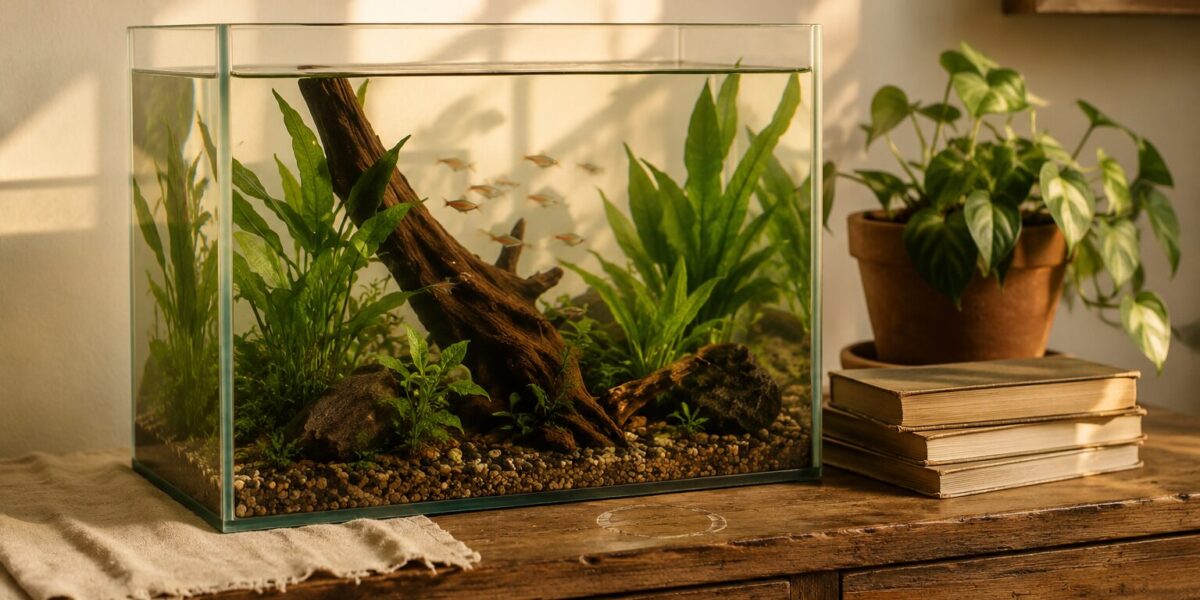
A tropical fishtank is not hard. It is just unforgiving of one specific shortcut, and almost every beginner takes it. If you set up a tropical fishtank this weekend and buy fish on the same trip, you will most likely be replacing those fish within a month — not because you did anything cruel, but because the tank was not ready to keep them alive yet. This guide walks the seven steps in the right order, and the order is the whole trick.
Step 1: Buy a bigger tropical fishtank than you think you need
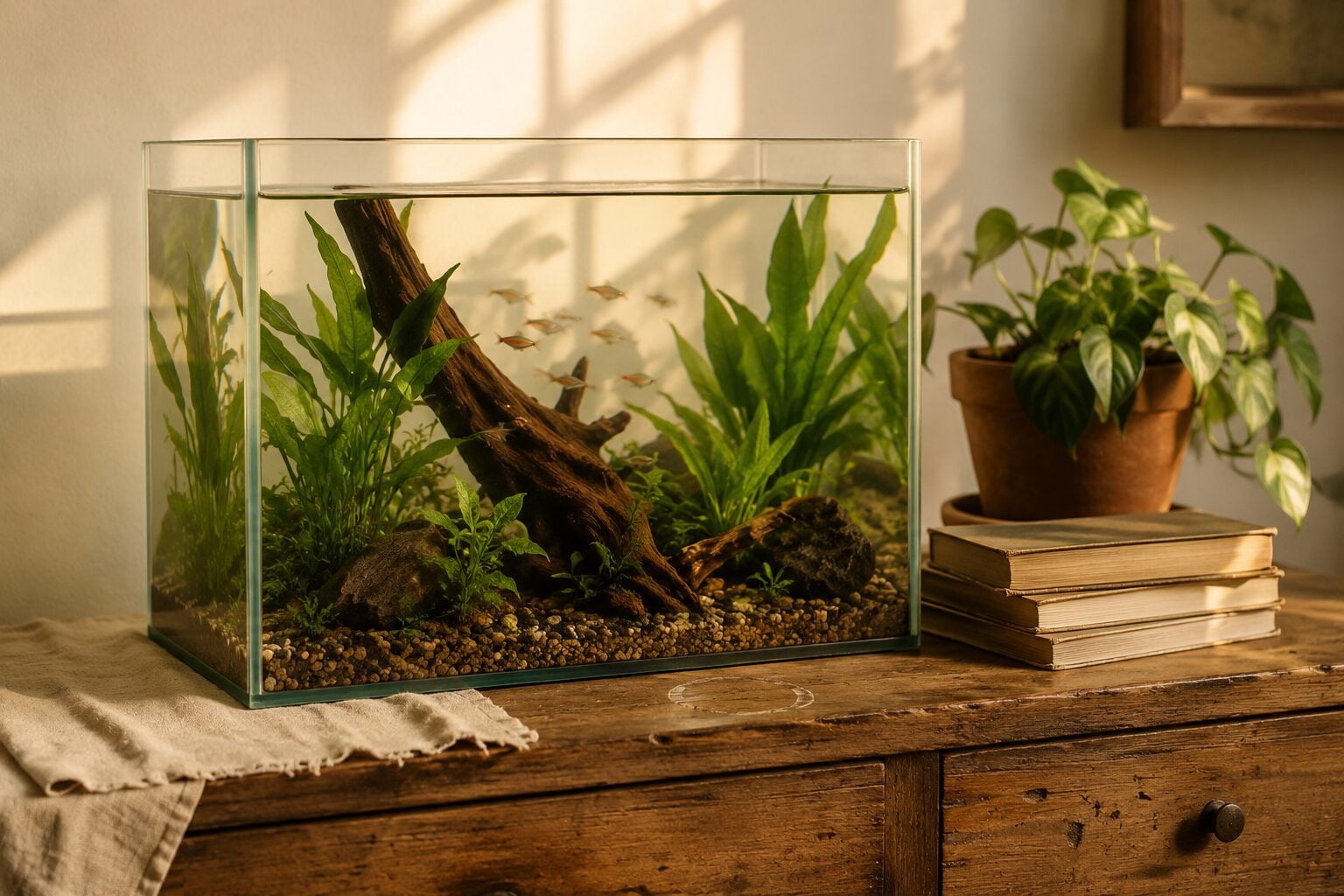
The most counterintuitive fact in the hobby is that small tanks are harder than big ones. A five-gallon desktop tank sounds beginner-friendly and is actually a chemistry experiment on a hair trigger: one dead snail, one overfeeding, one hot afternoon, and the whole volume swings. A larger body of water dilutes waste, holds its temperature, and buys you time to notice a problem before it becomes a funeral.
For a first tropical fishtank, a 20-gallon long is the practical sweet spot. It gives schooling fish enough horizontal room to actually school, it holds a proper heater and filter, and it is still light enough to move when empty. Nano species — ember tetras, chili rasboras — can work in 10 to 15 gallons if you stock lightly. Below that, you are choosing difficulty for the sake of shelf space.
Put it somewhere level, structural, and out of direct sun. Sunlight will cook the tank and grow a spectacular green algae bloom, and a full 20-gallon weighs well over 200 pounds. A flimsy bookshelf will not do.
Step 2: Heater, filter, light — the three machines
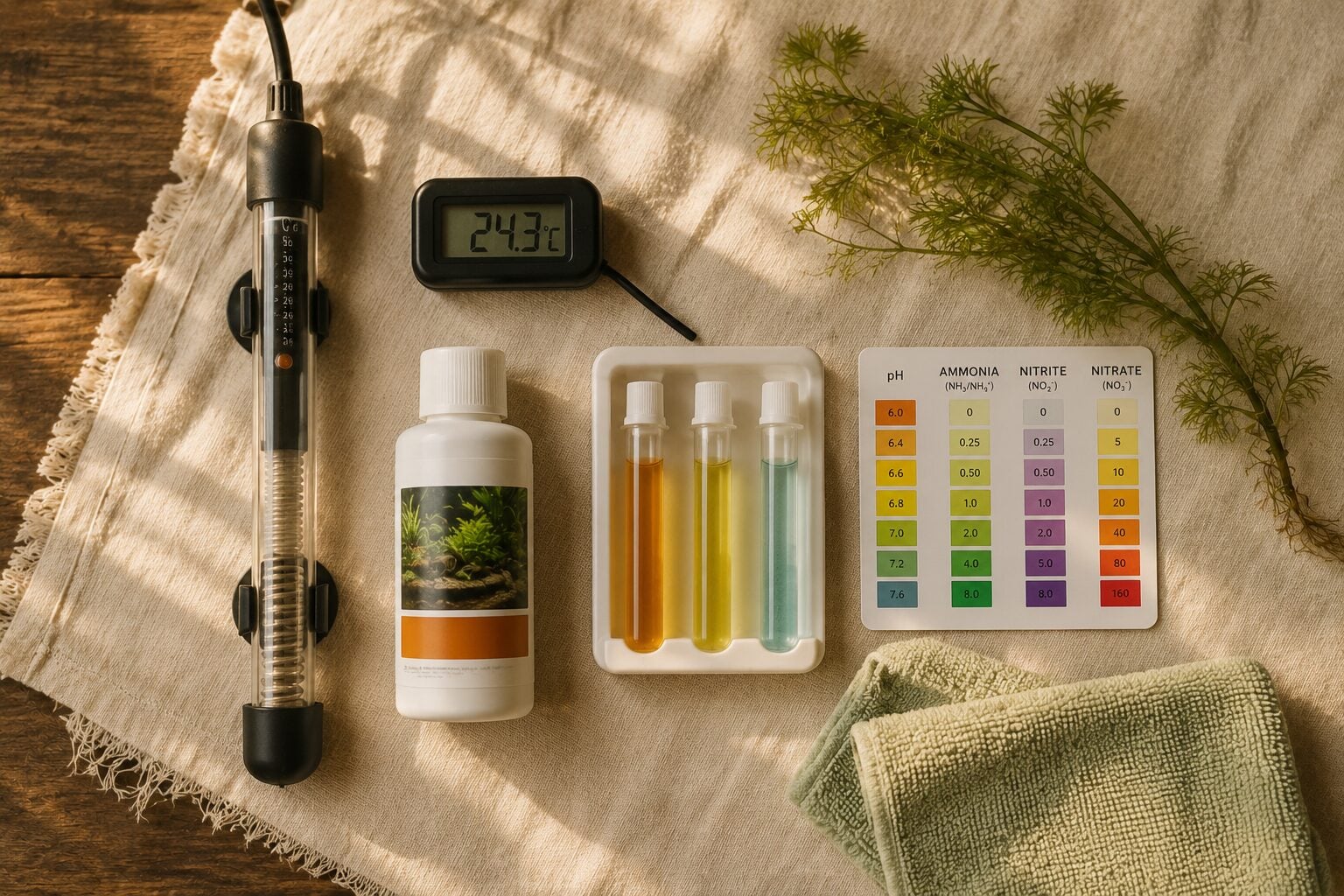
Tropical means warm, and warm means a heater is not optional. Tropical community fish want 75–80°F (24–27°C), and most preset aquarium heaters are factory-set to 78°F (25°C) for exactly that reason. An adjustable, fully submersible aquarium heater sized to your tank volume plus a cheap stick-on or digital thermometer covers it. Buy the thermometer. Heaters fail, and they usually fail in the expensive direction.
The filter is where your bacteria will live, which makes it the most important box on the tank. A hang-on-back filter is the standard choice; a simple air-driven sponge filter is quieter, cheaper, cannot suck up fry, and works beautifully in a planted tropical fishtank. Either is fine. What matters is that you never, ever wash the filter media in tap water — chlorine kills the bacterial colony you spent six weeks growing. Rinse it in old tank water instead.
The light is the least fussy of the three, unless you want plants. If you do, an LED aquarium light with a built-in timer is worth every dollar: low-light aquatic plants want roughly 15–30 PAR at the substrate and a photoperiod of seven to nine hours. Longer is not better. Longer is algae.
Step 3: Substrate, hardscape and live plants
You can run a bare-bottom tank, but a planted one is more stable and much better to look at. Root-feeding plants — cryptocorynes, Amazon swords, vallisneria — want either a nutrient aquasoil or plain gravel dosed with root tabs every two to three months. Rhizome plants — anubias, java fern, bucephalandra — do not go in the substrate at all: their rhizomes rot if buried, so they get tied or glued to driftwood and stone.
None of the plants above need injected CO2. A low-tech tropical fishtank with a modest light, a weekly half-dose of all-in-one liquid fertilizer, and root tabs for the heavy feeders will grow a genuinely lush tank. If you want the full plant-by-plant breakdown — light, substrate, and the melt-then-recover behavior of crypts — we cover it in the guide to the best freshwater plants for beginners.
Plant heavily on day one. A sparse tank is an algae tank; a densely planted one gives the algae nothing to eat. Buy twice as many plants as looks reasonable and thank yourself in a month.
Step 4: Cycle the tank — the step that decides everything
This is the shortcut nobody should take. A new tropical fishtank has no bacteria in it, and bacteria are the only thing standing between your fish and the ammonia they excrete every hour of every day.
The nitrogen cycle runs in two bacterial steps. Nitrosomonas-type bacteria convert ammonia into nitrite, which is also toxic. Nitrobacter-type bacteria then convert nitrite into nitrate, which is comparatively harmless and which you remove with water changes and feed to your plants. Growing both colonies takes roughly four to six weeks, and it goes faster warm — which is one small mercy of a tropical setup, since bacteria colonize noticeably quicker at 24–26°C than at room temperature.
The stakes are not abstract. The University of Florida IFAS Extension puts hard numbers on it: un-ionized ammonia is extremely toxic to fish, damaging them above about 0.05 mg/L and killing them near 2.0 mg/L. Crucially, the un-ionized — toxic — fraction of total ammonia rises with both pH and temperature. A warm tropical tank converts more of its ammonia into the dangerous form than a cold one does. Your liquid test kit reads total ammonia nitrogen, not the toxic fraction, so a reading that looks survivable on paper can be lethal at 78°F.
How to cycle without killing anything
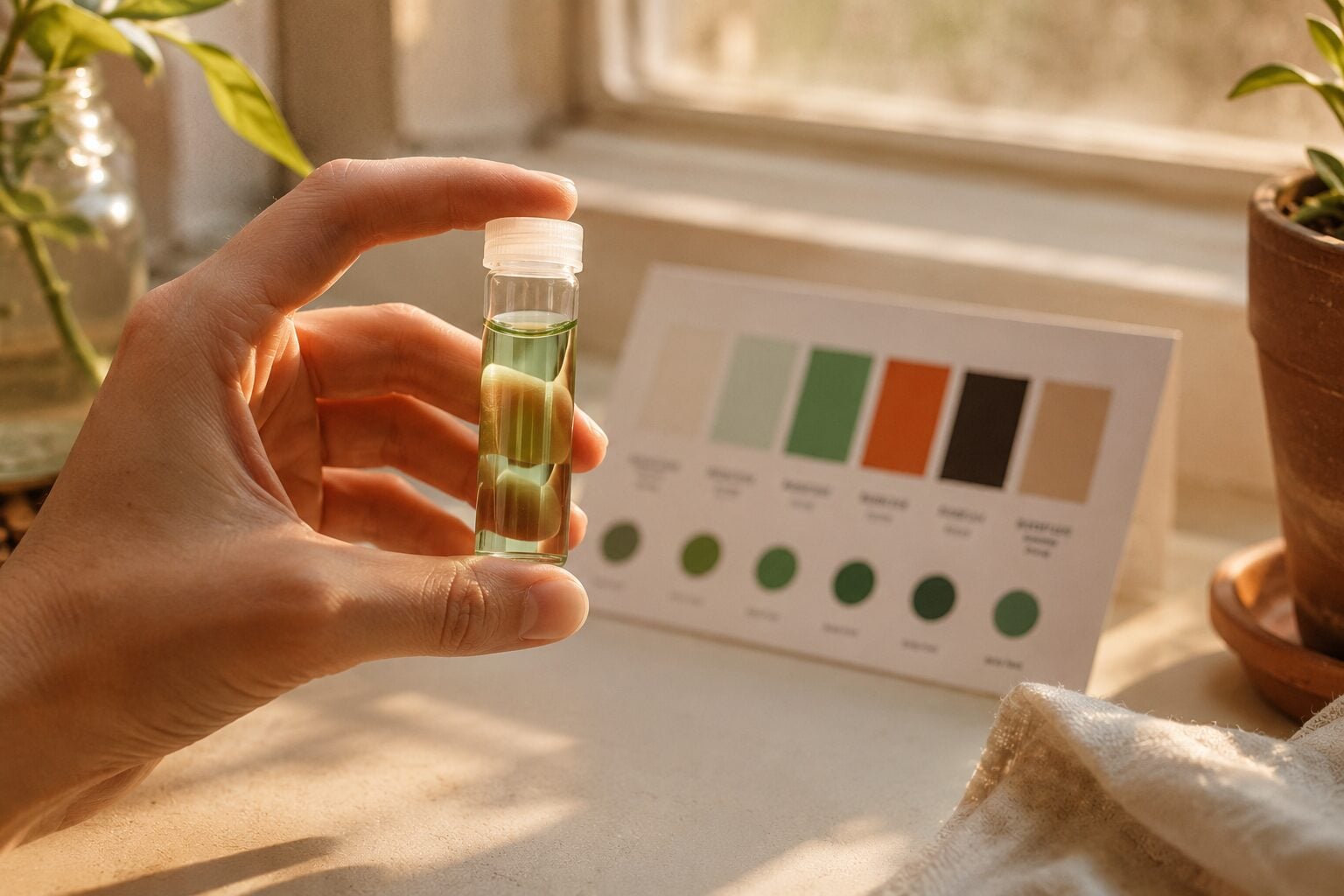
Fishless cycling is the humane version and it is not complicated. Set the tank up fully — heater on, filter running, plants in, no fish. Add an ammonia source: a few drops of pure, unscented household ammonia, or a pinch of fish food left to decay. Then test every couple of days with a liquid master test kit (the strip tests are notoriously imprecise) and watch the pattern unfold.
First ammonia climbs. Then it falls as nitrite rises. Then nitrite falls as nitrate appears. When you can dose ammonia and see both ammonia and nitrite read zero within 24 hours, with nitrate present, the tank is cycled. Do a large water change to drop the nitrate, and only then go buy fish. Bottled bacteria starters and a squeeze of filter sponge from an established tank both speed this up considerably.
Every fish loss in a new tropical fishtank that gets blamed on “bad luck” or “a bad batch from the store” is usually this: New Tank Syndrome, an ammonia and nitrite spike in an uncycled tank. It is entirely preventable and it costs you nothing but patience.
Step 5: Water, and what you put in it
Tap water contains chlorine or chloramine, both of which are added specifically to kill bacteria — including the bacteria in your filter — and both of which burn fish gills and damage plant tissue. Every drop of water that enters the tank, forever, gets treated first with a water conditioner. There are no exceptions to this rule.
Match temperature roughly when you refill, and change modest amounts weekly rather than huge amounts occasionally. Stability is what fish and plants both want; a dramatic 60% change swings pH, hardness and temperature all at once. Ten to twenty-five percent a week is plenty for a properly stocked tank.
Do not chase pH with chemicals. Nearly all commercially available tropical fish are captive-bred and adapt fine to normal tap water anywhere between about 6.5 and 7.8. A stable “wrong” pH beats a perfect one that lurches every time you dose a bottle.
Step 6: Stocking — hardy fish, added slowly
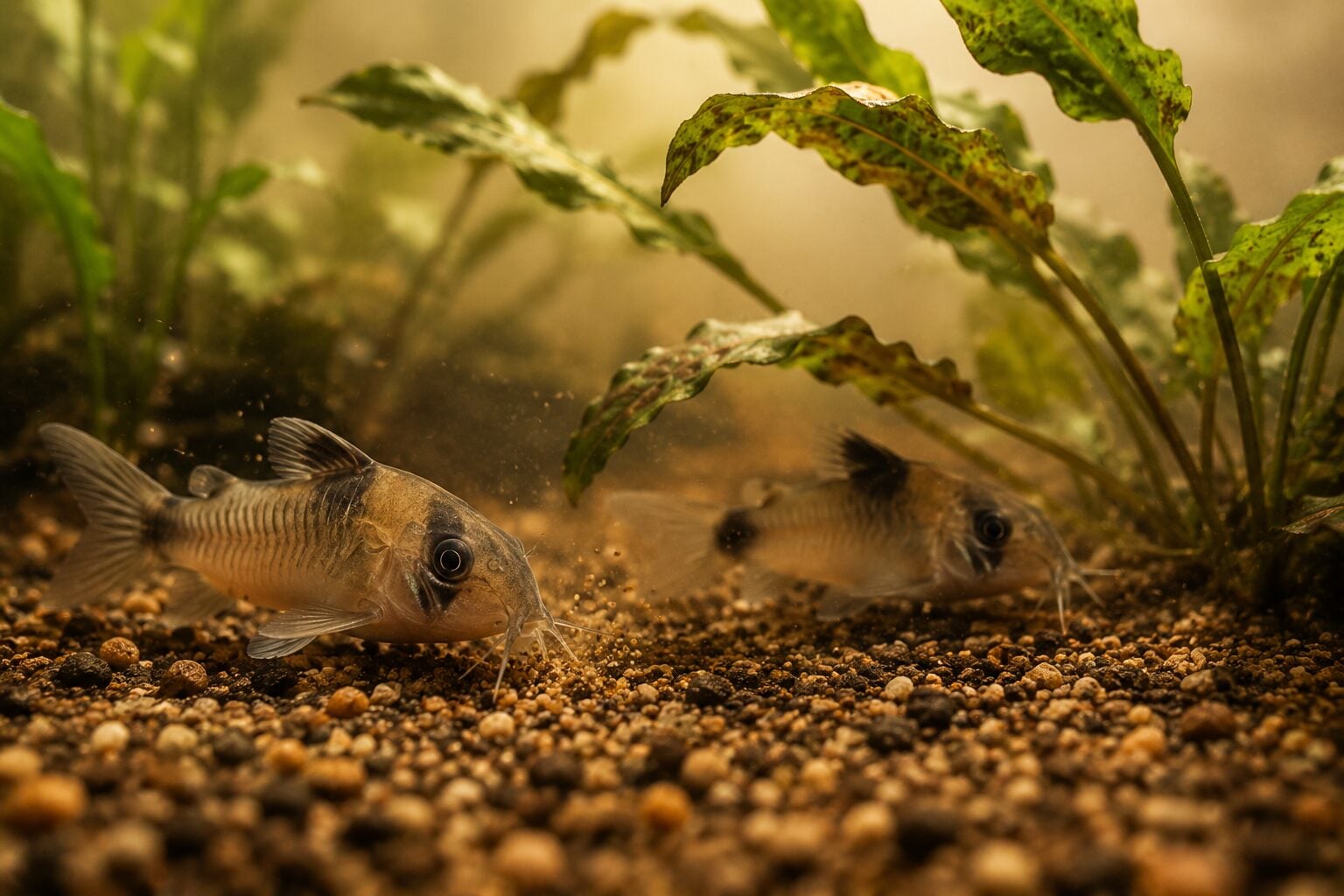
Start with fish that forgive a beginner. The reliable list is well established: danios, guppies, platys, mollies, the smaller tetras, and corydoras catfish. These are the species stores recommend precisely because they tolerate the small parameter wobbles a new keeper produces.
Respect the social rules, because they are welfare issues, not preferences. Tetras are schooling fish and are visibly stressed alone — keep at least five or six of the same species. Corydoras are the same: groups of four to six minimum, in a tank of ten to twenty gallons or more. A single “sample” tetra in a community tank is a miserable fish.
Add in small batches, two or three weeks apart. Your bacterial colony sizes itself to the ammonia load it is fed; dump a full stocking list into a freshly cycled tropical fishtank at once and you will get a secondary ammonia spike while the colony catches up. Feed sparingly, too — once a day, only as much as the fish clear in a minute or two. Overfeeding is the number one source of the ammonia that starts every problem in this article.
Step 7: The weekly rhythm
A settled tropical fishtank asks for about fifteen minutes a week. Test ammonia, nitrite and nitrate. Change ten to twenty-five percent of the water with dechlorinated, temperature-matched water. Wipe the front glass. Trim the plants. Rinse the filter media in the bucket of old tank water if flow has dropped — never under the tap. Check the heater is holding its number.
That is the entire maintenance burden. What it buys you is a system that runs itself: bacteria eating ammonia, plants eating nitrate, fish eating what you give them, and a tank that gets more stable every month rather than less.
Troubleshooting the usual suspects
Cloudy white water in a new tank is a bacterial bloom — harmless, and it clears on its own if you leave it alone. Green water and algae on the glass mean too much light or too many nutrients: shorten the photoperiod to seven hours, cut back feeding, and add a fast-growing plant like hornwort to compete. Fish gasping at the surface points to low oxygen or high ammonia — test immediately and do a water change. Fish hanging listless at the bottom after a recent stocking almost always means an ammonia or nitrite spike. Test, change water, and stop adding fish.
What it actually costs, and where to spend
A first tropical fishtank is cheaper than most people expect, and the money goes to counterintuitive places. The tank itself is not where quality matters — a plain 20-gallon long from any big-box store holds water exactly as well as a boutique rimless one. Spend the money instead on the heater, the filter, and the test kit, because those three are the difference between a tank that runs and a tank that crashes.
A realistic starting budget looks like this. Tank and stand or a sturdy existing surface. An adjustable heater rated for your volume, plus a thermometer to catch it when it lies. A filter — hang-on-back or sponge. Substrate: a bag of plain aquarium gravel with root tabs, or an aquasoil if you want the plants to take off faster. A light with a timer. A liquid master test kit, which will outlast several tanks. Water conditioner, a five-gallon bucket used for nothing else, and a gravel vacuum. That is the whole list, and it runs a couple hundred dollars for a setup that will still be running in five years.
Where you buy the living things is worth more thought than where you buy the hardware. Big-box plants are often grown out of water and arrive with pest snails and a rough transition ahead; specialist aquatic nurseries — the Buce Plant and Aquarium Co-Op end of the market — ship submerged-grown, quarantined stock that settles in with almost no melt. Fish from a shop that quarantines its stock and will happily answer questions are worth a premium over fish from a shop that will sell you six tetras for a tank you set up yesterday. For the gear, though, Amazon is genuinely the sane, cheap option — a sponge filter and air pump kit does not need a boutique markup.
Your first thirty days, in order
Here is what a well-run first month looks like, laid out as a timeline. Day one: assemble the tropical fishtank, rinse the substrate until the water runs clear, place the hardscape, fill, and run every piece of equipment for a full 24 hours to confirm the heater holds temperature and the filter does not leak. Day two: plant. Take your time; a planted tank is easier to arrange before there are fish darting around your hands.
Day three: begin the fishless cycle. Dose ammonia to about 2 ppm, or drop in a pinch of food, and start testing. Weeks one and two: ammonia climbs, then falls; nitrite appears and climbs. This is the boring, worrying stretch where beginners lose faith and buy fish anyway. Do not. Weeks three to five: nitrite falls, nitrate appears, and your plants begin putting out new submerged-form leaves. When ammonia and nitrite both clear to zero within a day of dosing, the tank is cycled.
Week five or six: a large water change, then your first small group of fish — a school of six, not a full stocking list. Watch them for a week. Test. Then, and only then, add the next group. Six weeks feels like an eternity when there is an empty tank in the living room, and it is precisely why the tank that gets stocked in week one so often ends up empty by week four.
The rule that outlives the tank
One last thing that matters beyond your living room. Never release fish, plants, or tank water into a pond, ditch, storm drain, or waterway. The aquarium trade is how hydrilla — now one of the most destructive aquatic weeds in the United States — arrived here in the 1950s, and UF/IFAS’s Center for Aquatic and Invasive Plants still tracks the damage from these aquatic hitchhikers. Trimmings go in the trash. Unwanted fish go to a hobbyist, a club, or back to the store. If you want to go deeper on keeping the fish themselves healthy, UF/IFAS’s introduction to fish health management is the best free primer there is.
What a tropical fishtank teaches you
Everything a tropical fishtank demands, the rest of the plant world demands more quietly: right light rather than maximum light, water on the organism’s schedule rather than yours, nutrients delivered where the roots actually are, and patience with a system that changes slowly. The keepers who do well with an aquarium tend to do well with a windowsill — the instincts are the same ones behind a solid plant care routine, and behind the forgiving houseplants that let a beginner build confidence. A closed terrarium, for what it is worth, is a tropical fishtank with the water poured out and the humidity left behind.
The short version
Buy the bigger tank. Heater at 78°F, filter running, light on a seven-to-nine-hour timer. Plant it heavily with low-tech species and skip the CO2. Cycle it fishless for four to six weeks until ammonia and nitrite both read zero. Then stock hardy fish, in proper groups, in small batches, and feed less than feels right. Test weekly, change water weekly, condition every drop, and never release anything into wild water.
Do it in that order and a tropical fishtank stops being a gamble. It becomes the calmest thing in the house.
The planted tank starter kit
- API TAP WATER CONDITIONER Aquarium Water Conditioner 16-Ounce Bottle — water conditioner
- Pawfly 3 Pack Aquarium Sponge Filter Aquarium Air Pump 50 GPH Fish… — sponge filter and air pump kit
- Poolmaster 5-Way Pool & Spa Water Test Kit with Liquid Reagents — liquid master test kit
- hygger 24/7 Mode Submersible Aquarium LED Light, Full Spectrum Hidden… — LED aquarium light with a built-in timer
- DaToo Mini Aquarium Heater 25W Small Fish Tank Heater 25 Watt with… — aquarium heater sized to your tank volume
Opens Amazon’s cart confirmation page — you review the list and prices there, and nothing is added until you approve it. Prefer to pick and choose? Every item above links to its own product page.

Leave a Reply