
Humble Acres is reader-supported. When you buy through links on our site, we may earn an affiliate commission at no extra cost to you — we only recommend products we’d use ourselves. See our affiliate disclosure.
The air plant starter kit
- BeautifyBeauties Continuous Spray Bottle for Hair, 10.1 oz Mister Spray — continuous-mist spray bottle
- Air Plant Variety Pack – 6 Live Tillandsia Plants (Caput Medusae,… — tillandsia variety pack
- 16oz Bromeliad Fertilizer – Makes 24 Gallons of Liquid Bromeliad Plant… — liquid bromeliad fertilizer
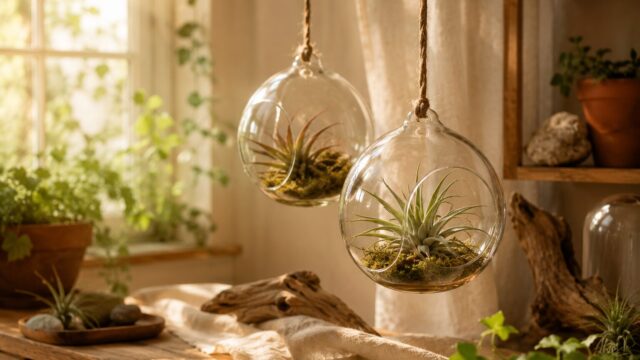
- Mkono 3 Pack Air Plant Holder, Glass Hanging Planter Terrarium Globe… — hanging glass globes
- Venus Flytrap Desktop Pot with LED Grow Light Home Office Desk Decor — LED grow light
Opens Amazon’s cart confirmation page — you review the list and prices there, and nothing is added until you approve it. Prefer to pick and choose? Every item above links to its own product page.
The care of airplants is the easiest kind of plant care there is — once you stop treating them like every other houseplant. Tillandsias grow without a single grain of soil, drink through their leaves instead of their roots, and will live happily glued to a piece of driftwood on your bookshelf. And yet the number one way people kill them is kindness: too much water, trapped in the wrong place. This guide covers everything I’ve learned growing these odd, wonderful plants, backed by the university horticulturists who study them.
What Is an Air Plant, Exactly?
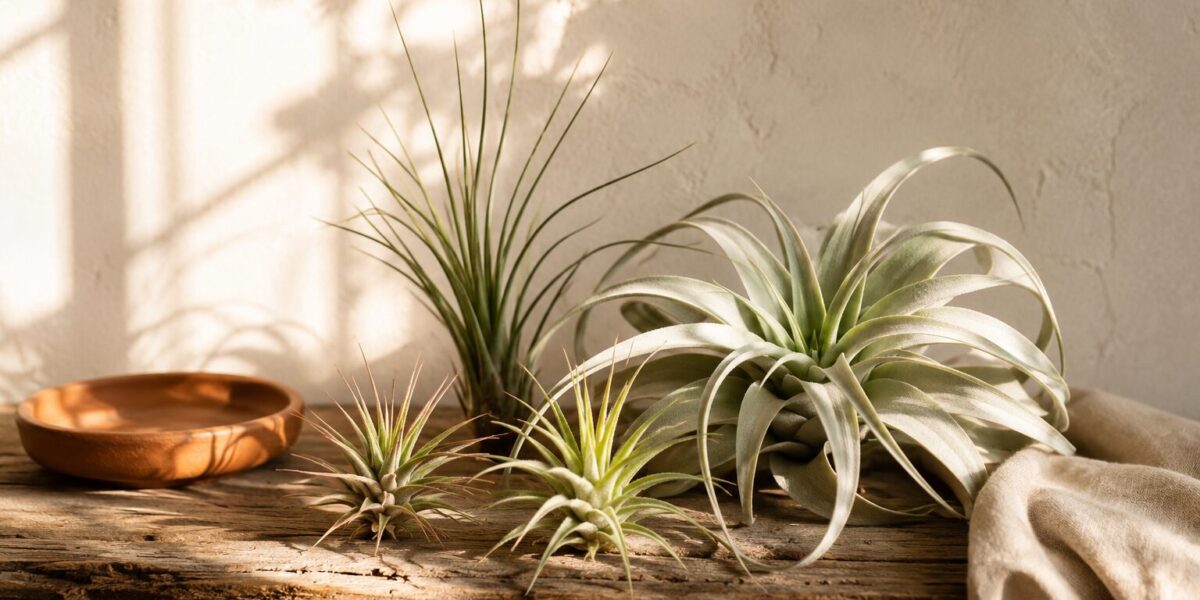
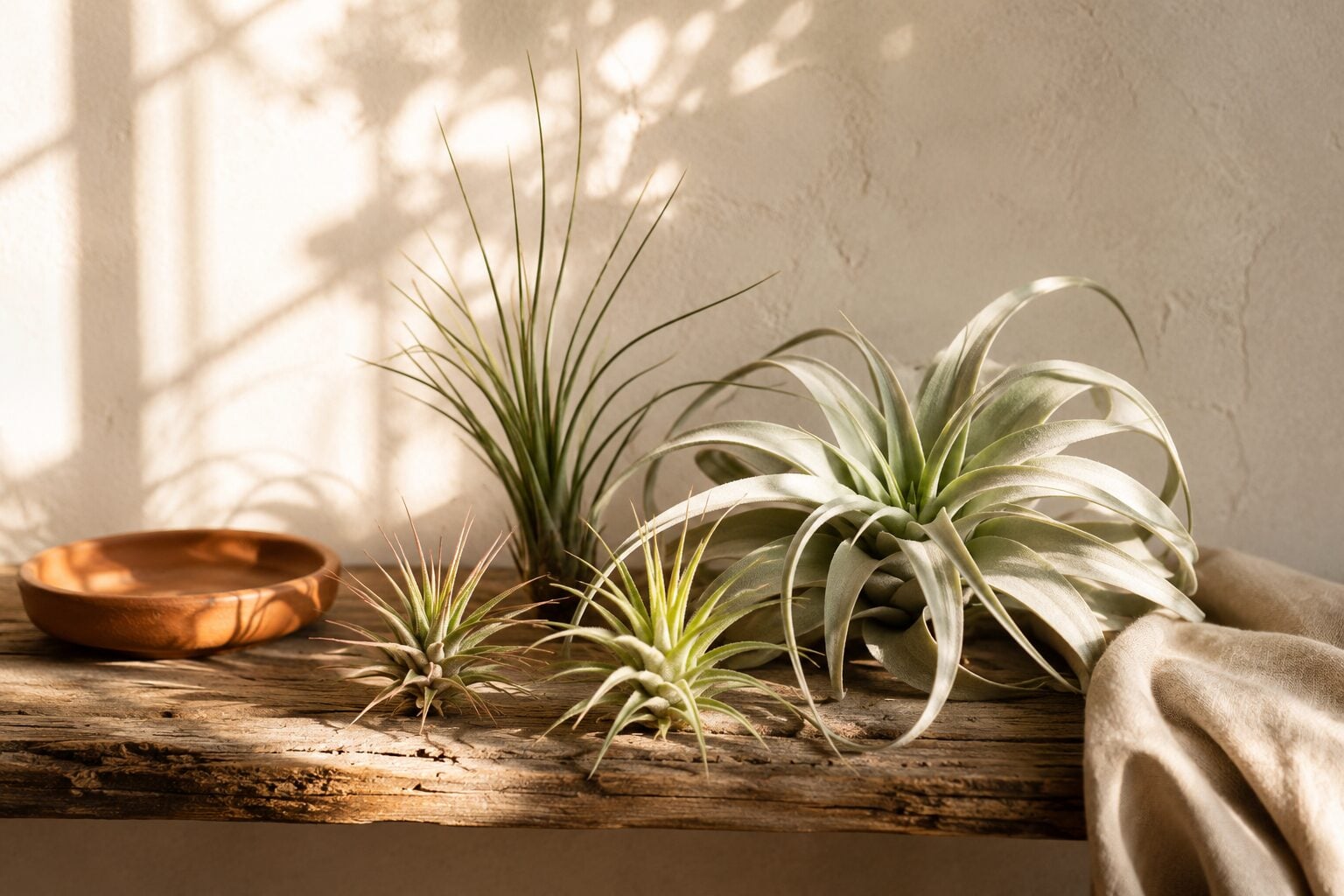
When people say “air plant” they almost always mean Tillandsia — the largest genus in the bromeliad family, with roughly 660 species according to Penn State Extension. That makes them cousins of the pineapple and of the Spanish moss draping trees across the American South.
Air plants are epiphytes: in the wild they perch on tree branches and rock faces, using their wiry roots purely as anchors. Horticulturists at the University of Florida’s Gardening Solutions program are quick to note that epiphytes are not parasites — unlike mistletoe, they take nothing from the tree that hosts them. Every drop of water and every nutrient comes from the atmosphere, absorbed directly through the leaves.
The magic happens in the trichomes — the fuzzy silver coating on the leaves. Under magnification these are cup-shaped modified scales that trap moisture and dust and pull them into the plant. The fuzzier the plant, the more drought-hardy it is. Roots are optional equipment; some growers trim them off entirely for display, and the plant doesn’t mind.
One buying note that matters: Clemson’s Home & Garden Information Center warns that wild populations are endangered by over-collection in much of their native range, which spans the southern US through Central and South America. Buy nursery-propagated plants only — a good tillandsia variety pack from a reputable grower is inexpensive and guilt-free, and Etsy’s specialist air plant shops are another excellent source for unusual species and handmade holders.
Mesic vs. Xeric: Know Which Type You Have
Air plants split into two broad camps, and knowing yours answers half your care questions before they’re asked.
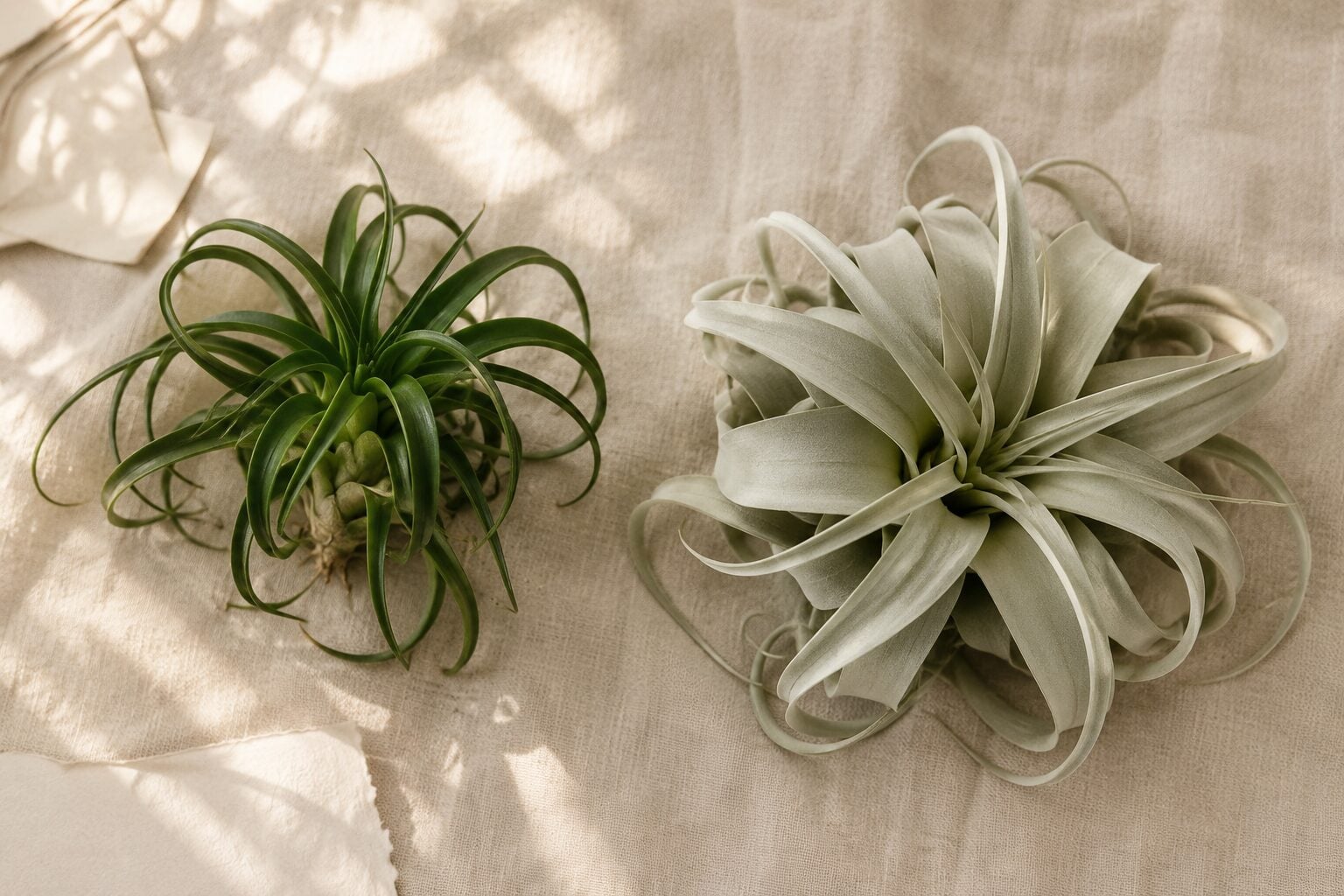
Mesic species come from humid places — think South American rainforest canopy. Penn State describes their leaves as slightly cupped, deeper green, and smoother, with smaller trichomes. They like more frequent water and gentler, filtered light. Common examples: T. bulbosa, T. butzii, and the beloved sky plant T. ionantha (which sits between the camps).
Xeric species are desert and rock dwellers. Their leaves are wider, gray, and heavily felted with trichomes — that silvery fuzz is drought armor that catches morning dew and holds it. They tolerate brighter light and longer dry spells. The magnificent curling T. xerographica is the classic xeric showpiece.
Rule of thumb: the greener and smoother the plant, the more water and less sun it wants. The grayer and fuzzier, the more sun and less water.
Light: Bright, Indirect, Always
Tillandsias want bright light without direct scorching sun. UF/IFAS recommends keeping indoor plants near a south, east, or west window; Penn State’s Master Gardeners favor east or west exposures. A few feet back from a hot south window works too — if the leaves feel warm to the touch, they’re too close.
Air plants also summer outdoors beautifully. Hang them under a tree or on a shaded porch where they get bright shade and rain, and they’ll reward you with their best growth of the year. Just keep them out of direct afternoon sun, which Penn State notes can scorch them quickly outside, and bring them in before nights dip below 50°F.
Low-light corners and windowless bathrooms, despite the marketing, are slow death for tillandsias. If you can’t read a book comfortably by daylight in that spot, an air plant won’t thrive there either. A small full-spectrum LED grow light on a timer solves dim rooms neatly.
Watering: The Heart of the Care of Airplants
Watering is where air plants live or die, so let’s be precise. University extensions endorse three methods, and you can mix them to suit your schedule.
The weekly soak
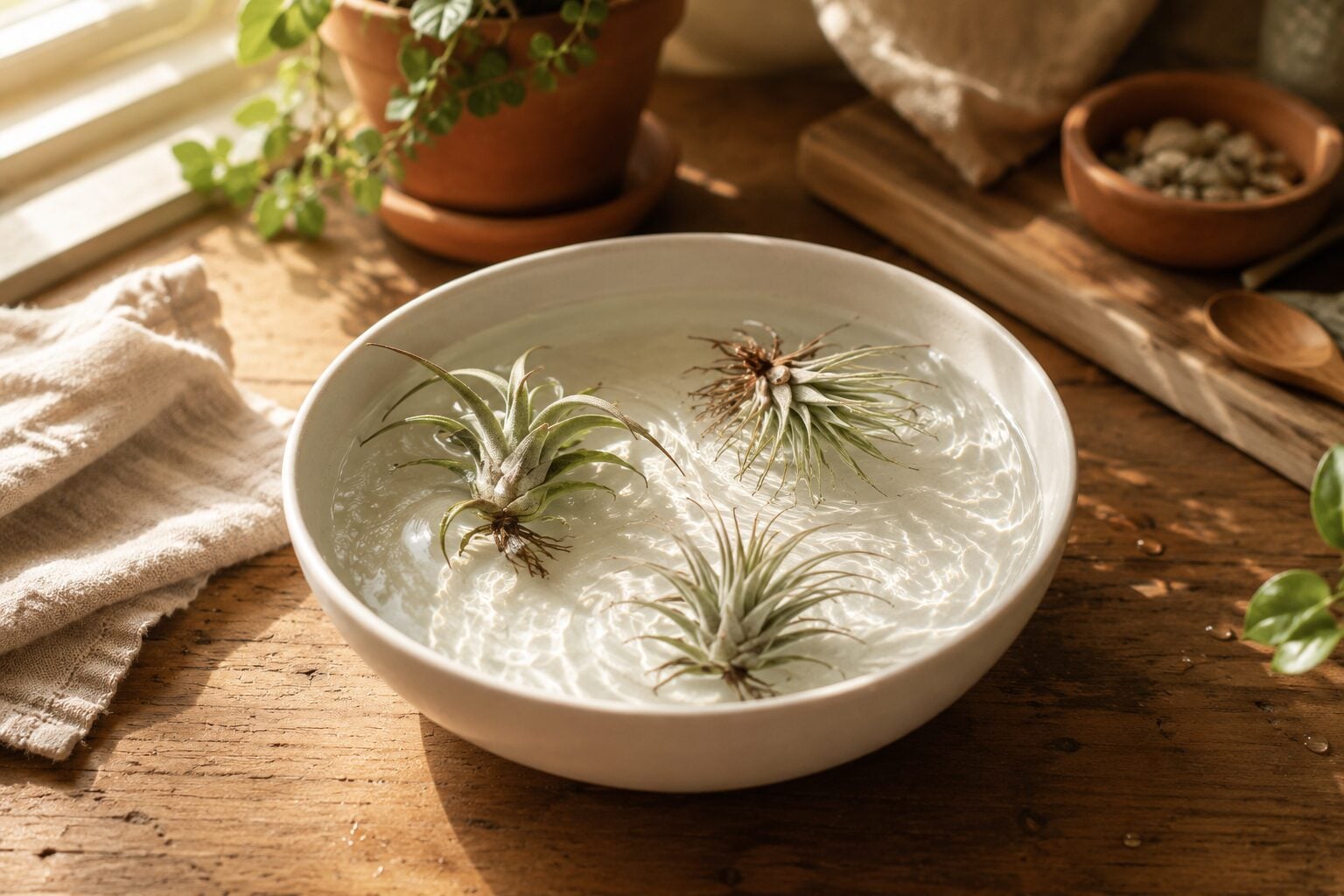
The most reliable method for most homes. Clemson recommends submerging plants for 20–30 minutes once a week; Penn State reports success with weekly soaks from 20 minutes up to an hour. Fill a bowl with room-temperature water, float the plants (upside down if they’re blooming — never soak a flower), then lift them out and get them dry, which we’ll cover in a moment because it’s the step everyone skips.
The twice-weekly rinse
Penn State’s Master Gardeners call rinsing possibly the simplest technique: gather your plants twice a week, hold them under a gently running tap of tepid water, and rinse thoroughly. It takes two minutes and doubles as a dust bath — helpful, since dusty trichomes absorb poorly.
The frequent mist
Misting is the least thorough method but the most fun, and in a dry centrally-heated home Penn State suggests it may be needed every other day. UF/IFAS frames it as the primary method with a heavier hand: once a week, mist to the point that water runs off the leaves. A continuous-mist spray bottle makes drenching a shelf of plants painless. Misting works best as a between-soaks supplement rather than the whole program.
The drying step everyone skips
Here is the single most important sentence in this guide: after watering, turn each plant upside down and let it drain until fully dry. Water trapped in the leaf bases is how air plants rot, and Clemson specifically advises shaking plants gently and drying them inverted to prevent it. Penn State adds that plants destined for a terrarium or globe need at least four hours of open-air drying before they go back in. I stand mine upside down on a linen towel; they look like a row of tiny green fireworks and dry perfectly.
Reading a thirsty plant
Your plants tell you when the schedule is off. Curled or rolled leaves mean dehydration, per UF/IFAS. Clemson adds dull color and browning tips to the thirsty list. A soft, darkening base means the opposite problem — rot from trapped water — and that plant needs immediate drying, ruthless removal of mushy leaves, and better drainage habits going forward. Use rainwater or ordinary tap water; avoid water from a softener, whose salts coat the trichomes the plant drinks through.
Air Circulation and Temperature
The “air” in air plant isn’t decorative. Clemson lists good air circulation as a core requirement — moving air dries the plants between waterings and prevents the fungal problems that follow dampness. An open shelf beats a sealed jar; if you love the look of glass, choose open hanging glass globes with wide mouths rather than closed terrariums, and remember the four-hour drying rule before plants go back inside.
Temperature-wise, tillandsias like what you like. Penn State pegs the comfort zone at 65–90°F by day with nights above 55°F. Keep them away from air conditioners and heating vents, which desiccate them with surprising speed, and away from freezing windowsills in winter.
Feeding: Optional, but Worth It
Air plants survive without fertilizer — the atmosphere genuinely does feed them — but they grow faster, color better, and bloom more readily with a light hand of feeding. Clemson’s protocol is simple: once a month, add a liquid bromeliad fertilizer diluted to one-quarter the label rate to your normal watering, then drain the plants well as usual. Penn State notes an orchid fertilizer works equally well, and that a formula higher in nitrogen pushes leafy growth.
Quarter strength is the ceiling, not the floor. Trichomes absorb with terrifying efficiency, and full-strength fertilizer burns air plants outright. When in doubt, dilute further — a starved air plant recovers; a burned one usually doesn’t.
Blooms, Pups, and the Circle of Life
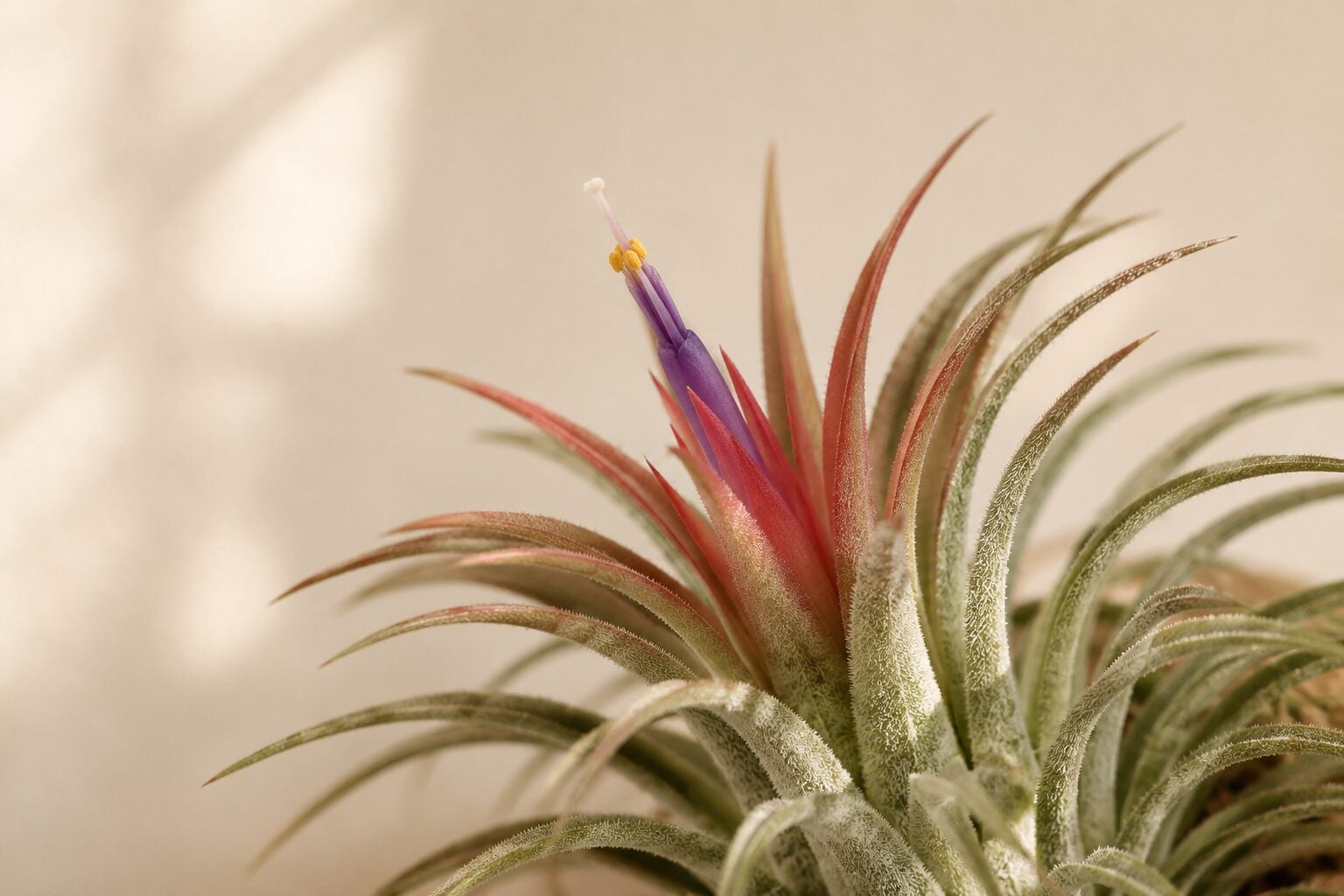
Every air plant blooms exactly once. Penn State’s growers describe flowers in corals, pinks, and purples — some species, like T. crocata, even carry a jasmine-like fragrance. Indoors, UF/IFAS says blooms tend to arrive in late winter or mid-summer and can last anywhere from days to months. Many species blush before flowering, their center leaves flushing red as a signal that something wonderful is coming.
Here’s the bittersweet part: after flowering, the mother plant slowly dies. But she doesn’t leave quietly — she spends her final months producing pups, tiny offsets sprouting from her base. Penn State’s rule: once a pup reaches one-third the size of its mother, you can gently twist it free to grow on its own, or leave the family together to form a clump. Clumps grown over years become spectacular tangled globes of plants that bloom in waves.
Want to nudge a stubborn plant toward blooming? Give it the maximum tolerable light, consistent water, and monthly feeding — the same trio Penn State recommends. Patience is the fourth ingredient; some species take years to reach blooming size, and that’s normal.
Displaying Air Plants (Without Killing Them)
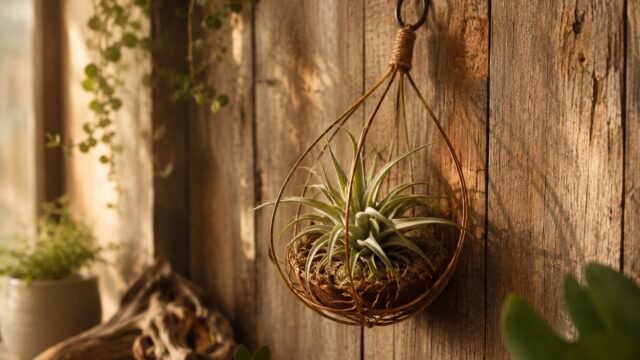
Freedom from soil makes air plants the most decoratable plants on earth, and the extensions agree on the one rule: whatever you mount them on must not hold water. Bark, cork rounds, seashells, stones, and driftwood mounting pieces are all classic. UF/IFAS suggests attaching plants with a dab of liquid nails or hot glue (let the glue cool slightly first) or simply tying them on with wire; fishing line makes them float in midair.
A few display ideas that have worked on my own shelves: a row of ionanthas marching along a strip of weathered fence board; one giant xerographica alone in a shallow terracotta saucer, treated as sculpture; and small clumps tucked among the shells and stones of an open terrarium — if you’re building one, our terrarium plants guide covers companions and kits worth buying. Etsy sellers make wonderful hand-thrown ceramic and macramé holders if you want something no big-box store carries.
Skip anything that cups the base of the plant in standing moisture — deep egg-cup holders, moss-stuffed pockets, sealed jars. They’re rot machines with good marketing.
Are Air Plants Safe for Pets?
Good news for the fur-covered members of the household: the ASPCA’s toxic and non-toxic plant list classifies Tillandsia as non-toxic to both cats and dogs. As with any plant, a nibbled leaf can still produce mild stomach upset, and dangling air plants are essentially cat toys with roots — so hang them high, and watch the hardware. Wire, glue, and small pebbles from displays are physical hazards even when the plant itself is harmless. For a full room-by-room rundown of pet-friendly greenery, see our guide to cat safe plants.
Troubleshooting the Care of Airplants
| Symptom | Likely cause | Fix |
|---|---|---|
| Leaves curling or rolling inward | Dehydration | Soak 30–60 minutes, then tighten the watering schedule |
| Dull color, crispy brown tips | Dry air or underwatering | Add a midweek rinse or mist; move away from vents |
| Brown, soft, darkening base; leaves shedding from center | Rot from trapped water | Dry inverted immediately, remove mushy leaves, always drain upside down after watering |
| Faded, bleached, or scorched patches | Direct sun | Move to bright indirect light |
| No growth, no bloom for years | Too little light or food | Brighter spot; monthly quarter-strength bromeliad feed |
| Plant falls apart at the base | Advanced rot — usually fatal | Salvage any healthy pups; adjust drying habits for the rest of the collection |
A Simple Weekly Routine
Pulling it all together, here is the whole program: once a week, soak your plants for 20–30 minutes in tepid water. Shake them out and dry them upside down for a few hours in moving air. Return them to bright, indirect light somewhere between 65 and 90°F. Once a month, add quarter-strength bromeliad fertilizer to the soak. Watch for curling leaves (thirst) and soft bases (rot), and adjust. That’s it — the entire care of airplants fits in one paragraph, which is precisely why they’ve earned a place in nearly every room of my house.
If tillandsias are your gateway into indoor growing, welcome — it gets worse (better) from here. Our complete houseplant care guide covers the soil-dwelling classics when you’re ready to expand, and the air plants section has species profiles and display projects to keep your collection growing.
Five Beginner-Proof Species to Start With
Tillandsia ionantha — the sky plant. Two inches of dense green leaves that blush fiery red at bloom time. Cheap, everywhere, nearly indestructible, and quick to pup into handsome clumps. If you buy one air plant, buy this one.
Tillandsia xerographica — the queen. A slow-growing silver rosette of wide, curling ribbon leaves that can reach the size of a dinner plate. Fully xeric: give it your brightest spot and err dry, with a shorter soak and a thorough upside-down drain — its cupped leaves trap water more readily than most.
Tillandsia caput-medusae — Medusa’s head. Snaky leaves rising from a bulbous base, more sculpture than plant. The hollow base makes inverted drying non-negotiable, but otherwise it’s as tough as they come.
Tillandsia juncea — the grassy one. A tall, reedy fountain of stiff leaves that adds height to any grouping and tolerates a wide range of light.
Tillandsia stricta — the reliable bloomer. Soft green rosettes that produce a show-stopping pink-and-purple flower spike sooner than most species, often within a year or two of reaching maturity. Deeply satisfying for impatient growers.
All five follow the same routine from this guide — the differences are a notch more or less water and light, in the mesic-to-xeric direction their leaves will tell you about at a glance.
Air Plant FAQ
How long do air plants live?
A single plant lives a few years — it grows, blooms once, pups, and fades. But a clump is effectively immortal: each generation of pups matures and blooms in turn, so a well-tended cluster outlives its original plant by decades. Think of the plant you bought as the founder of a lineage rather than an individual.
Can air plants live in a bathroom?
Only a bright one. The humidity of a well-lit bathroom is genuinely helpful, but steam is no substitute for light — a dim windowless bath will slowly starve the plant no matter how tropical it feels. Bright window plus shower steam, however, is air plant paradise.
Do air plants need soil, ever?
Never — and soil is actively harmful. Potting an air plant traps moisture against the base and rots it. If you want it upright in a pot for looks, rest it on dry pebbles or seashells where air can reach every leaf.
Why is my air plant turning red at the center?
Celebrate — that blush means a bloom is coming. Many species flush red or pink at the crown as flowering approaches. Keep the light bright and the routine steady, and don’t soak the flower itself once it opens; rinse around it instead.
Final Thoughts
The care of airplants asks almost nothing of you: light without scorch, a weekly drink with a proper drying-off, moving air, and an occasional feed. In exchange you get living sculpture that grows on driftwood, blooms in improbable colors, and hands you a new generation of plants when it goes. Master the upside-down drying habit — the one step that separates thriving collections from mushy disappointments — and there is no easier plant in the house.
The air plant starter kit
- BeautifyBeauties Continuous Spray Bottle for Hair, 10.1 oz Mister Spray — continuous-mist spray bottle
- Air Plant Variety Pack – 6 Live Tillandsia Plants (Caput Medusae,… — tillandsia variety pack
- 16oz Bromeliad Fertilizer – Makes 24 Gallons of Liquid Bromeliad Plant… — liquid bromeliad fertilizer
- Mkono 3 Pack Air Plant Holder, Glass Hanging Planter Terrarium Globe… — hanging glass globes
- Venus Flytrap Desktop Pot with LED Grow Light Home Office Desk Decor — LED grow light
Opens Amazon’s cart confirmation page — you review the list and prices there, and nothing is added until you approve it. Prefer to pick and choose? Every item above links to its own product page.
Leave a Reply