
Humble Acres is reader-supported. When you buy through links on our site, we may earn an affiliate commission at no extra cost to you — we only recommend products we’d use ourselves. See our affiliate disclosure.
The houseplant care kit
- Briignite Grow Light Bulbs, LED Grow Light Bulb A19 Bulb, Full Spectrum — LED full-spectrum grow light
- Miracle-Gro Organic Indoor Potting Mix, 16 qt. — indoor potting mix
- Garden Tools Set, 3 Pack Heavy Duty Gardening Tools Set Include Garden… — indoor gardening hand tools
- 1.8L Watering Can, Small Watering Can for Indoor Plants with Long Spout — indoor watering can
- Indoor Plant Food, Complete Liquid Fertilizer for Houseplants, 8oz — balanced liquid houseplant fertilizer
Opens Amazon’s cart confirmation page — you review the list and prices there, and nothing is added until you approve it. Prefer to pick and choose? Every item above links to its own product page.
If you have ever brought home a leafy new plant only to watch it sulk, drop leaves, and quietly give up on the windowsill, you are in very good company. The truth almost nobody tells beginners is this: most indoor plants die from small, fixable mistakes, not from bad luck or a “brown thumb.” Good houseplant care is really just a handful of habits done consistently, and once they click, keeping a home full of green becomes genuinely easy.
This guide walks through the seven essentials that decide whether a plant thrives or struggles: light, water, soil, pots, feeding, repotting, and pest prevention. Everything here is grounded in guidance from university extension horticulturists, translated into the practical, do-this-now language a real grower uses on a Tuesday evening. By the end you will be able to look at any plant, read its needs, and give it a home where it can actually flourish. Master these fundamentals of houseplant care and every plant you bring home afterward gets easier.
Start with light: the one thing you cannot fake
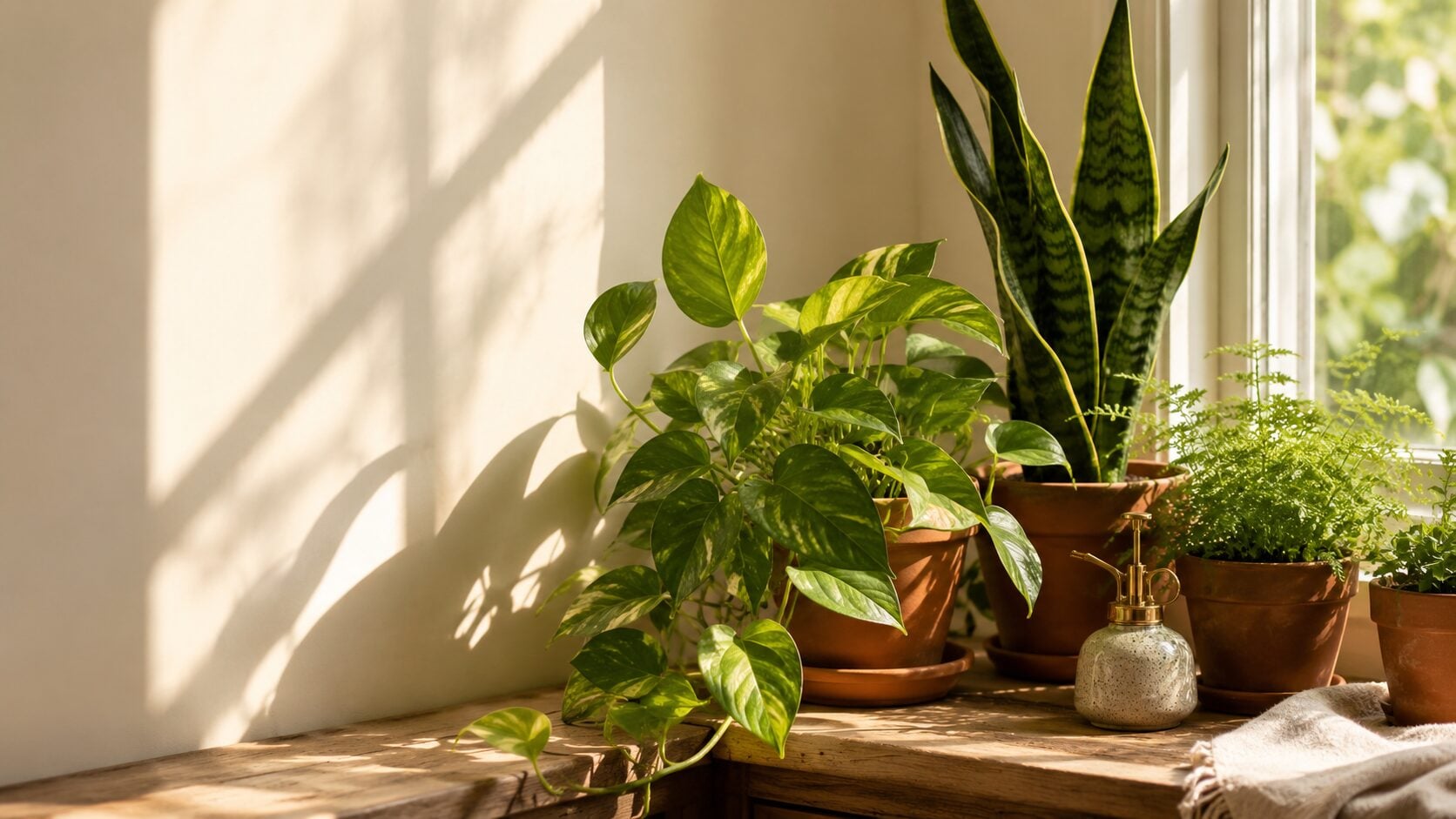
Light is the single biggest factor in whether a plant lives, and it is the one beginners most often get wrong. Plants make their own food from light, so a plant in the wrong spot is slowly starving no matter how attentively you water it. According to Wisconsin Horticulture Extension, too little light causes faded leaves, stunted growth, and leggy stems reaching toward the window, while too much light shows up as wilting, scorched patches, and a washed-out look.
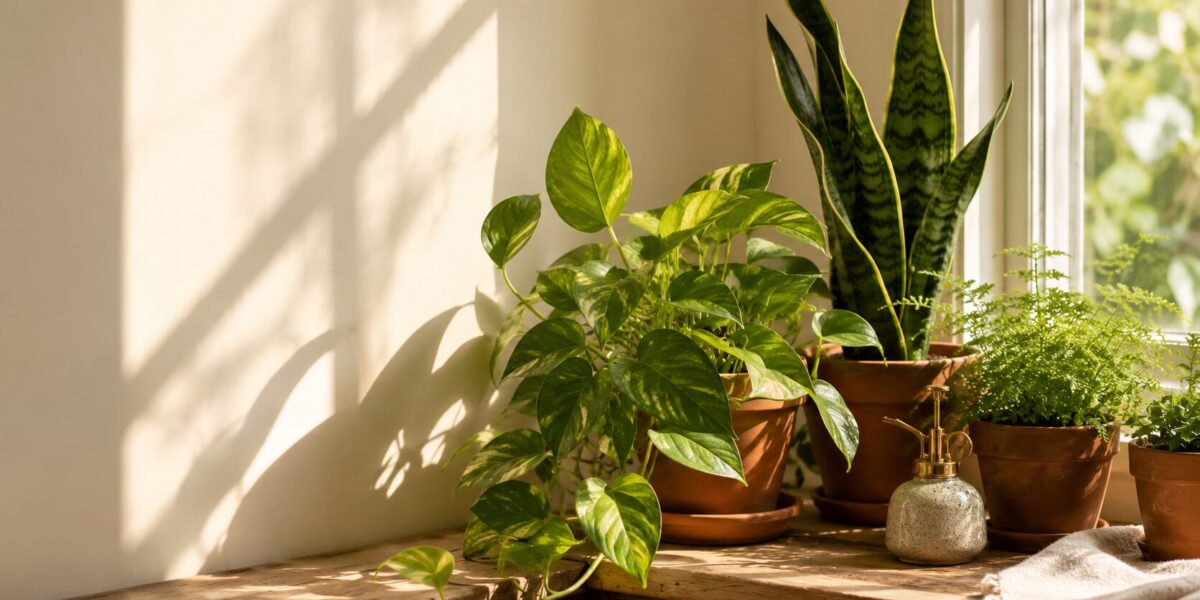
Most common houseplants want what growers call bright, indirect light — roughly the brightness found within four to eight feet of a bright south-facing window. A few rules of thumb make placement simple. South and west windows are the brightest; east windows give gentle morning light; north windows are the dimmest and suit only low-light survivors. Before you buy a plant, notice which way your windows face and how many hours of light each spot actually gets.
If your home is short on natural light, a grow light closes the gap beautifully. A simple LED full-spectrum grow light placed about twelve inches above the foliage and run for roughly sixteen hours a day will keep most foliage plants happy through a dark winter. This is a small purchase that quietly rescues more struggling plants than almost anything else.
Reading your plant’s light signals
Your plant will tell you when the light is wrong if you learn its language. New growth that is pale, small, and widely spaced along a long stem means the plant is stretching for more light — move it brighter. Crispy brown or bleached patches on the leaves facing the window mean the light is too intense — pull it back a foot or add a sheer curtain. Rotating a plant a quarter turn each week keeps it growing evenly instead of leaning. These little reads become second nature within a season and are the backbone of confident houseplant care.
Watering without killing: the finger test
Here is the statistic that changes everything: improper watering is the number one cause of houseplant death, and far more plants are drowned than droughted. The fix is refreshingly low-tech. As the University of Maryland and Wisconsin extension services both recommend, stop watering on a fixed schedule and start watering when the plant actually needs it.
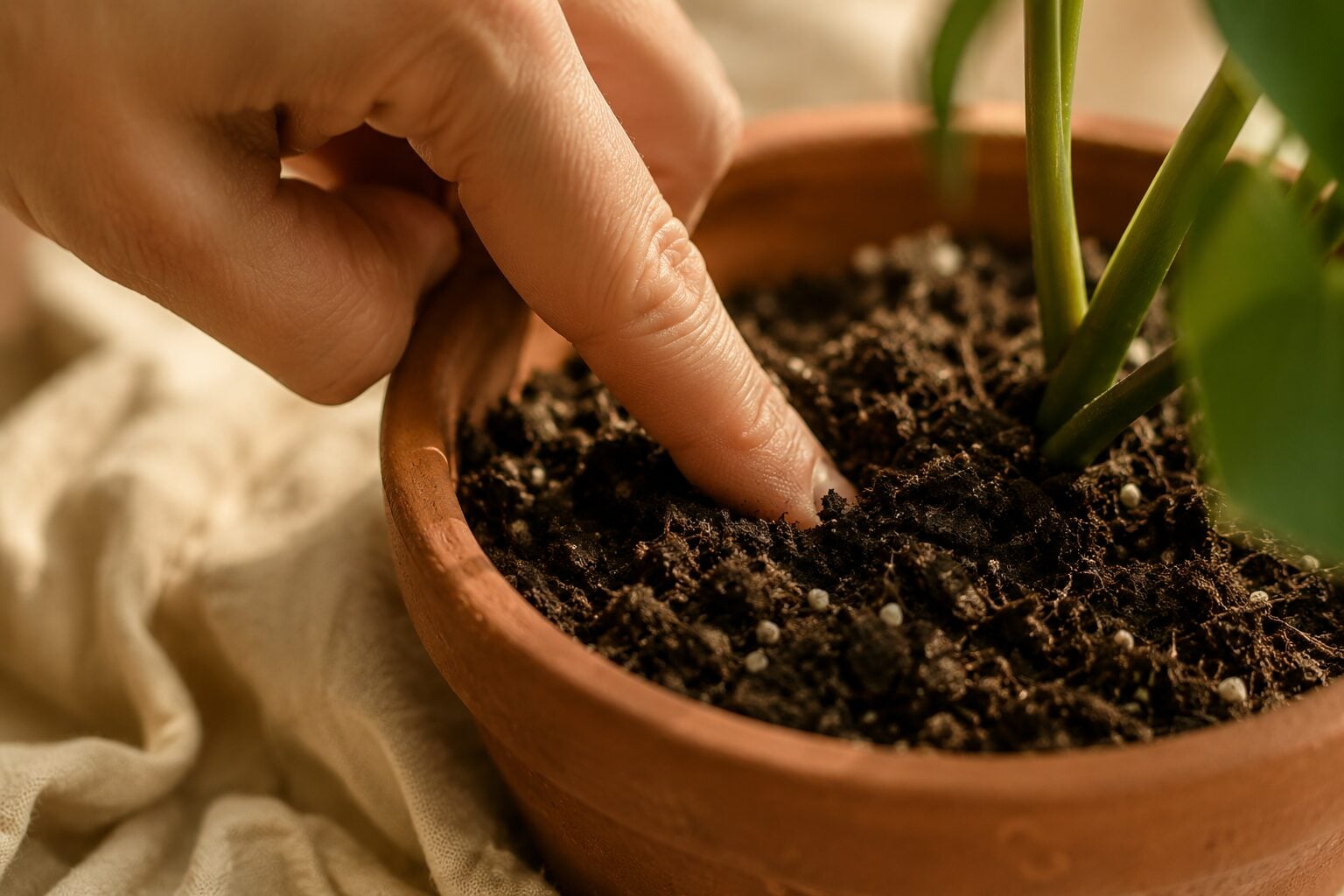
The finger test is your whole method. Push a finger one to two inches into the soil. If it comes out with damp soil clinging to it, wait. If it comes out dry, it is time to water. Most foliage plants like to dry out slightly between drinks; succulents and cacti want to dry out completely. That single check, done before every watering, prevents the slow suffocation that overwatering causes.
When you do water, water thoroughly. Pour until water runs freely from the drainage holes, let the pot sit for ten to twenty minutes, then tip out whatever has collected in the saucer. A plant should never stand in a puddle, because waterlogged soil starves roots of oxygen and invites root rot. A long-spouted indoor watering can makes it easy to deliver water straight to the soil without splashing the leaves.
One overlooked detail: tap water. Chlorine and fluoride in municipal water can cause brown, crispy leaf tips on sensitive plants. Let a filled watering can sit out for twenty-four hours before using it, and those chemicals largely dissipate. It is a free habit that spares you a lot of unexplained tip burn.
Soil and pots: drainage is everything
Two beginner mistakes quietly undo good watering: the wrong soil and the wrong pot. Skip the bag of dense garden soil — extension horticulturists warn it compacts, holds too much water, and can carry the very organisms that cause root rot. Instead reach for a light, soilless potting mix built from ingredients like peat or coco coir, perlite, vermiculite, and bark, which hold moisture while still letting air reach the roots.
A quality indoor potting mix covers most leafy houseplants, while succulents and cacti need a fast-draining cactus mix, and orchids want a chunky bark blend. Matching the mix to the plant is a five-minute decision that pays off for years.
The pot matters just as much as what fills it. The non-negotiable rule is drainage holes — without them, water pools at the bottom and roots rot no matter how careful you are. Terracotta pots breathe and wick away excess moisture, making them forgiving for anyone prone to overwatering; glazed and plastic pots hold moisture longer, which suits thirsty plants. Whatever you choose, resist the urge to size up dramatically. A pot that is far too large holds a reservoir of wet soil around the roots and creates exactly the soggy conditions that cause rot.
Feeding your plants the right way
Potted plants live in a small, closed world of soil, so the nutrients wash out over time and need replacing. But feeding is where enthusiasm backfires — more fertilizer is not more love. Wisconsin Extension advises a general, balanced houseplant fertilizer such as a 20-20-20 formula, applied only during the active growing season, roughly spring through fall, about once every one to two months.
In winter, when most plants rest, stop feeding almost entirely; pushing fertilizer into a dormant plant simply builds up salts that can scorch the roots and burn leaf edges. A gentle balanced liquid houseplant fertilizer diluted to half strength is the safest way for beginners to feed, because it is very hard to overdo. Always follow the label rate, and when in doubt, feed less rather than more.
Repotting: when and how to move up
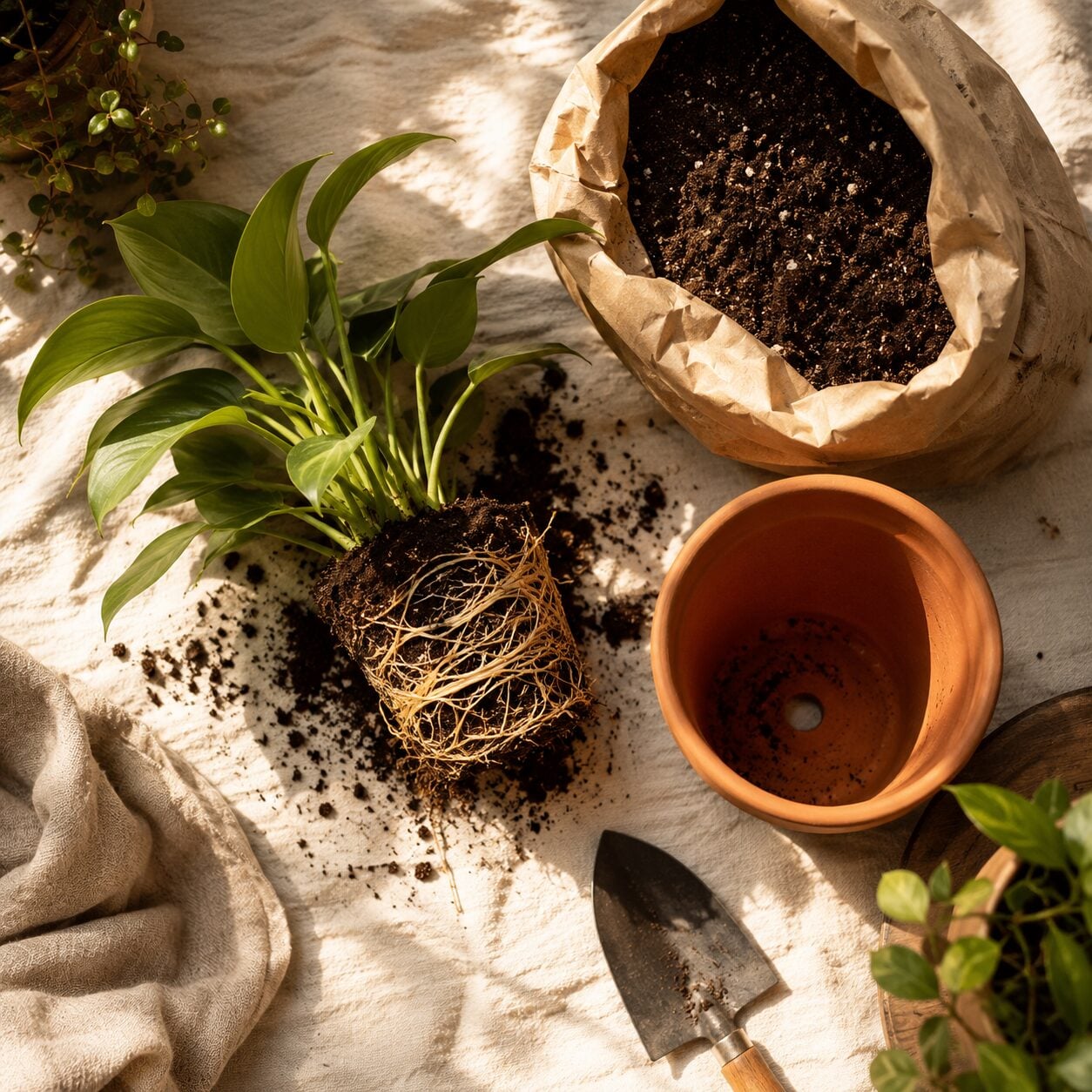
Plants outgrow their homes, and knowing when to repot keeps them from stalling. Watch for a few clear signals: roots creeping out of the drainage holes or circling the soil surface, water racing straight through the pot because roots have crowded out the soil, or growth that has simply stopped despite good care. Slide the plant out and look at the root ball — if it is a dense mat of roots with little visible soil, it is time to move up.
Repot into a container just one size larger, never several sizes up, and do it in spring so the plant can establish new roots during its strong growing months. Refresh with new potting mix, settle the plant at the same depth it grew before, firm the soil gently, and water it in. A tidy set of indoor gardening hand tools makes the job cleaner, though honest hands work just as well.
Preventing pests and common problems
The best pest control is prevention, and it starts the moment a new plant comes home. Extension horticulturists recommend quarantining any newcomer away from your other plants for one to two weeks, and inspecting the undersides of leaves and the growing tips, where trouble usually hides. Most infestations arrive on a new purchase rather than appearing out of thin air.
The usual suspects indoors are spider mites, mealybugs, and fungus gnats. Spider mites thrive in hot, dry air, so raising humidity or simply rinsing the plant under lukewarm water in the sink can knock them back. Mealybugs look like tiny tufts of cotton in leaf joints and can be dabbed away with a cotton swab. For a broader problem, a bottle of insecticidal soap or neem oil spray handles most common indoor pests without harsh chemicals.
Two problems that look like disease are usually just care mistakes. Yellowing lower leaves and mushy stems almost always mean overwatering and the beginnings of root rot — let the soil dry and reduce watering. Brown, crispy leaf edges usually mean the air is too dry or the plant is underwatered. Reading these signals early turns a crisis into a simple adjustment.
Humidity, grouping, and everyday habits
Beyond the big four of light, water, soil, and food, a few small habits separate plants that merely survive from plants that genuinely thrive. Humidity is the quiet one. Most tropical houseplants come from humid forests and struggle in the bone-dry air of a heated or air-conditioned home, which shows up as brown leaf tips and crisping edges. You do not need a greenhouse to fix this — grouping plants together raises the local humidity as they transpire, and setting pots on a shallow tray of pebbles and water lifts moisture right where it is needed. For humidity-loving plants like ferns and calatheas, a small cool-mist humidifier is the single upgrade that makes the biggest difference.
Everyday houseplant care also includes the little touches that are easy to forget. Dust settles on leaves and blocks the light a plant works so hard to capture, so wipe broad leaves with a damp cloth every few weeks. Rotate each pot a quarter turn when you water so growth stays balanced instead of leaning toward the window. And resist the urge to fuss — checking a plant daily is fine, but poking, moving, and re-watering it constantly does more harm than good. Consistency, not constant intervention, is the real heart of caring for indoor plants.
Common houseplant care mistakes to avoid
Almost every struggling plant traces back to a short list of avoidable errors, and knowing them in advance saves a lot of heartache. The biggest by far is overwatering: because a wilting, unhappy plant looks thirsty, the instinct is to add water, when just as often the roots are already drowning. Always check the soil with the finger test before reaching for the watering can — this one habit prevents the most common cause of houseplant death.
The other frequent missteps are just as fixable. Placing a plant in too little light and then blaming yourself when it grows leggy; using a pot with no drainage hole because it looked nice; potting up into a container three sizes too big and leaving the roots sitting in cold, wet soil; and fertilizing a dormant plant through the winter. Notice that none of these require expertise to avoid — they simply require knowing they exist. Good houseplant care is as much about what you don’t do as what you do, and beginners who sidestep these traps tend to succeed remarkably fast.
One last mindset shift: expect to lose a plant or two, and don’t take it personally. Even seasoned growers with plants on every windowsill have a graveyard of experiments that didn’t work out. Each one teaches you something about your particular home — its light, its dry winter air, its drafty corners — and that hard-won local knowledge is worth more than any care tag. Treat houseplant care as a practice you get better at, not a test you pass or fail, and the whole thing becomes deeply rewarding.
The best house plants for beginners
If you are just starting out, choosing forgiving plants stacks the deck in your favor. These are among the best house plants for a first-time grower, chosen because they tolerate irregular care and still look wonderful. A quick word on safety: several popular houseplants are toxic to curious pets, so the notes below flag ASPCA pet-safety status where it matters.
- Snake plant (Dracaena trifasciata): tolerates low light, needs water only when fully dry, and shrugs off neglect. Toxic to cats and dogs (saponins), per ASPCA. Our full houseplant guides go deeper on this one.
- Pothos: trails happily in bright or medium light, forgives missed waterings. Toxic to pets if chewed.
- ZZ plant: nearly indestructible, thrives in low light and dry soil. Mildly toxic to pets.
- Spider plant: fast, cheerful, and non-toxic to cats and dogs — a great pick for pet homes, per ASPCA.
- Peace lily: tolerates lower light and tells you when it is thirsty by drooping. Toxic to pets.
- Succulents: ideal for sunny sills and light-handed waterers; see our succulent care basics.
- Philodendron: easygoing trailing foliage for medium light. Toxic to pets.
Notice the pattern: the easiest plants are the ones that prefer to dry out and don’t demand bright light. Starting with two or three of these builds confidence fast, and confidence is what turns a nervous beginner into someone with plants on every windowsill.
A simple seasonal houseplant care routine
Indoor plants follow the seasons even behind glass, and matching your care to the calendar keeps them in rhythm. In spring and summer, during active growth, water a little more often, resume feeding, and tackle any repotting. This is the season to front-load your effort, because plants respond quickly and reward you with new leaves.
In fall and winter, everything slows down. Water less, since soil stays wet longer in cool, dim conditions; stop or sharply reduce fertilizer; and move plants away from cold drafts and blasting heat vents, both of which stress foliage. Wiping dust off leaves every few weeks also matters more than it sounds, because clean leaves absorb the weak winter light far better. A steady, season-aware rhythm is the quiet secret behind every thriving indoor jungle, and it is the heart of good houseplant care.
Bringing it all together
Strip away the mystique and successful houseplant care comes down to seven repeatable habits: give each plant the right light, water by feel instead of by schedule, use a draining mix in a pot with holes, feed lightly in the growing season, repot up a size in spring, quarantine and inspect for pests, and adjust with the seasons. None of it is complicated, and none of it demands a green thumb you were supposedly born without.
Pick one or two forgiving plants, put them where the light is right, and practice the finger test until it becomes second nature. Within a season you will have the instincts that make the whole thing feel effortless. For deeper dives on watering, light, and specific plants, our plant care library is here whenever you are ready to grow your collection — and your confidence — a little further.
Sources
Care guidance in this article draws on Wisconsin Horticulture Extension (UW-Madison), the University of Maryland Extension, and Oklahoma State University Extension, with pet-safety status from the ASPCA.
The houseplant care kit
- Briignite Grow Light Bulbs, LED Grow Light Bulb A19 Bulb, Full Spectrum — LED full-spectrum grow light
- Miracle-Gro Organic Indoor Potting Mix, 16 qt. — indoor potting mix
- Garden Tools Set, 3 Pack Heavy Duty Gardening Tools Set Include Garden… — indoor gardening hand tools
- 1.8L Watering Can, Small Watering Can for Indoor Plants with Long Spout — indoor watering can
- Indoor Plant Food, Complete Liquid Fertilizer for Houseplants, 8oz — balanced liquid houseplant fertilizer
Opens Amazon’s cart confirmation page — you review the list and prices there, and nothing is added until you approve it. Prefer to pick and choose? Every item above links to its own product page.

Leave a Reply