
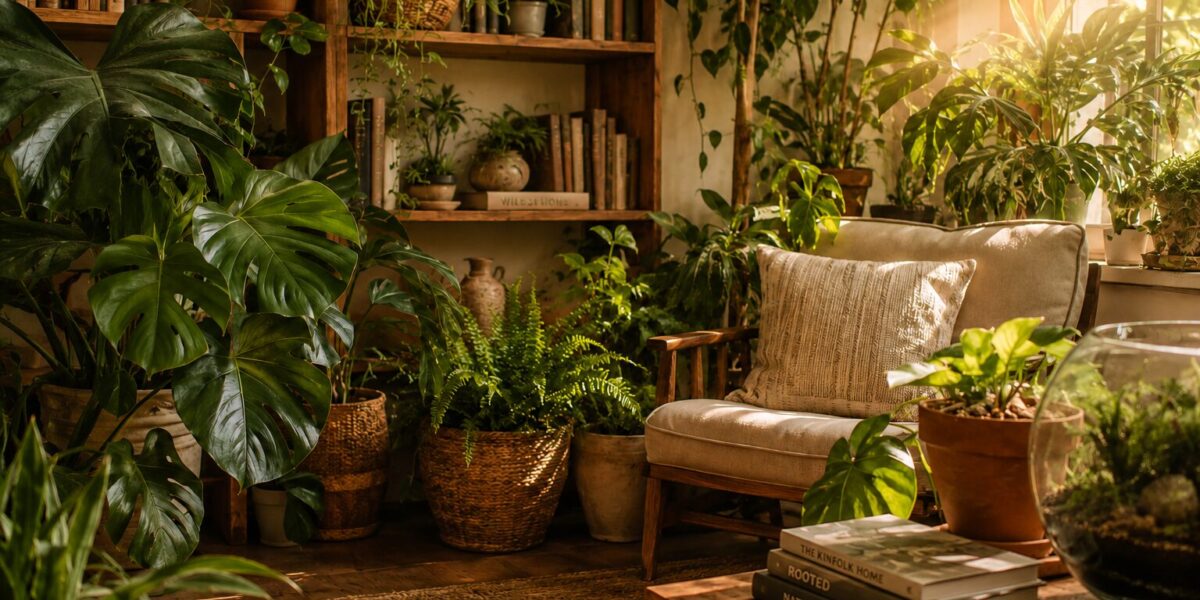
Not every room gets great light — and sometimes even shade-tolerant plants need help. Grow lights for low light plants bridge the gap: a dark corner, a north-facing room, or a windowless office can all support thriving greenery once you add the right artificial light. The trick is knowing when a plant truly needs supplemental light, and which fixtures are worth the money.
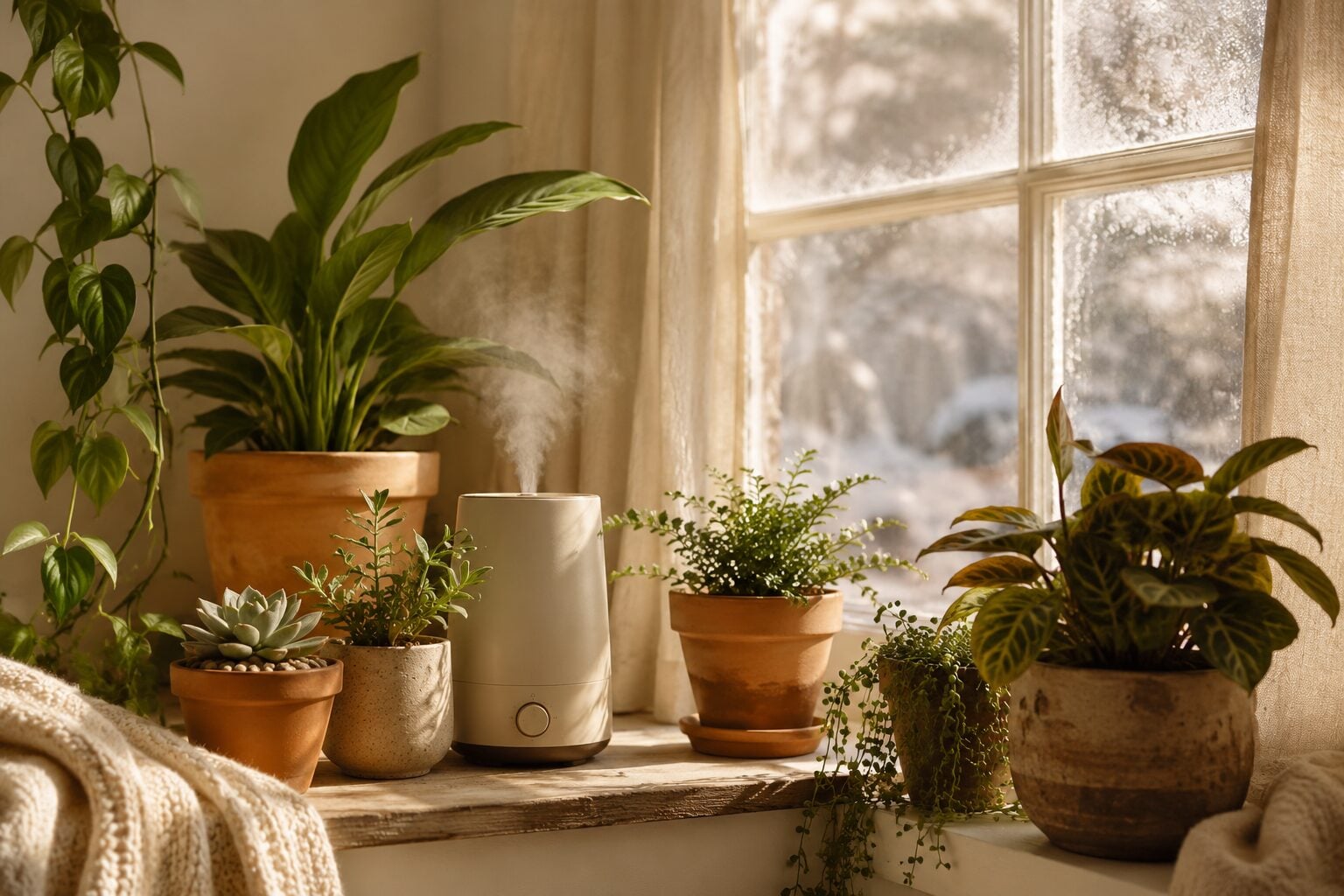
This guide covers when to reach for a grow light, how to choose one, and the low light houseplants that respond best to a little extra help — along with what “low light” really means.
Humble Acres is reader-supported. When you buy through links on our site, we may earn an affiliate commission at no extra cost to you — we only recommend products we’d use ourselves. See our affiliate disclosure.
The houseplant care kit
- Mkono Macrame Plant Hanger Indoor 35 Inch Hanging Planter Basket Ivory… — hanging planter baskets
- Fosmon Digital Timer for Electrical Outlets, Indoor 24 Hour Light… — outlet timers
- Briignite Grow Light Bulbs, LED Grow Light Bulb A19 Bulb, Full Spectrum — full-spectrum LED grow lights
- 8.6'' Mini LED Grow Light Strips, Full Spectrum 3000K, 52 LED Plant… — LED grow light strips for shelves
- Necgemlex Smart LED Grow Light Bulbs for Gooseneck Clamp Light -… — clamp grow lights with timers
Opens Amazon’s cart confirmation page — you review the list and prices there, and nothing is added until you approve it. Prefer to pick and choose? Every item above links to its own product page.
Do you actually need a grow light?
Worth settling before you buy anything: is the room genuinely too dark, or just darker than you would like? Clemson’s threshold is the one to measure against — roughly 100 foot-candles for 12 hours a day is the floor for holding a foliage plant at its current quality, and below about 200 foot-candles fertiliser does nothing at all, because the plant cannot photosynthesise enough to use it. Minnesota Extension’s field test needs no equipment: if you can comfortably read a newspaper in that spot during the day without switching on a lamp, you are in low light rather than no light.
If you land in that range, the cheaper fix is often a better-matched plant rather than hardware. We cover which species genuinely thrive there — with care stats, foot-candle guidance and ASPCA pet safety — in our guide to the best low light houseplants. If you are below it, or you want growth rather than mere survival, that is what the rest of this guide is for.
How Plants Use Light (the 60-Second Version)
Light is food. Photosynthesis converts light into the sugars a plant runs on, so the amount of usable light a leaf receives sets a hard ceiling on growth. As Michigan State University Extension puts it, a plant short on light shows it quickly: pale or yellowing leaves, long stretched stems reaching toward the nearest window, small new leaves, and little or no growth.
Two properties of a grow light matter for houseplants:
- Intensity — how much light actually lands on the leaves, which drops off sharply with distance. A light 6 inches away can deliver several times what the same light delivers at 2 feet.
- Spectrum — plants use red and blue wavelengths most heavily. “Full-spectrum” LEDs cover the whole range and render plants in natural color, which is why they’ve replaced the old purple-glow panels in most homes.
You don’t need to measure any of this precisely for low light houseplants. Pick a full-spectrum LED, start it 12–18 inches above the foliage, run it 12 or so hours a day, and adjust based on what the plant tells you over the following month.
Which plants to put under it
A grow light widens your options; it does not remove the need to choose sensibly. Shade-tolerant species respond fastest, because you are lifting them from surviving to growing rather than forcing a sun-lover to cope — pothos, ZZ plant, snake plant, peace lily, cast iron plant and Chinese evergreen all reward the extra light with visibly faster, denser growth. Our full guide to the best low light houseplants covers twelve of them with light, water, mature size and pet-safety details, and flags which ones will actually flower.
Three placement notes that matter once a light is involved. In bathrooms, choose a fixture rated for damp locations and keep the driver away from the shower. In offices and cubicles, overhead fluorescent or LED panels running twelve hours a day often already clear the 100 foot-candle floor at desk height, so a clip light is a top-up rather than the whole solution. And in homes with pets or small children, run the cord along a wall or behind furniture and favour a screw-in bulb in an existing lamp over a free-standing panel with a trailing lead — and check the plant itself, since several of the most shade-tolerant species are toxic to cats and dogs.
Choosing Grow Lights for Low Light Plants
If your space gets no natural light at all — a basement, an interior room — even the toughest low-light plants will eventually struggle. A full-spectrum LED grow light running 12–14 hours a day can supplement or replace natural light entirely. Modern grow lights are slim, energy-efficient, and fit standard light fixtures. They’ve made it possible to grow plants in rooms that would otherwise be completely off-limits.
The four main formats
- Grow bulbs (E26 screw-in): the cheapest entry point — swap one into any lamp you already own. Perfect for supplementing a single plant or a small cluster. A desk lamp aimed at a peace lily is a legitimate grow light setup.
- Clamp lights with gooseneck arms: clip onto a shelf or desk edge and aim precisely. Most include their own timers and dimmers. The best pick for one or two plants in a truly dark spot.
- LED strip or bar lights: mount under shelves to turn a bookcase into a plant display. Low-profile and nearly invisible once installed — the standard choice for plant shelves and cabinets.
- Panel lights: cover a wide area for plant collections, seed starting, or a dense corner jungle. Overkill for a single pothos, exactly right for a 3-foot cluster of pots.


Distance, duration, and timers
For low light houseplants, hang or aim the light 12–18 inches from the foliage. Closer risks bleached, scorched patches on shade-adapted leaves; much farther and the intensity drops below usefulness. Run it 12–14 hours a day — and give plants their dark period, because they need the nightly rest cycle. Leaving a grow light on 24/7 stresses most houseplants rather than helping.
The single best accessory is a cheap outlet timer. Set it once and the light runs the same schedule every day — consistency plants love and humans forget to provide.

Signs the grow light is working
Give it three to four weeks, then look for: new leaves that are full-sized instead of small, richer leaf color, shorter gaps between leaves on new stems, and — for variegated varieties — variegation returning instead of fading to green. If leaves nearest the light develop pale, washed-out patches, raise the fixture a few inches.
Care notes for plants under a grow light
- Expect to water more, not less. This catches people out. A plant that drank once a month in a dim corner is now photosynthesising and growing, so it uses water faster. Keep checking the soil two inches down rather than carrying over the old interval.
- Fertiliser starts working again. Below roughly 200 foot-candles feeding does nothing; above it, the plant can finally use what you give it. Resume a light dose through spring and summer once the light has been running a few weeks.
- Keep the leaves clean. Dust scatters the light you are now paying for. A damp cloth once a month, or a set of leaf wipes, keeps the delivered intensity where you set it.
- Rotate a quarter-turn monthly. A fixed overhead light produces the same one-sided growth a window does, just from a different angle.
- Watch for bleaching. Pale, washed-out patches on the leaves nearest the fixture mean it is too close. Raise it a few inches rather than shortening the run time.

Grow Light FAQ
Can a regular LED bulb work as a grow light?
Partially. Ordinary white LEDs emit usable wavelengths and will keep a tough plant like pothos alive if they’re close and bright. But purpose-made full-spectrum grow bulbs deliver more usable intensity per watt, and they cost only a few dollars more — for anything beyond survival mode, they’re the better buy.
Do grow lights use a lot of electricity?
Modern LED grow lights are frugal. A typical 20-watt fixture running 12 hours a day uses roughly 7 kWh a month — about a dollar on most U.S. electric bills. The old high-pressure sodium and fluorescent setups earned grow lights their power-hungry reputation; LEDs have retired it.
Will a grow light make my low light plant grow fast?
Faster, not fast. Low light species are naturally slow growers — a grow light removes the light bottleneck, but a snake plant is still a snake plant. Expect steadier, healthier growth rather than a growth spurt.
Is purple light better than white light?
No — the purple “blurple” panels simply omit the wavelengths plants use less. They work, but full-spectrum white LEDs work equally well, show your plants in true color, and don’t turn the living room into a nightclub. For homes, full-spectrum wins.
For plants that pair well in mixed displays, explore our terrarium guides and our picks for plant care essentials.
The houseplant care kit
- Mkono Macrame Plant Hanger Indoor 35 Inch Hanging Planter Basket Ivory… — hanging planter baskets
- Fosmon Digital Timer for Electrical Outlets, Indoor 24 Hour Light… — outlet timers
- Briignite Grow Light Bulbs, LED Grow Light Bulb A19 Bulb, Full Spectrum — full-spectrum LED grow lights
- 8.6'' Mini LED Grow Light Strips, Full Spectrum 3000K, 52 LED Plant… — LED grow light strips for shelves
- Necgemlex Smart LED Grow Light Bulbs for Gooseneck Clamp Light -… — clamp grow lights with timers
Opens Amazon’s cart confirmation page — you review the list and prices there, and nothing is added until you approve it. Prefer to pick and choose? Every item above links to its own product page.
Related: Best Low Light Houseplants · Related: Plant Care hub


Leave a Reply