
Humble Acres is reader-supported. When you buy through links on our site, we may earn an affiliate commission at no extra cost to you — we only recommend products we’d use ourselves. See our affiliate disclosure.
The houseplant care kit
- Jxikatx Soil Moisture Meter, Plant Water Monitor Hygrometer Sensor,… — soil moisture meter
- Fiskars 6" Steel Micro-Tip Pruning Scissors, Garden Snips for Small… — micro-tip pruning snips
- Mkono Macrame Plant Hanger Indoor 35 Inch Hanging Planter Basket Ivory… — macramé hanging planter
- GREANER 12 Inch Plant Saucer, Black Plant Plates to Catch Water,… — pebble humidity tray
- Miracle-Gro Blooming Houseplant Food, 8 fl. oz. — bloomscape
Opens Amazon’s cart confirmation page — you review the list and prices there, and nothing is added until you approve it. Prefer to pick and choose? Every item above links to its own product page.
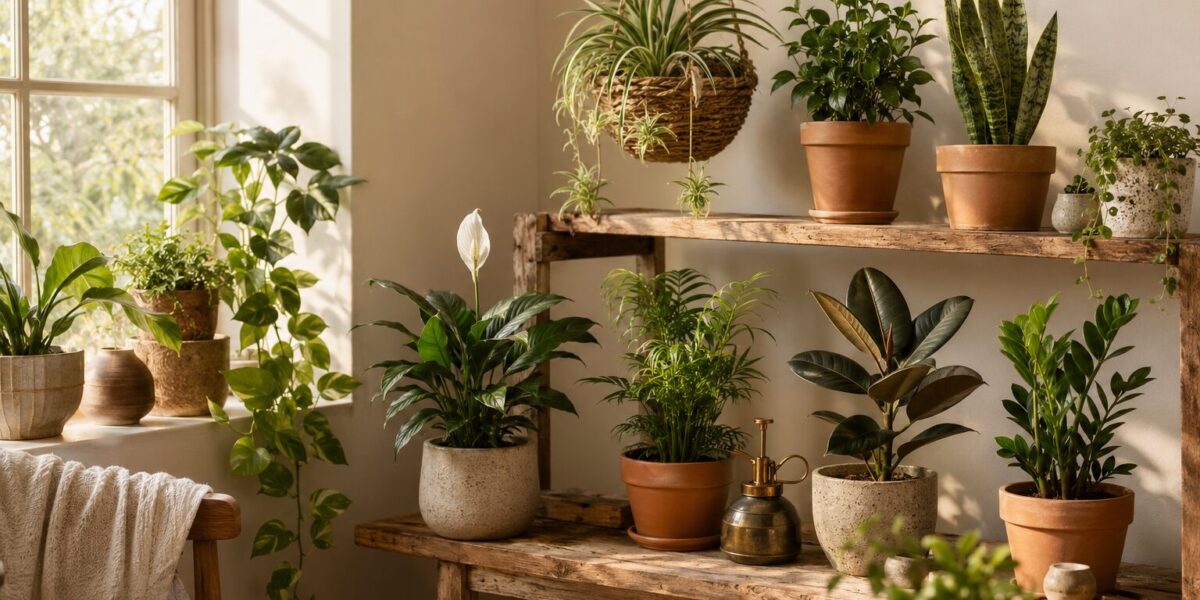
Walk into any plant shop and the choice is overwhelming — hundreds of green faces, every one of them promising to be easy. This house plant indoor guide narrows the field to ten plants that actually keep that promise: proven survivors of dim apartments, forgotten waterings, and dry winter air. Each entry tells you the light it needs, how often to water, how big it gets, and — because it matters in real homes — whether the ASPCA considers it safe around cats and dogs.
These ten are ranked roughly by forgiveness — the plants at the top will survive nearly anything short of a saucer left full of water. Pick two or three that match your light and your household, and skip the guilt of a windowsill graveyard forever.
How this house plant indoor list was chosen
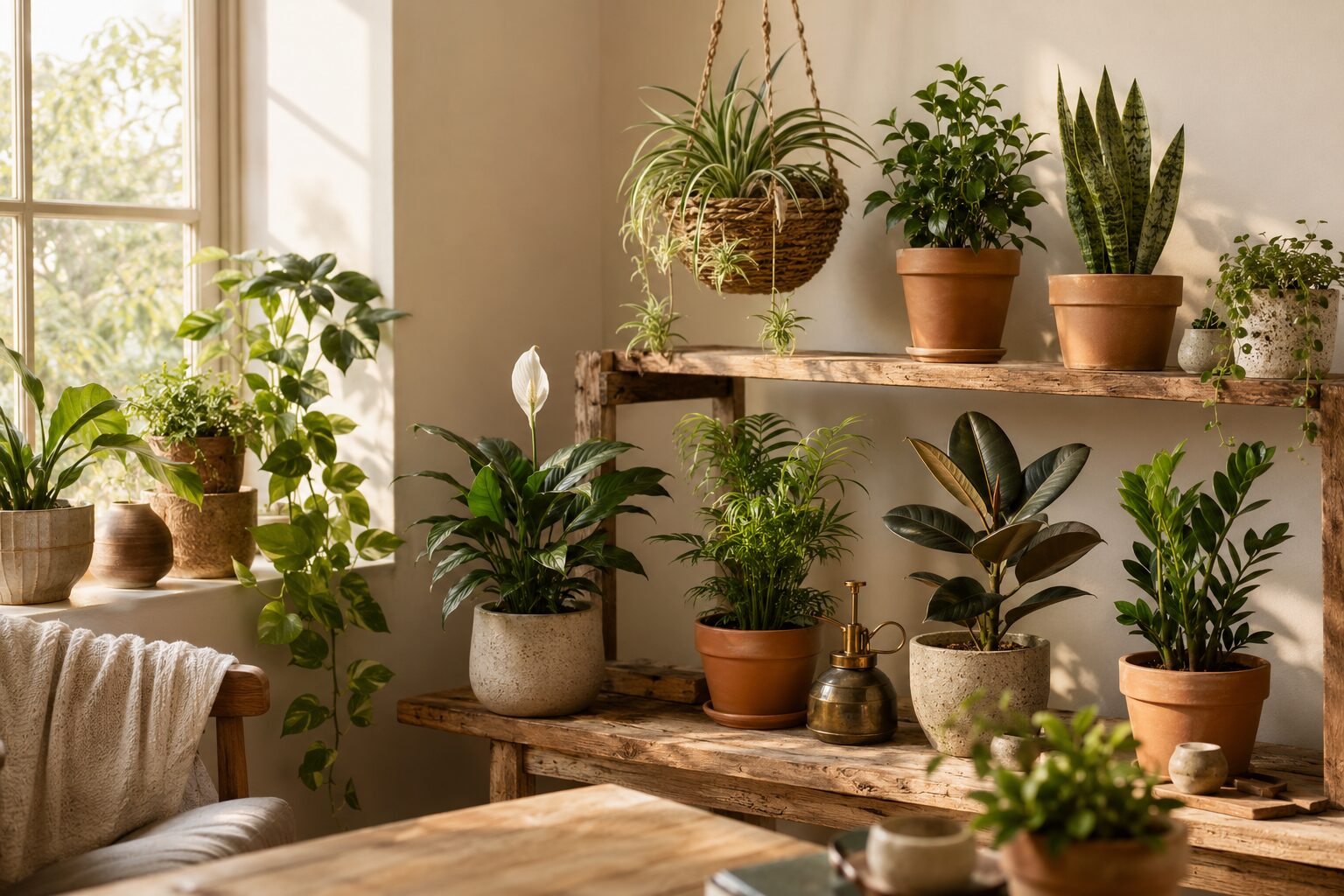
Every plant here had to clear four bars. It must tolerate ordinary indoor light — not the greenhouse glow of a conservatory. It must forgive an irregular watering hand, in at least one direction. Its care advice had to be grounded in university horticulture sources — NC State’s Extension Gardener Plant Toolbox and Clemson’s Home & Garden Information Center anchor the entries below. And its pet-safety status had to be checkable against the ASPCA’s toxic and non-toxic plant lists, because “easy” should include easy to live with.
One honest note up front: several of the toughest houseplants are mildly toxic if chewed, usually thanks to calcium oxalate crystals that cause mouth burning and drooling — painful, rarely dangerous, but worth knowing. Four entries below are fully non-toxic per the ASPCA, and they are flagged clearly. If you share your home with a determined leaf-chewer, start there.
1. Pothos (Epipremnum aureum)
If one plant defines beginner success, it is pothos. The heart-shaped leaves trail from shelves and climb moss poles, growing quickly enough that you can watch progress month to month. NC State’s Plant Toolbox rates it happy anywhere from low to bright indirect light — variegated types like ‘Golden’ and ‘Marble Queen’ hold their color better with more light, while low light simply turns them greener.
Care stats: Light: low to bright indirect. Water: let the top half of the soil dry, then soak — roughly every 1–2 weeks. Soil: standard well-drained mix. Size: vines 6–10 feet indoors, trimmed to any length. Growth: fast. Pet safety: toxic to cats and dogs (insoluble calcium oxalates) per the ASPCA — hang it or shelf it out of reach.
Cuttings root in a glass of water on the windowsill, so one plant quietly becomes five. A macramé hanging planter keeps the vines cascading safely above pet height.
2. Snake plant (Dracaena trifasciata)
The snake plant’s upright, sword-like leaves store water the way a succulent’s do, which makes it nearly impossible to kill by neglect — dim corner, month without water, dry winter air, it shrugs at all of it. Overwatering is its only real enemy. We wrote a full guide to it, and the short version is: bright indirect light is ideal, low light is tolerated, and the soil should dry out completely between drinks.
Care stats: Light: low to bright indirect, 2–6 hours of gentle sun welcome. Water: only when fully dry — every 2–8 weeks by season. Soil: cactus mix or standard mix cut with perlite. Size: 6 inches (‘Hahnii’) to 4 feet. Growth: medium. Pet safety: toxic to cats and dogs (saponins), low severity per ASPCA.
Its vertical architecture makes it the roundup’s best “design” plant for narrow spots, and it shares care logic with the drought-lovers in our succulents collection.
3. ZZ plant (Zamioculcas zamiifolia)
The ZZ plant grows from thick underground rhizomes that hoard water like little canteens, so it tolerates drought, low humidity, and the kind of light most plants would call darkness. The glossy, almost polished leaflets look freshly cleaned even when they are not. Give it any spot out of direct sun, water when the pot has gone fully dry, and it will quietly thrive for years.
Care stats: Light: low to bright indirect. Water: when fully dry, every 2–4 weeks. Soil: well-drained mix. Size: 2–3 feet tall. Growth: slow to moderate. Pet safety: toxic to cats and dogs (calcium oxalates) per ASPCA — same mouth-burning irritant as pothos.
4. Spider plant (Chlorophytum comosum) — pet-safe
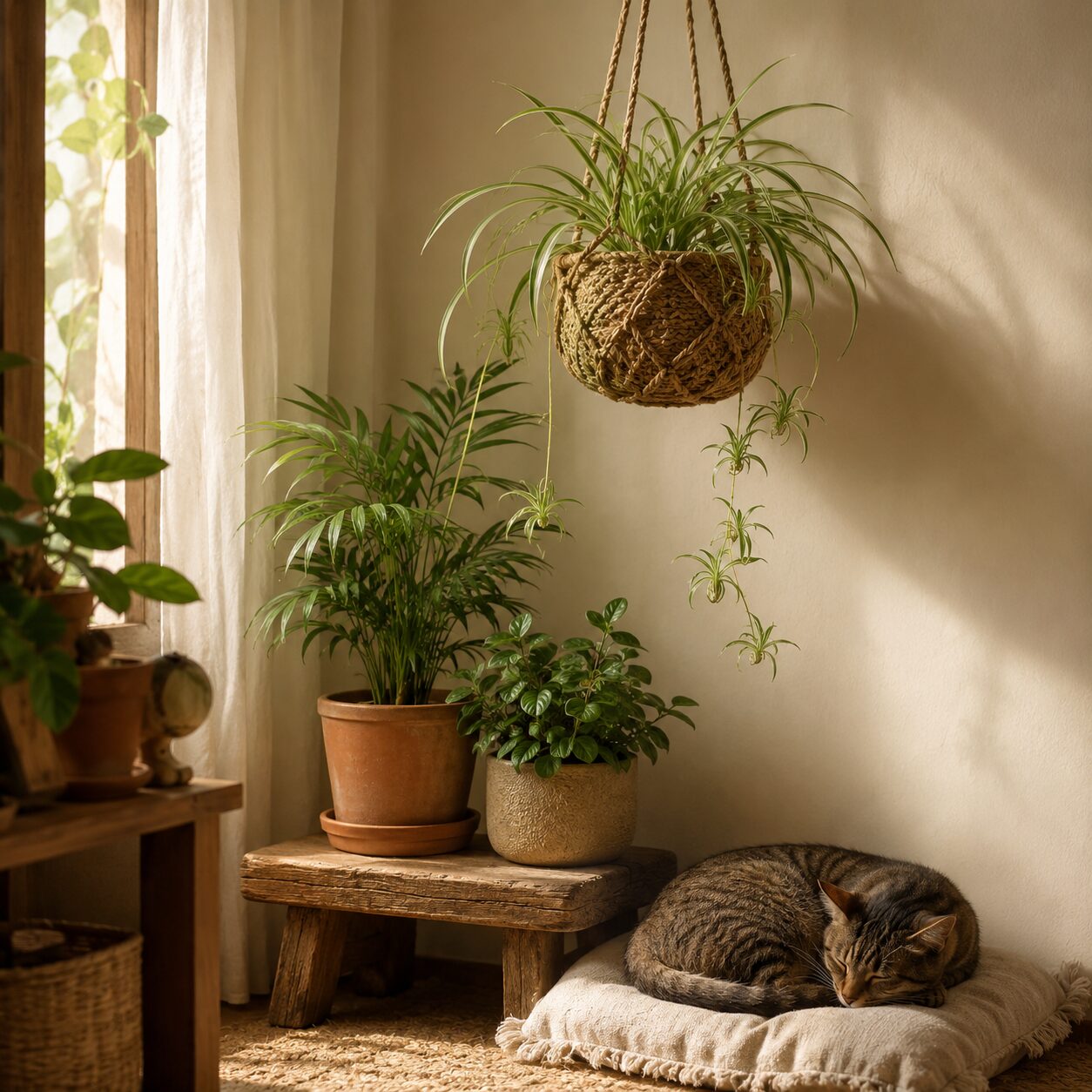
The spider plant earns its keep twice: arching striped leaves in a hanging basket, and a steady supply of baby plantlets dangling on runners like ornaments. Clemson’s factsheet recommends bright, indirect light and evenly moist soil during growth; browning leaf tips usually trace to dry air or fluoridated tap water, and letting water sit overnight before using it helps.
Care stats: Light: bright indirect; tolerates medium. Water: evenly moist spring–summer, slightly drier in winter. Soil: standard mix. Size: 12–15 inches tall, trailing to 3 feet with plantlets. Growth: fast. Pet safety: non-toxic to cats and dogs per the ASPCA — the classic safe choice.
Each plantlet roots in a small pot of moist soil while still attached to the mother — snip the cord after a few weeks and you have gifts for every friend who visits.
5. Peace lily (Spathiphyllum)
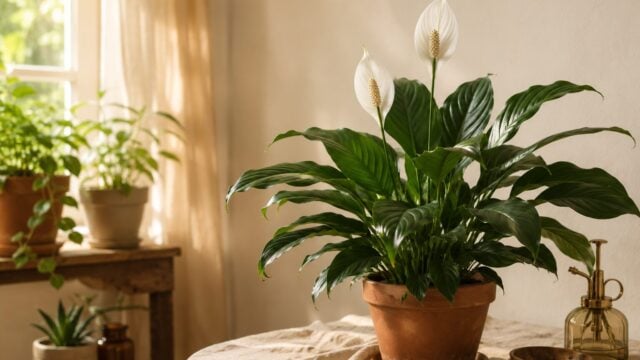
The only plant in this house plant indoor lineup that reliably flowers in low light. Clemson’s Home & Garden Information Center calls the peace lily one of the easiest flowering plants to grow indoors: white sail-like blooms over glossy leaves, in corners too dim for anything else to bloom. It likes evenly moist soil and announces thirst with a dramatic, fully reversible wilt.
Care stats: Light: low to bright indirect, never direct sun. Water: keep lightly moist; water when the surface dries. Soil: well-drained, rich in organic matter. Size: 1–4 feet; dwarf and 6-foot cultivars exist. Growth: moderate, blooms year-round. Pet safety: toxic to cats and dogs (calcium oxalates) per ASPCA — irritating rather than deadly, and not a true lily, but keep it up high.
6. Cast iron plant (Aspidistra elatior) — pet-safe
The name is the review. The cast iron plant survived the gaslit parlors of the Victorian era — low light, coal smoke, cold drafts — and it will survive your hallway. Deep green, paddle-shaped leaves rise slowly from the soil and simply persist, decade after decade. It asks only that you not overwater it and not put it in direct sun, which scorches the foliage.
Care stats: Light: low to medium; deep shade tolerated. Water: let the top inch or two dry between waterings. Soil: any well-drained mix. Size: about 2 feet tall. Growth: slow. Pet safety: non-toxic to cats and dogs per the ASPCA.
7. Parlor palm (Chamaedorea elegans) — pet-safe
A true palm that stays apartment-sized, the parlor palm brings soft, feathery texture that reads instantly as “more plants, please.” It shared those Victorian parlors with the cast iron plant and tolerates the same gentle, indirect light — a north or east window is plenty. Keep the soil lightly, evenly moist and it grows slowly into an elegant 2–4 foot cloud of fronds.
Care stats: Light: medium indirect; tolerates low. Water: evenly moist, never soggy; top inch dry means water. Soil: well-drained mix. Size: 2–4 feet indoors. Growth: slow. Pet safety: non-toxic to cats and dogs per the ASPCA.
Brown frond tips usually mean dry air or salty water — the same fixes as the spider plant. A gentle misting habit or a pebble humidity tray keeps the fronds fresh through winter heating season.
8. Rubber plant (Ficus elastica)
When you want one bold statement rather than a crowd of small pots, the rubber plant delivers: broad, glossy, burgundy-green leaves on a plant that climbs steadily toward the ceiling. Clemson’s factsheet recommends bright, indirect light and letting the soil dry slightly between thorough waterings. Wipe the big leaves monthly — dust dulls them and slows the plant.
Care stats: Light: bright indirect; tolerates medium. Water: dry an inch or two down between waterings. Soil: well-drained mix. Size: 6–10 feet indoors over years. Growth: moderate. Pet safety: the milky sap can irritate mouths and skin — keep away from persistent chewers and wash hands after pruning.
9. Heartleaf philodendron (Philodendron hederaceum)
Pothos’s velvet-hearted cousin, and every bit as forgiving. Clemson groups philodendron and pothos together for good reason: both trail beautifully, root from cuttings in water, and tolerate low light with grace. The heartleaf’s leaves are thinner, darker, and more heart-shaped, and it is slightly more tolerant of dim corners than pothos.
Care stats: Light: low to bright indirect. Water: top inch dry, then water — every 1–2 weeks. Soil: standard well-drained mix. Size: vines to 8 feet or more, prune to taste. Growth: fast. Pet safety: toxic to cats and dogs (insoluble calcium oxalates) per ASPCA.
10. Peperomia (Peperomia species) — pet-safe
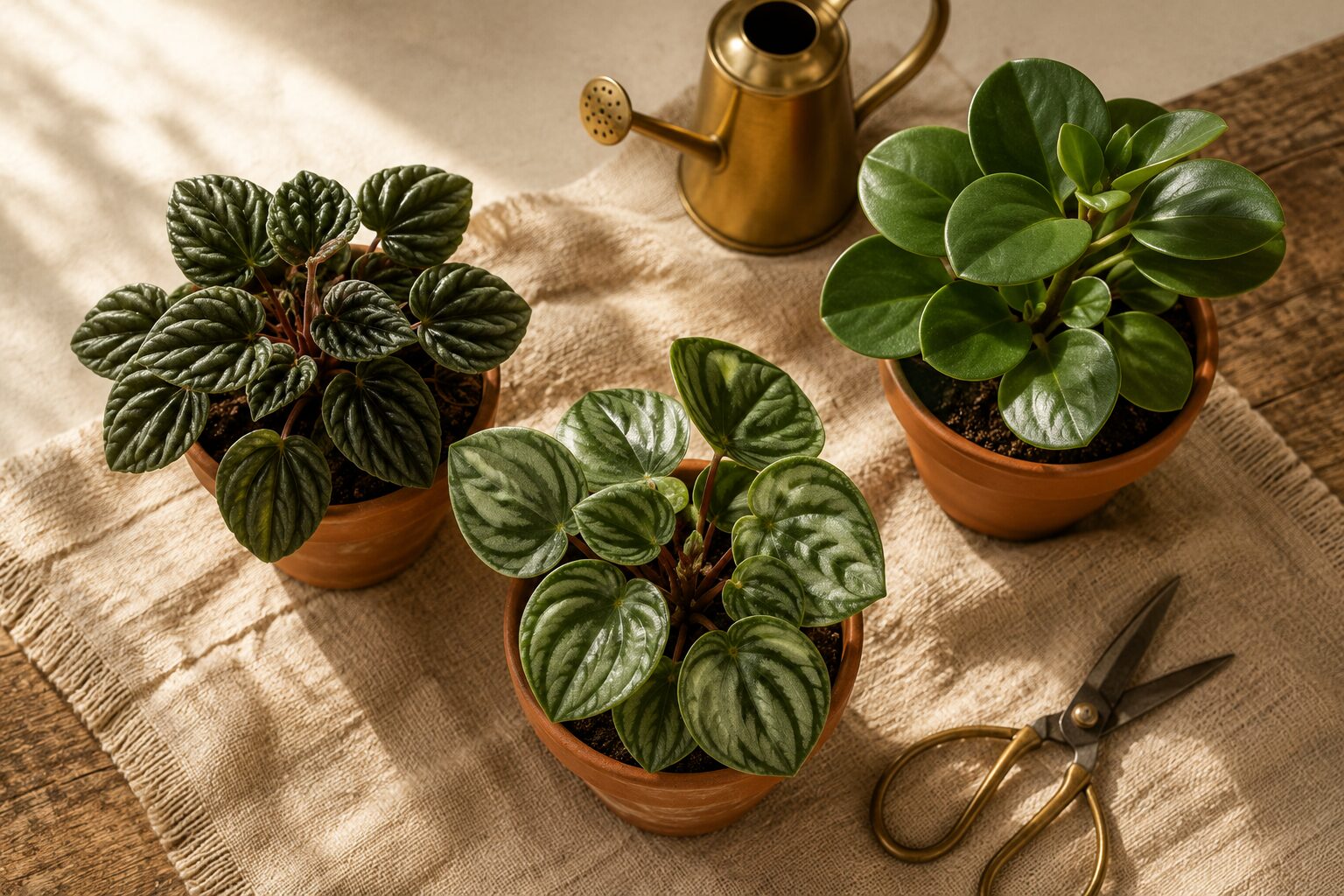
Peperomias are the collector’s gateway: hundreds of compact species with wildly different leaves — rippled ‘Caperata’, watermelon-striped ‘Argyreia’, coin-round ‘Obtusifolia’ — all sharing the same easy, semi-succulent care. They stay small enough for desks and shelves, and the entire genus is listed non-toxic by the ASPCA, which makes them the pet household’s answer to variety cravings.
Care stats: Light: medium to bright indirect. Water: let the top half of the pot dry; err dry — every 1–2 weeks. Soil: light, airy mix; add perlite. Size: 6–12 inches. Growth: slow to moderate. Pet safety: non-toxic to cats and dogs per the ASPCA.
The pet-safe shortlist
If ASPCA-verified safety is your first filter, build your collection from the spider plant, cast iron plant, parlor palm, and peperomia above — and add the Boston fern (Nephrolepis exaltata) as a lush honorable mention, also non-toxic to cats and dogs, if you can offer it humidity. Between those five you get hanging texture, floor presence, palm softness, desktop variety, and fern abundance without a single worry about curious mouths.
For everything else on this list, “toxic” deserves context: the calcium-oxalate plants cause immediate, unpleasant mouth burning that almost always stops a pet after one bite — serious cases are rare. Placement solves most of it. Hanging baskets, tall shelves, and closed rooms keep chewers and leaves apart. If a pet does sample something, the ASPCA Animal Poison Control Center is at (888) 426-4435.
Buying well: five things to check at the shop
A good house plant indoor purchase starts before the register. First, look under the leaves and where leaf meets stem — white cottony tufts (mealybugs), fine webbing (spider mites), or brown bumps (scale) mean walk away. Second, check the soil: it should smell earthy, not sour or swampy. Third, tip the pot and peek at the drainage holes; a few visible roots are fine, a solid mat means the plant is badly root-bound and stressed.
Fourth, choose firm, compact growth over tall and floppy — a smaller, sturdier plant establishes faster than a leggy showpiece. Fifth, quarantine every newcomer in its own room for two weeks before it joins your collection; it is the single best pest habit you can build. Budget gear is easy: a bag of quality potting mix, a soil moisture meter if you distrust your finger, terracotta pots with saucers, and micro-tip pruning snips cover every plant in this guide.
Where you buy matters less than condition, but each source has a personality. Local nurseries let you inspect before buying. For delivered plants, mature specimens from a grower like Bloomscape arrive potted and established — worth it for statement plants like the rubber plant — while Etsy shops are unbeatable for cuttings and unusual peperomia or philodendron varieties at friendly prices.
Match the plant to the room, not the room to the plant
The fastest way to sort this house plant indoor list is by where you actually live. A north-facing bedroom or windowless bathroom suits the shade specialists: cast iron plant, ZZ plant, snake plant, and peace lily will all hold steady where brighter-light plants slowly starve. An east window with gentle morning sun is the all-rounder spot — pothos, philodendron, spider plant, and parlor palm are all at their best there.
South and west windows run hot and bright; keep plants a few feet back or behind a sheer curtain, and give the prime seat to the rubber plant, which uses that energy to build its big glossy leaves. Kitchens and bathrooms, with their humidity swings, flatter the parlor palm and peace lily. Drafty entryways and rooms that go cold at night are cast-iron-plant territory — almost nothing else on the list enjoys a chill.
Renters and desk-dwellers, note the footprint column in the table below: peperomias and spider plants deliver the most variety per square inch, while the rubber plant and snake plant are long-term investments that appreciate in presence every year.
Three questions beginners always ask
How many plants should I start with? Two or three. Enough to learn different watering rhythms, few enough that a busy week doesn’t become a casualty list. Add more once checking on them feels like a habit instead of a chore.
Do I need a grow light? Not for this list — every plant here tolerates ordinary room light. If your only spot is genuinely dark (you’d need a lamp to read there at noon), a small clip-on full-spectrum light for a few hours a day helps, but choose the cast iron plant or ZZ first and you may never need one.
Why are the leaves turning yellow? Nine times out of ten: too much water, too often. Check that the pot drains, let the soil dry to the depth each entry above recommends, and remember that one old yellow leaf at the base is retirement, not disease.
Universal rules that keep all ten alive
Whatever you choose from this list, four habits do most of the work. Every pot needs a drainage hole — no exceptions, no “gravel layer” workarounds. Water by feel, not by calendar: a finger an inch into the soil answers the question every time, and every plant above would rather run slightly dry than sit wet. Feed lightly — a balanced liquid fertilizer at quarter strength, only during spring and summer growth. And give plants a season to settle after any move before you judge them; dropped leaves in week one are adjustment, not doom.
Deeper dives on all four habits — plus repotting, propagation, and pest first-aid — live in our plant care library, and profiles of these plants and their relatives keep growing in the houseplants collection.
Quick comparison: the ten at a glance
| Plant | Light | Water | Size | Pet-safe (ASPCA) |
|---|---|---|---|---|
| Pothos | Low–bright indirect | Top half dry | 6–10 ft vines | No |
| Snake plant | Low–bright indirect | Fully dry | 0.5–4 ft | No |
| ZZ plant | Low–bright indirect | Fully dry | 2–3 ft | No |
| Spider plant | Bright indirect | Evenly moist | 1 ft + trailers | Yes |
| Peace lily | Low–bright indirect | Lightly moist | 1–4 ft | No |
| Cast iron plant | Low–medium | Top 1–2 in dry | ~2 ft | Yes |
| Parlor palm | Low–medium indirect | Evenly moist | 2–4 ft | Yes |
| Rubber plant | Bright indirect | Top 1–2 in dry | 6–10 ft | Sap irritant |
| Heartleaf philodendron | Low–bright indirect | Top inch dry | 8 ft vines | No |
| Peperomia | Medium–bright indirect | Top half dry | 6–12 in | Yes |
Start with two: one forgiving trailer for a shelf and one upright anchor for the floor. Learn their rhythms for a season, then add. That is how every house plant indoor collection worth envying actually began — not with a haul, but with a pothos that lived and the confidence it grew.
The houseplant care kit
- Jxikatx Soil Moisture Meter, Plant Water Monitor Hygrometer Sensor,… — soil moisture meter
- Fiskars 6" Steel Micro-Tip Pruning Scissors, Garden Snips for Small… — micro-tip pruning snips
- Mkono Macrame Plant Hanger Indoor 35 Inch Hanging Planter Basket Ivory… — macramé hanging planter
- GREANER 12 Inch Plant Saucer, Black Plant Plates to Catch Water,… — pebble humidity tray
- Miracle-Gro Blooming Houseplant Food, 8 fl. oz. — bloomscape
Opens Amazon’s cart confirmation page — you review the list and prices there, and nothing is added until you approve it. Prefer to pick and choose? Every item above links to its own product page.

Leave a Reply