
Humble Acres is reader-supported. When you buy through links on our site, we may earn an affiliate commission at no extra cost to you — we only recommend products we’d use ourselves. See our affiliate disclosure.
The houseplant care kit
- Rosy Soil Cactus & Succulent Potting Mix, 4 Quarts — cactus and succulent soil mix
- Indoor Plant Food, Complete Liquid Fertilizer for Houseplants, 8oz — balanced liquid houseplant fertilizer
- yadoker Plant Grow Light, LED Growing Light Full Spectrum for Indoor… — LED grow light
- Terracotta 6-Inch Plant Pots with Drainage & Saucers 3 Pack, Indoor &… — terracotta or ceramic planter
Opens Amazon’s cart confirmation page — you review the list and prices there, and nothing is added until you approve it. Prefer to pick and choose? Every item above links to its own product page.
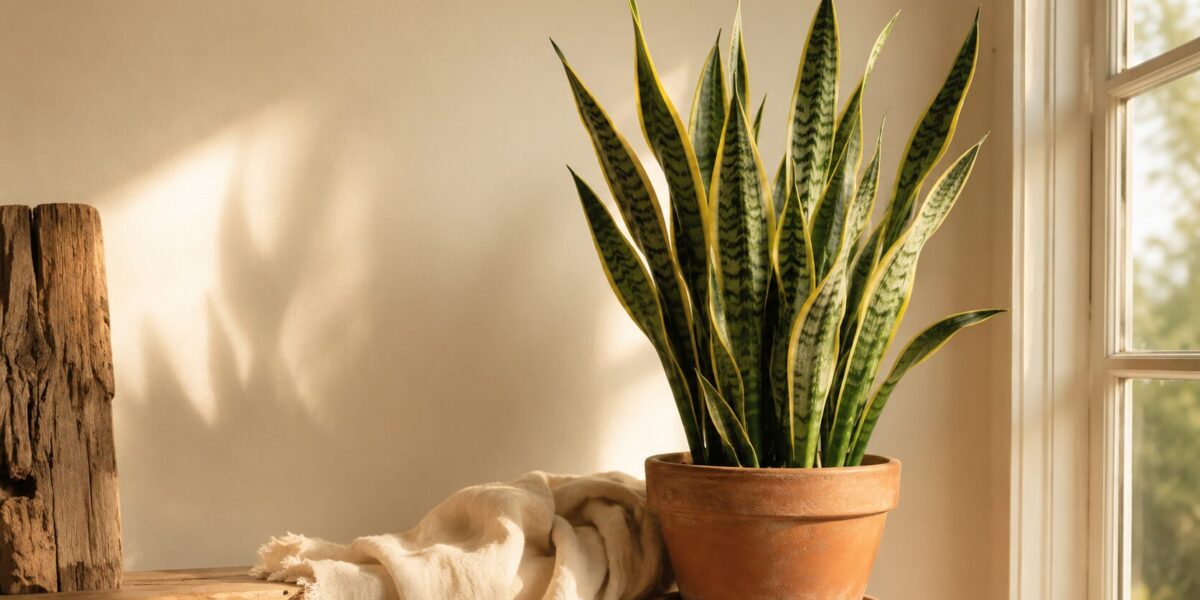
If there is one plant that makes a nervous beginner feel like a natural, it is the snake plant. Tall, architectural, and famously hard to kill, it forgives forgotten waterings, dim corners, and the general chaos of a busy home. Good snake plant care is less about doing a lot and more about doing very little, very deliberately — which is exactly why it belongs on so many first-time windowsills.
This complete guide covers everything you need to keep one thriving: the light it wants, how rarely to water it, the soil and pot that prevent its one real weakness, plus feeding, propagation, the most beautiful varieties to collect, and an honest word about pet safety. Whether this is your first houseplant or your fortieth, the goal is the same — a plant so healthy it looks like it belongs in a magazine, with almost none of the fuss.
Meet the snake plant: Dracaena trifasciata
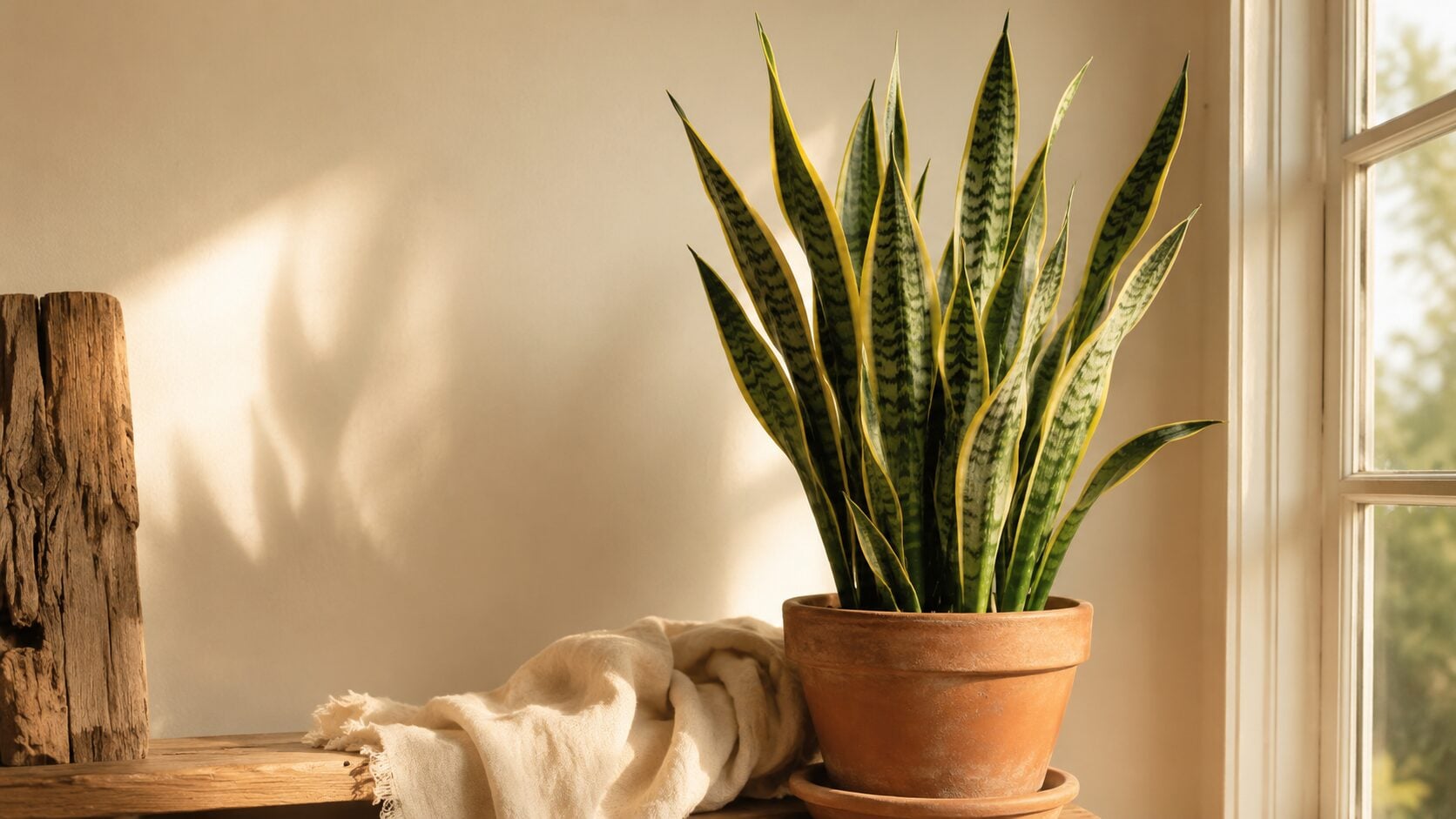
The snake plant goes by many names — mother-in-law’s tongue, good luck plant, viper’s bowstring hemp — but botanists now file it as Dracaena trifasciata. If you learned it as Sansevieria, you are not wrong so much as out of date: as Penn State Extension explains, genetic research reclassified the entire group from the genus Sansevieria into Dracaena, which also includes corn plant and lucky bamboo. The species name, trifasciata, means “three bundles” and nods to the banded stripes on its leaves.
It is a clumping, evergreen perennial in the asparagus family (Asparagaceae), native to West and Central Africa, with more than seventy species and countless cultivars. Those succulent, upright leaves store water, which is the secret to why the plant tolerates neglect so gracefully. NC State Extension sums it up plainly: this plant is “quite durable, easily grown, and difficult to kill.” That reputation is well earned, and it is the foundation everything else in snake plant care is built on.
Light: low-light champion, bright-light thriver
The snake plant’s superpower is flexibility. It will genuinely tolerate a dim corner that would kill most houseplants, which is why you see it in office lobbies and windowless bathrooms. But tolerating and thriving are two different things. According to NC State Extension, the plant does best with two to six hours of indirect or gently filtered sun a day, and rewards brighter (but not harsh) light with faster growth and stronger variegation.
The one thing to avoid is intense, direct afternoon sun through glass, which can scorch and bleach the leaves. A spot near an east or north window, or a few feet back from a bright south window, is ideal. If your only option is a genuinely dark room, the plant will hang on, but consider supplementing with a small LED grow light to keep its color rich and its leaves upright rather than floppy.
Watering: when in doubt, wait
If you remember only one rule of snake plant care, make it this: underwatering is almost impossible, overwatering is the one thing that kills it. Because the leaves are water-storing succulents, the plant would rather be bone dry than soggy. Penn State Extension notes you can neglect to water it for a month or more and it will be “no worse for wear,” while overwatering reliably causes fatal root rot.
The method is the finger test. Push a finger a couple of inches into the soil, and only water if it comes out completely dry. From spring through autumn, let the soil dry out fully between waterings. In winter, when the plant rests, NC State Extension recommends watering just once every one to two months. Yes, really — that infrequently.
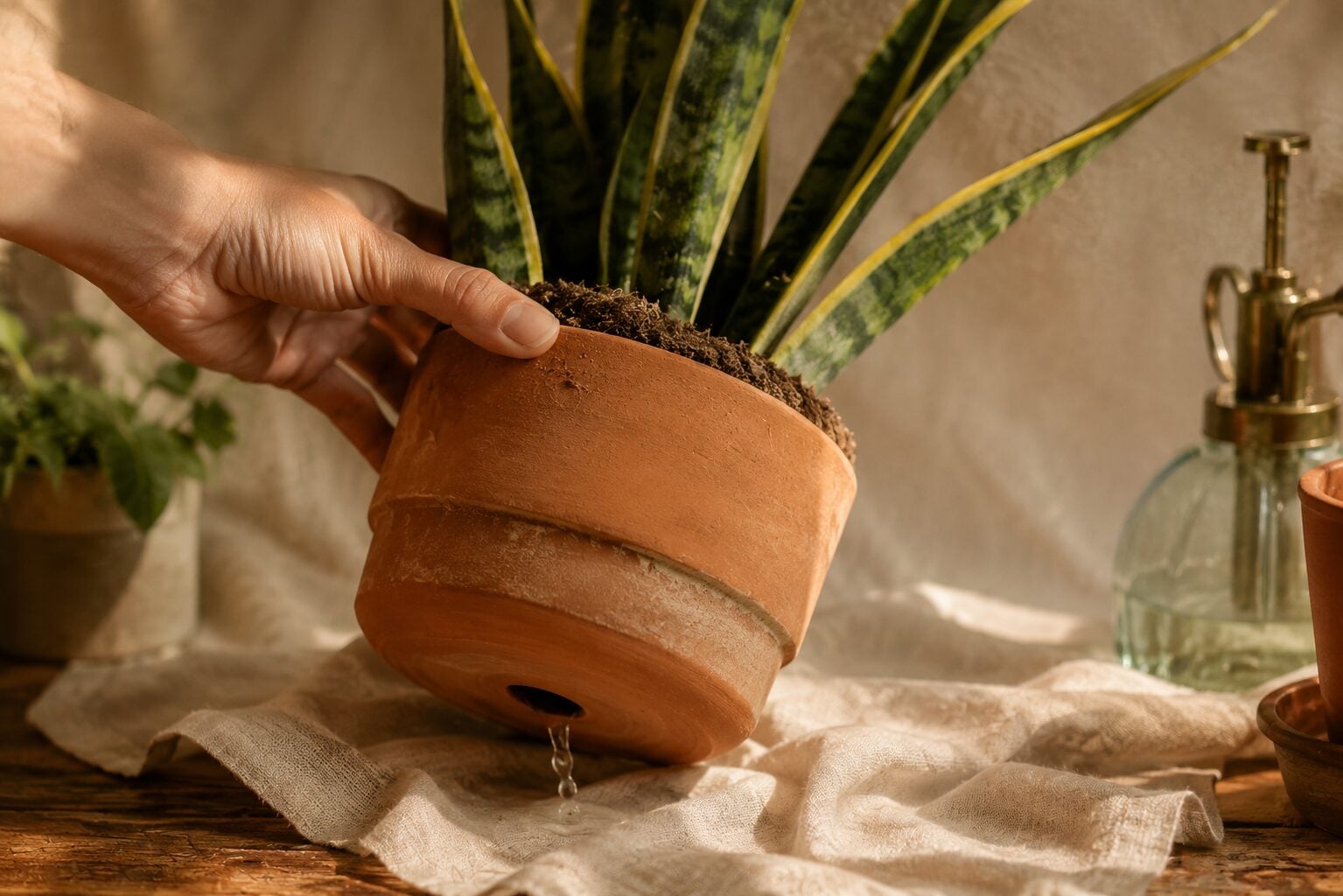
When you do water, water thoroughly, let it drain completely through the pot, and never leave the plant sitting in a saucer of water. That single discipline — drain fully, empty the saucer — prevents nearly every snake plant death. If you tend to be a devoted, frequent waterer, the snake plant will quietly teach you the value of restraint.
Soil and pot: the setup that prevents rot
Everything about the snake plant’s container should encourage water to leave quickly. Penn State Extension recommends a well-drained mix — a cactus and succulent potting mix, or a standard mix amended with perlite or grit to open it up. A dense, moisture-holding soil is the enemy here, because it keeps the roots wet long after the plant wants to be dry.
Reach for a bag of fast-draining cactus and succulent soil mix and a pot with drainage holes, and you have solved the plant’s only real vulnerability. There is a practical tip for taller varieties, too: those upright leaves get top-heavy, so choose a heavier pot — a chunky terracotta or ceramic planter — to keep the plant from toppling, especially when the soil is light and dry.
One quirk worth knowing: the snake plant doesn’t mind being snug in its pot and can go a long time before needing to move up. But a seriously rootbound plant can actually crack a clay pot as its rhizomes expand, so if you see the pot bulging or roots forcing their way out, it is time to divide or repot into something one size larger.
Temperature, humidity, and feeding
This is a plant that asks for nothing unusual from your home. It tolerates low humidity without complaint, shrugs off the dry air that makes ferns miserable, and handles cool temperatures down to around fifty degrees, according to NC State Extension. It is also notably resistant to drought and heat. The only real danger is prolonged cold — keep it away from freezing windows and unheated porches in winter.
Feeding is minimal by design. Penn State Extension suggests fertilizing monthly during the growing season with an all-purpose fertilizer at half strength, and skipping it entirely in fall and winter. A gentle balanced liquid houseplant fertilizer is all it needs; overfeeding does far more harm than the occasional missed feeding. As with watering, the snake plant rewards a light touch.
How to propagate a snake plant
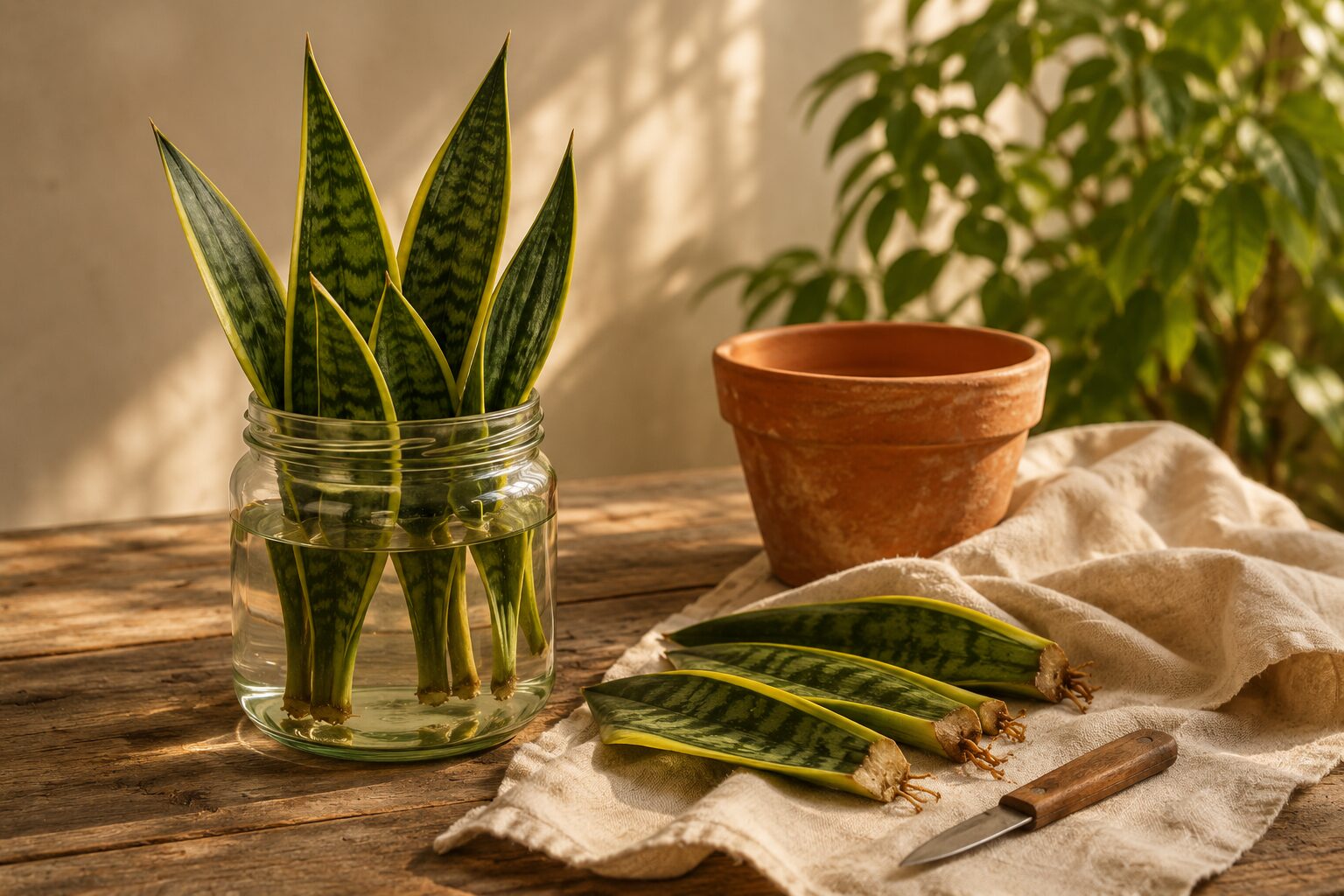
One of the quiet joys of this plant is how easily it multiplies, turning a single specimen into gifts for the whole neighborhood. NC State Extension lists two reliable methods: division and leaf cuttings.
Division is the fastest and keeps variegation intact. Slide the plant out of its pot, find a natural clump with its own roots and rhizome, and separate it with a clean knife, then pot each division in fresh, well-drained mix. Leaf cuttings are the fun experiment: cut a healthy leaf into several sections, let the cut ends callus for a day, then stand them upright (keeping their original orientation) in soil or water until roots form. Leaf cuttings of variegated types like ‘Laurentii’ often revert to plain green, so use division if you want to preserve the yellow edges. Either way, a little patience turns one plant into many.
Snake plant varieties worth collecting
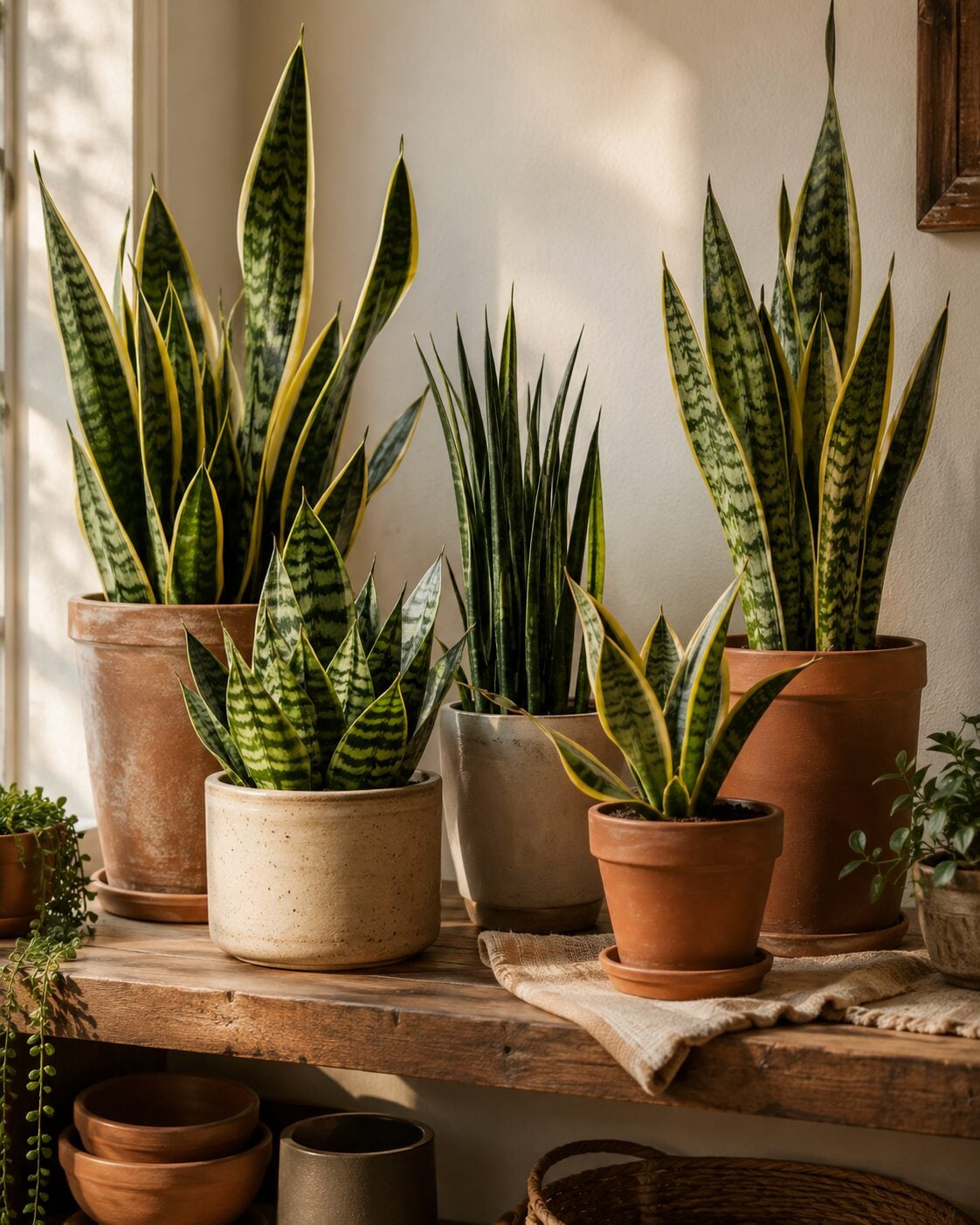
Part of the fun is that snake plants come in a remarkable range of shapes and colors, so a whole collection never looks repetitive. A few standouts, drawn from the NC State and Penn State cultivar lists:
- ‘Laurentii’: the classic — tall green leaves edged in bright golden yellow.
- ‘Moonshine’: broad, pale silvery-green leaves with a soft, almost ghostly look.
- ‘Bantel’s Sensation’: narrow leaves with striking vertical white striping, growing to about three feet.
- ‘Hahnii’ (bird’s nest): a dwarf rosette only about six inches tall — perfect for a desk or shelf.
- ‘Black Gold’: deep, dark green leaves rimmed in gold.
- Whale fin (Dracaena masoniana): a single dramatic paddle-shaped leaf up to ten inches wide.
- Cylindrical (Dracaena angolensis): rounded, spear-like tubular leaves, sometimes braided.
Because they all share the same easy temperament, you can grow a shelf full of wildly different forms with a single care routine. If you enjoy the collector’s itch, our houseplant guides cover many more easygoing options to pair alongside them.
Is the snake plant toxic to pets?
This is the one place caution is genuinely warranted, and it deserves a straight answer. Yes — the snake plant is toxic to cats, dogs, and horses. Penn State Extension notes that all snake plant species contain saponin toxins, and NC State classifies it as low-severity poisonous if ingested.
The saponins can cause vomiting (occasionally with a little blood), nausea, drooling, and diarrhea if a pet chews the leaves, and the sap can irritate skin. It is rarely life-threatening, but it is unpleasant for the animal and worth avoiding entirely. If you share your home with a determined leaf-chewer, place the plant well out of reach — a high shelf or hanging spot — or choose a pet-safe alternative like a spider plant. When in doubt about any plant and a pet, the NC State Extension plant toolbox and the ASPCA’s poison list are the references to trust.
Common problems and quick fixes
Snake plants have very few troubles, and nearly all of them trace back to water. Yellowing, soft, or mushy leaves almost always mean overwatering and the start of root rot — pull the plant out, trim any brown mushy roots, and repot in dry, fresh mix. Wrinkled or curling leaves point the other way, toward extreme thirst, though this takes a long time to develop. Occasional pests like mealybugs and spider mites can appear; wipe them off or treat with insecticidal soap, and inspect new plants before they join your collection.
A few cosmetic issues are worth a quick mention because they alarm beginners unnecessarily. Brown, dry leaf tips are usually just old age or a touch of tap-water fluoride, and you can simply trim them to a point with clean scissors. White crusty deposits on the soil or pot are mineral salts from hard water or fertilizer — flush the pot occasionally with plain water to clear them. And a leaf that snaps or gets damaged will not heal, so cut it off cleanly at soil level; the plant will send up fresh growth in time.
Why snake plants are worth growing
Beyond being forgiving, snake plants earn their place for reasons that go past low maintenance. Their strong vertical form brings height and structure to a room in a way few houseplants can, making them a designer’s favorite for filling an empty corner or flanking a doorway. A single tall specimen reads as sculpture; a grouped trio reads as a statement. That architectural presence is a big part of why the plant never went out of style even as trends came and went.
They are also famously undemanding of your attention, which suits real life. Snake plants tolerate travel, irregular schedules, and the neglect that comes with a busy few weeks — the water-storing leaves simply coast through. For renters, students, office workers, and anyone who has killed a plant before and lost their nerve, this resilience is exactly what rebuilds confidence. Good snake plant care asks so little that success feels almost guaranteed, and that early win is often what turns a hesitant beginner into a lifelong plant person.
There is a practical bonus, too: snake plants are among the plants NASA studied for indoor air, and they continue releasing oxygen and processing air at night, unlike many houseplants. While no potted plant will transform the air quality of a whole room on its own, a collection adds a small, steady benefit alongside the visual one — a pleasant thing to know as you fall asleep near one.
Snake plant care through the seasons
Even a plant this tough follows the calendar, and adjusting with the seasons keeps it at its best. Spring and summer are its active growing months. This is when you will see new leaves push up from the soil, when a little more light and the occasional half-strength feeding pay off, and when any dividing or repotting should happen so the plant can recover during its strong season. Water a touch more often in these warm months, but still only when the soil has dried out.
Fall and winter call for a lighter hand than almost any other houseplant demands. Growth slows to a near-stop, so watering drops to once every one to two months, feeding stops entirely, and the plant simply rests. The main winter risk is not neglect but cold and wet: keep it away from freezing windowpanes and never let it sit in damp soil while the house is chilly, since cold plus moisture is the fastest route to root rot. Dialing your snake plant care back in winter is not laziness — it is exactly what the plant wants.
Snake plant care frequently asked questions
Why are the leaves falling over? Floppy, splayed leaves usually mean too little light or overwatering. Move the plant somewhere brighter and check that the soil is drying fully between waterings.
How often should I really water? As a rule, every two to three weeks in summer and every four to eight weeks in winter — but always let the finger test override the calendar. When the top two inches are dry, water; otherwise wait.
How big will it get? It depends on the variety, from a six-inch ‘Hahnii’ rosette to leaves reaching three or four feet on ‘Laurentii’ and the whale fin. Growth is a steady medium pace, so a floor-standing plant takes a few years to reach its full drama.
Do snake plants flower? Occasionally. A mature, slightly rootbound plant may send up a fragrant spike of small greenish-white blooms, though it is rare indoors and nothing to force — the leaves are the main event.
Your snake plant care cheat sheet
Here is the whole routine in a breath: give it bright indirect light but accept that it will survive a dim corner; water only when the soil is fully dry, dropping to once a month or less in winter; plant it in fast-draining cactus mix in a heavy pot with drainage holes; feed lightly in the growing season and not at all in winter; and keep it away from cold and away from curious pets. Do that, and you will have a sculptural, air-purifying plant that looks after itself for years.
The snake plant is proof that a thriving home full of green does not require constant labor — just the right setup and the discipline to leave it alone. Master this one, and you will have the confidence to branch out. When you are ready, our plant care library and our guides to easygoing succulents are the natural next step in building a collection that grows right alongside your skills.
Sources
This guide draws on Penn State Extension and the NC State Extension Gardener Plant Toolbox, with pet-toxicity information corroborated by the ASPCA.
The houseplant care kit
- Rosy Soil Cactus & Succulent Potting Mix, 4 Quarts — cactus and succulent soil mix
- Indoor Plant Food, Complete Liquid Fertilizer for Houseplants, 8oz — balanced liquid houseplant fertilizer
- yadoker Plant Grow Light, LED Growing Light Full Spectrum for Indoor… — LED grow light
- Terracotta 6-Inch Plant Pots with Drainage & Saucers 3 Pack, Indoor &… — terracotta or ceramic planter
Opens Amazon’s cart confirmation page — you review the list and prices there, and nothing is added until you approve it. Prefer to pick and choose? Every item above links to its own product page.

Leave a Reply