
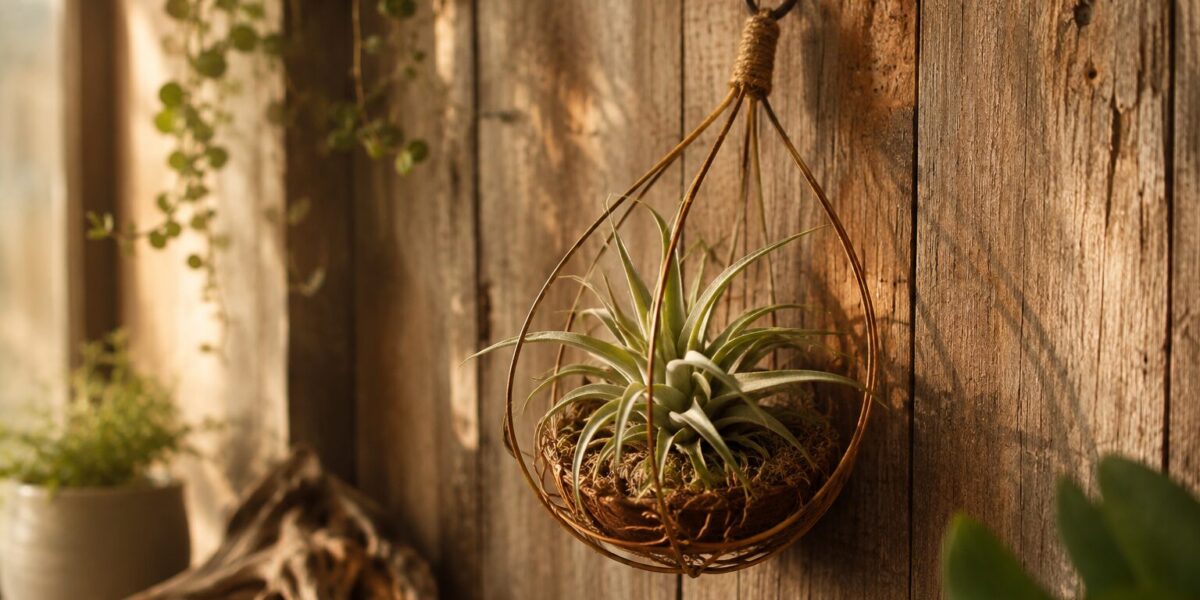
Air plants — the common name for Tillandsia — are unlike almost every other plant you’ll encounter. They need no soil, survive on mist and airflow, and come in over 650 species ranging from tiny silver wisps to large architectural specimens. They’re not delicate novelties, either. With the right care, they live for years and regularly produce pups (baby plants) that you can separate and grow on.
Humble Acres is reader-supported. When you buy through links on our site, we may earn an affiliate commission at no extra cost to you — we only recommend products we’d use ourselves. See our affiliate disclosure.

Because they need no soil, tillandsia give you display freedom no potted plant can match. This guide covers the best air plant holder styles and display ideas — mounts, hangers, driftwood, and open glass — plus the care essentials that keep a displayed air plant healthy.
The air plant starter kit
- Spray Bottle for Plants 2 Pack, 16oz – Ultra Fine Mist, Plant Mister… — fine mist spray bottles
- MITIME air plant holder, small air plant display stand. Wall mount to… — air plant wall mounts & holders
- Air Plants – Flowering Tillandsia Stricta Large 5" – 1ct – Live… — tillandsia stricta
- 5 Pack Ionantha Air Plants Live Tillandsia Succulent Air Plant -… — tillandsia ionantha (bulk packs)
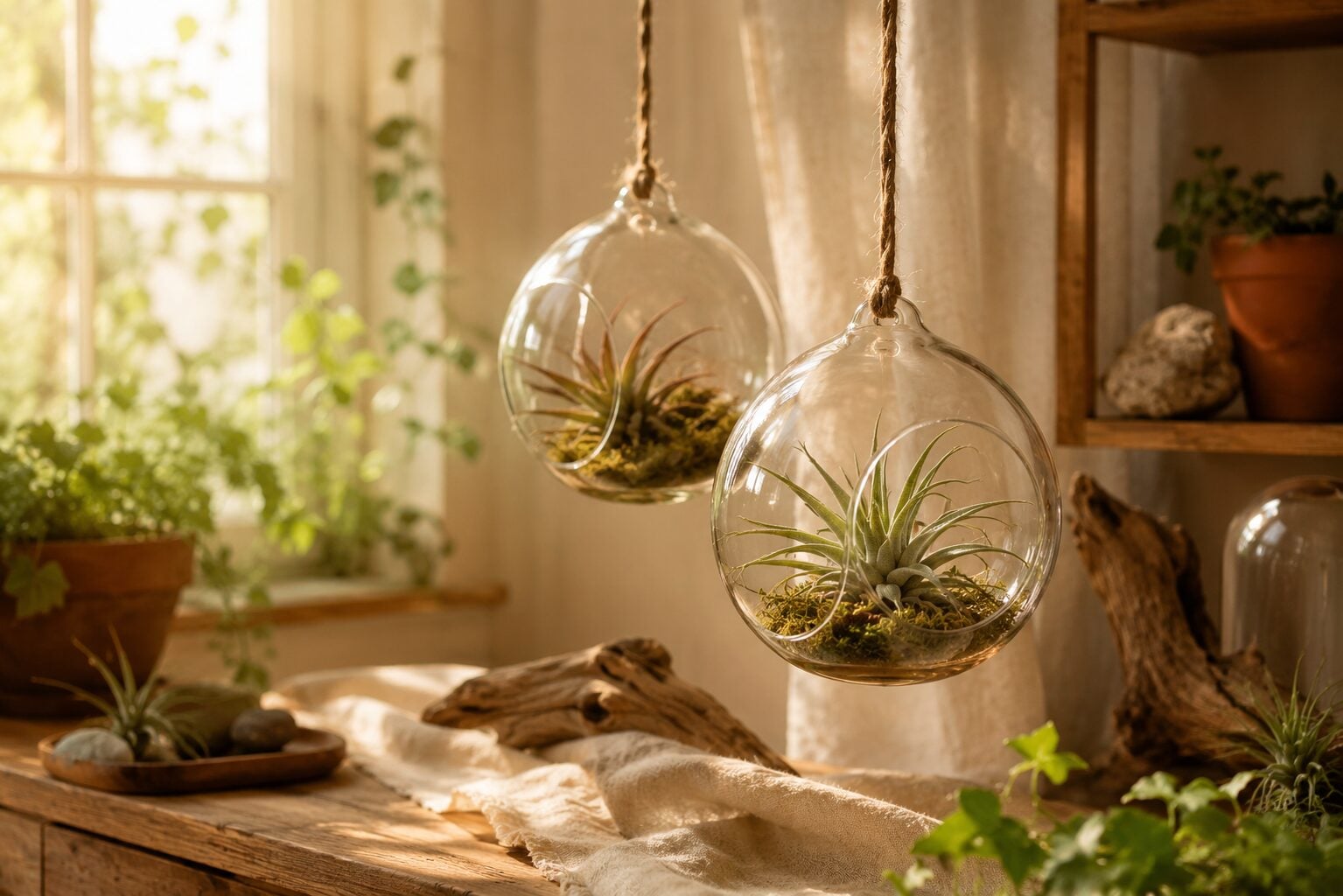
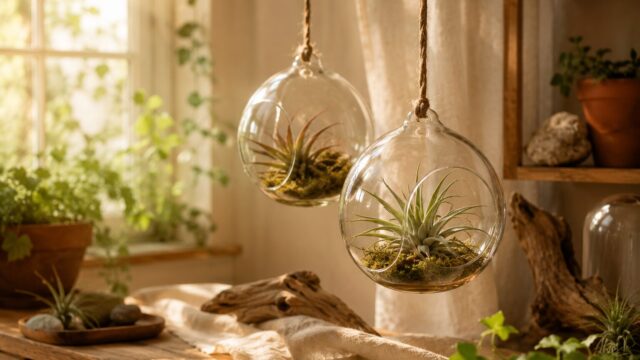
- WGVI WGV Hanging Terrarium Globe, Width 6", Height 6.5", DIY Air… — glass globe terrariums for air plants
Opens Amazon’s cart confirmation page — you review the list and prices there, and nothing is added until you approve it. Prefer to pick and choose? Every item above links to its own product page.
How Air Plants Actually Get Their Nutrients
Tillandsia are epiphytes — in the wild, they grow on tree branches, rocks, and cliff faces, absorbing water and nutrients through tiny scales on their leaves called trichomes. Their roots are primarily for anchoring, not feeding. This is why soil is irrelevant (and actually harmful — it traps moisture around the base and causes rot). Horticulturists at the University of Florida’s Gardening Solutions program note that epiphytes take nothing from the tree that hosts them — every drop of water and every nutrient comes from the atmosphere.
In your home, you replace the natural humidity and rainfall of their native Central and South American habitat with regular misting or soaking. One buying note that matters: Clemson’s Home & Garden Information Center warns that wild populations are endangered by over-collection in much of their native range — always buy nursery-propagated plants from reputable growers.
How to Water Air Plants
There are two main watering methods for air plants, and which one you use depends on your climate and your schedule:
Soaking (Best for Most Indoor Conditions)
Submerge the entire plant in room-temperature water for 20–30 minutes once a week. After soaking, shake off excess water gently and place the plant upside down on a towel for an hour to drain. This is critical — water pooling in the cup (center) of the plant causes rot. Once drained, return to its display spot.
Misting (For Xeric Varieties and Mounted Displays)
Misting works well for xeric air plants (the fuzzy, silver-leafed varieties like T. tectorum or T. xerographica) which prefer less water. Mist thoroughly 2–3 times per week until the leaves are dripping, then allow to dry completely within 4 hours.
Use tap water that has sat out overnight (to off-gas chlorine), filtered water, or rainwater. Avoid softened water — the added sodium damages trichomes over time.
Light Requirements
Most air plants prefer bright, indirect light. An east or west-facing window is ideal — the same exposure Penn State Extension’s Master Gardeners recommend for tillandsias kept indoors. They can tolerate a few hours of direct morning sun but will scorch in harsh afternoon sun.
The silver, fuzzy-leafed varieties (xeric types) are adapted to full sun in dry environments and handle direct light better. The green, smoother-leafed varieties (mesic types) prefer shadier conditions.
Under artificial lighting, a full-spectrum LED grow light 6–8 inches from the plant for 12 hours a day works well.
Popular Air Plant Varieties
Tillandsia ionantha

The most widely sold air plant, and a great starting point. Small (2–4 inches), tough, and spectacular when blooming — the leaves turn red or pink before producing a purple flower. Produces pups freely after blooming.
Tillandsia xerographica
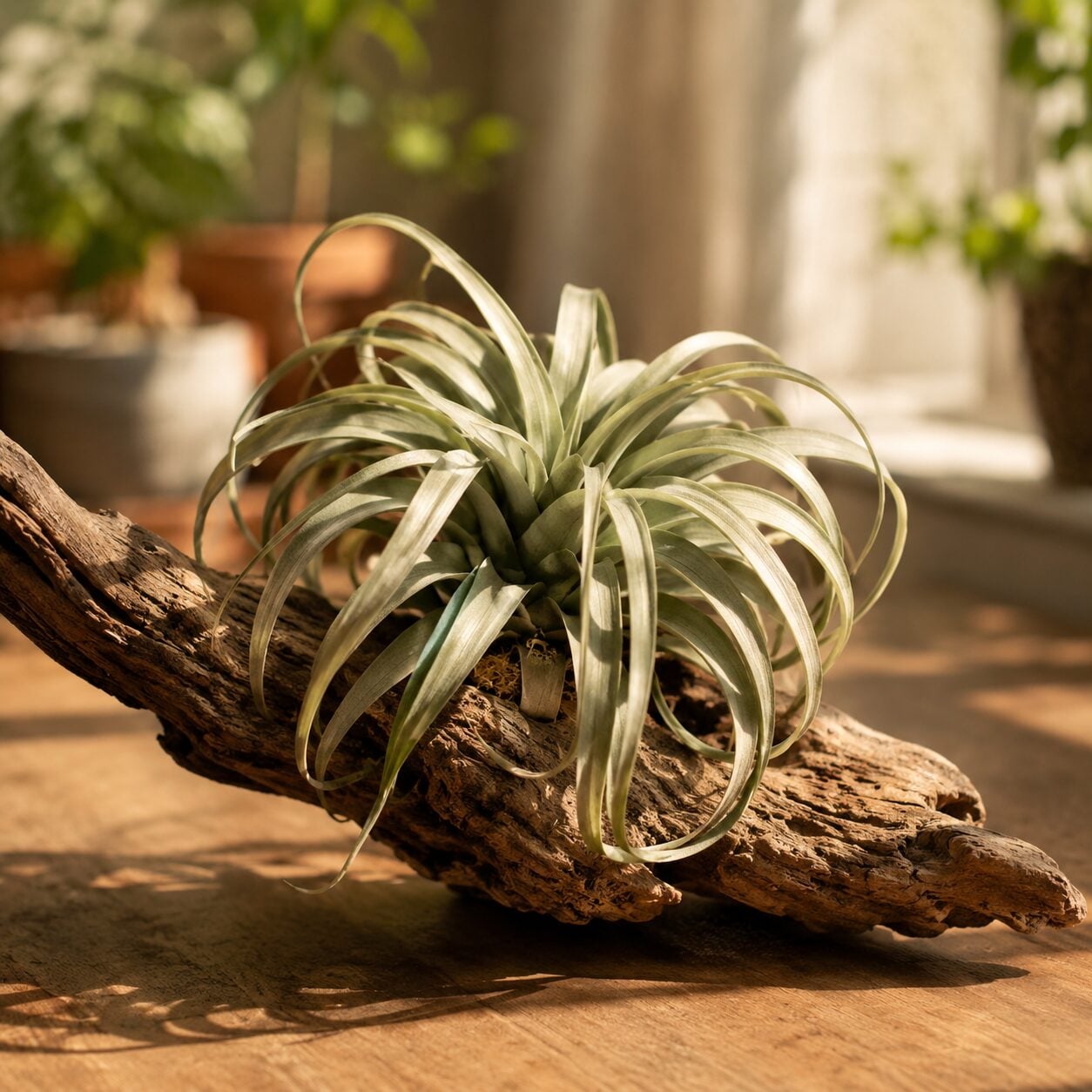
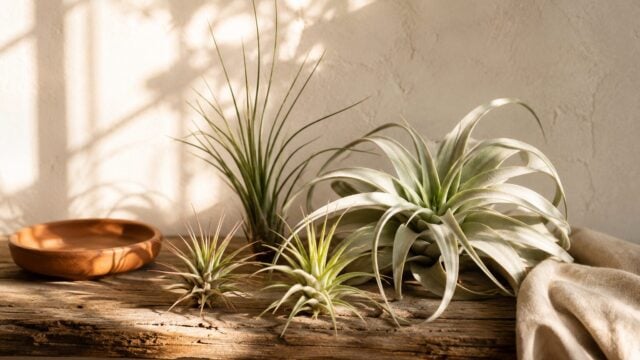
The king of air plants. Large, sculptural, with wide silver leaves that curl dramatically. Very slow-growing and drought-tolerant — water every 10–14 days. Makes a stunning centerpiece on its own. Worth the higher price tag.
Tillandsia stricta

A reliable, easy-care species with soft green leaves and a beautiful pink-and-purple flower. Grows in a rosette shape, produces pups readily, and adapts well to a wide range of humidity levels. Great for beginners.
Tillandsia bulbosa
Bizarre and wonderful — bulbosa has an inflated, hollow base and tentacle-like leaves that curl and twist. It looks almost alien. Loves humidity, making it a great choice for bathrooms or humid kitchens.
Air Plant Holders and Mounts: Display Ideas
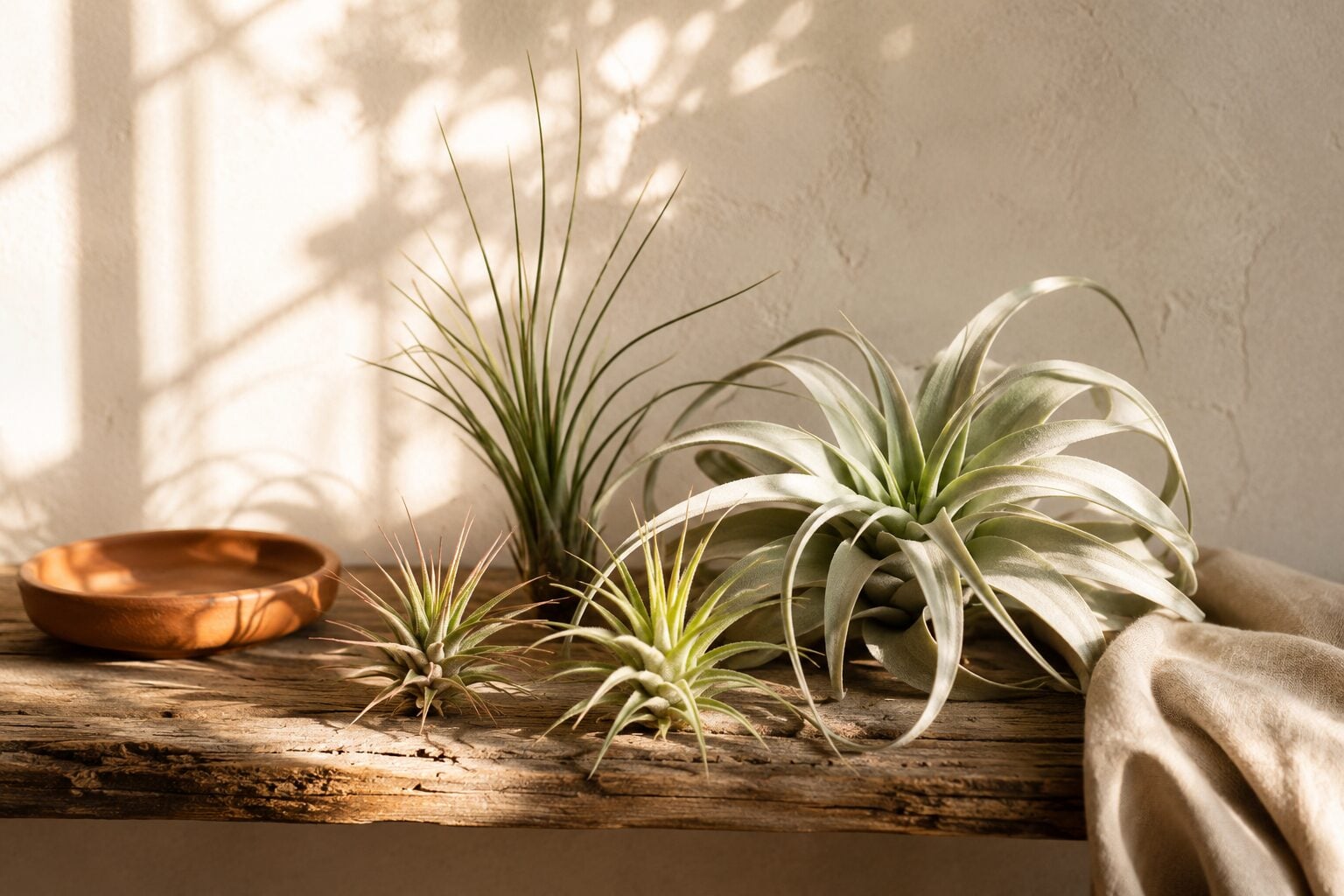
The best thing about air plants is the creative freedom in display. With no soil required, they can go almost anywhere:
- Mounted on driftwood or cork bark — attach with fishing line, floral wire, or non-toxic glue. The roots will eventually anchor themselves.
- In open terrariums — glass globes, geometric frames, and open vessels work beautifully. Avoid closed terrariums — airflow is essential.
- In shells, stone bowls, or on rocks — just ensure the base of the plant doesn’t sit in standing water.
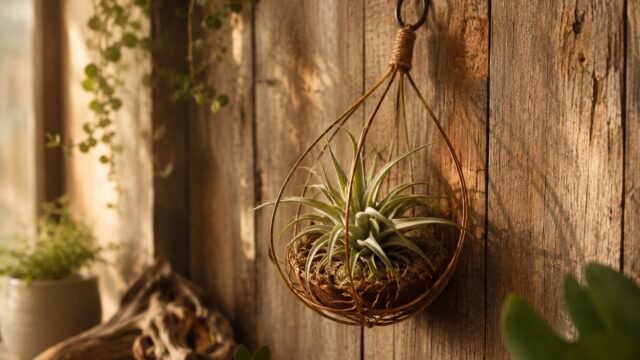
- Hanging in wire frames or macramé holders — suspending them upside down actually helps water drain properly after misting.

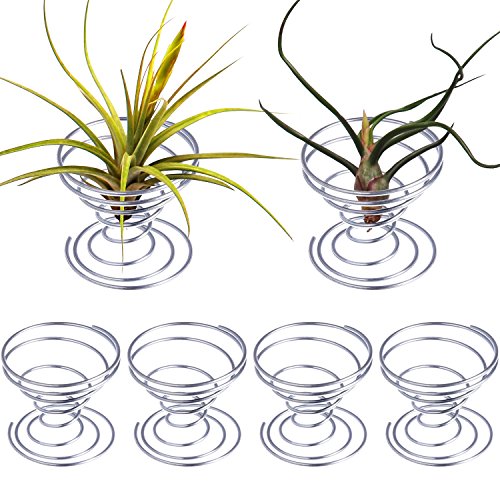
Avoid copper wire — it’s toxic to Tillandsia. Galvanized or plastic-coated wire is fine.
Seven display styles, from minimalist to maximalist
- The floating garden: several plants suspended at staggered heights from a curtain rod or ceiling hook on clear fishing line. From across the room, they hover.
- Geometric wall frames: brass or black metal polyhedrons, each holding one sculptural plant. Group three at different sizes for a gallery-wall effect.
- Macramé hangers: the classic — and functionally smart, since air circulates on all sides. Small-gauge hangers made for air plants hold the plant without any pot.
- The driftwood centerpiece: one large branch on a mantel or dining table with three to five plants wired along its length. The single most striking display per dollar spent.
- Shell and stone gardens: ionanthas nested in sea urchin shells (“jellyfish” when hung upside down) or resting in shallow stone bowls with pebbles.
- Wall-mounted cork rounds: the closest thing to how tillandsias live in the wild — glued or wired to bark, they’ll root on and become permanent residents.
- The bookshelf drifter: no holder at all. A xerographica resting on a stack of books is a finished look by itself. Just remember it still needs its weekly trip to the sink.


Materials to avoid
- Copper — wire, pipes, and treated surfaces. Copper is genuinely toxic to bromeliads, and contact plus moisture equals a dead plant within weeks.
- Pressure-treated wood — the preservatives can leach with every misting. Untreated driftwood, cork, and hardwood are safe.
- Anything that holds standing water at the base — a beautiful holder that cups water against the plant is a rot machine. Look for drainage or airflow at the contact point.
- Closed vessels — sealed or narrow-mouthed containers trap humid, still air. Air plants are named for what they need most.
Displaying Air Plants Without Killing Them
A display is only as good as the care routine it allows. Three rules keep displayed plants alive:
- Keep displays detachable. Wire or nestle plants so they lift out for their weekly soak. Permanent glue mounts mean you’re committed to misting-only care — workable, but less forgiving.
- Mind the microclimate. A glass globe near a sunny window heats up and dries out far faster than an open wall frame. The same plant may need twice the watering frequency in glass.
- Dry before re-hanging. Returning a wet plant to a snug holder traps water against the base — the number one killer of displayed air plants. Invert, drain, then display.
Blooming and Pups
Each air plant blooms once in its lifetime, then produces 2–8 pups (offsets) before the mother plant slowly dies. This isn’t a failure — it’s the plant’s reproductive cycle. The mother plant continues to support the pups for months as they grow, and the pups can be separated once they’re about one-third the size of the mother plant.
To encourage blooming, provide consistent care, good light, and try a monthly application of diluted bromeliad fertilizer (at 1/4 strength) in the soaking water.

Common Problems
- Brown, crispy leaf tips — underwatering or low humidity. Increase soak frequency or mist between soaks.
- Soft, mushy base — root rot from water sitting in the crown. Always invert to drain after watering. Remove any brown, mushy leaves at the base.
- Pale, washed-out color — too much direct sun. Move to brighter indirect light.
- No growth — usually insufficient light or water. Both must be adequate for the plant to thrive.
Air Plant Display FAQ
Can I glue an air plant to its holder?
Yes — use plant-safe adhesive (E6000 is the hobbyist standard) or a dab of hot glue on the base once cooled slightly. Glue to the woody base, never the leaves. Just know you’re committing to mist-based watering, since a glued plant can’t be soaked and drained as easily.
How do air plants stay attached without soil or pots?
Given time, their wiry roots grip whatever they touch — bark, rock, even wire. Until then, fishing line, floral wire, or a nesting holder does the anchoring. Some growers trim the roots off entirely for a cleaner look; the plant doesn’t mind.
Are air plants safe for cats and dogs?
Yes — Tillandsia are non-toxic to cats and dogs, which makes them one of the best display plants for pet households. Hanging and wall-mounted displays keep them away from playful paws anyway; a dangling air plant looks a lot like a cat toy.
How long do air plants live?
A single plant typically lives two to five years or more, blooming once near the end and leaving behind a cluster of pups. Kept and separated, those pups make the collection effectively immortal — many keepers are still growing descendants of their first plant.
Air plants pair beautifully with open terrariums and driftwood displays. See our terrarium plants guide for ideas, or browse our air plants category for more species guides.
The air plant starter kit
- Spray Bottle for Plants 2 Pack, 16oz – Ultra Fine Mist, Plant Mister… — fine mist spray bottles
- MITIME air plant holder, small air plant display stand. Wall mount to… — air plant wall mounts & holders
- Air Plants – Flowering Tillandsia Stricta Large 5" – 1ct – Live… — tillandsia stricta
- 5 Pack Ionantha Air Plants Live Tillandsia Succulent Air Plant -… — tillandsia ionantha (bulk packs)
- WGVI WGV Hanging Terrarium Globe, Width 6", Height 6.5", DIY Air… — glass globe terrariums for air plants
Opens Amazon’s cart confirmation page — you review the list and prices there, and nothing is added until you approve it. Prefer to pick and choose? Every item above links to its own product page.
Related: Air Plant Care Guide · Related: Air Plants hub
Leave a Reply