
Humble Acres is reader-supported. When you buy through links on our site, we may earn an affiliate commission at no extra cost to you — we only recommend products we’d use ourselves. See our affiliate disclosure.
The succulent starter kit
- GYTF Halo Plant Grow Light, 6000K White LED Full Spectrum Growing Lamp… — LED grow light
- Japanese Long Spout Watering Can for houseplant Ornamental Plants… — long-spout watering can
- Miracle-Gro Indoor Potting Mix for Cactus & Succulent, 8 qt. (2-Pack) — cactus and succulent potting mix
- Succulent Fertilizer – Liquid Plant Food for Vibrant, Compact Growth,… — liquid cactus and succulent fertilizer
- Riare 2QT Organic Perlite for Plants, Horticultural Perlite Soil… — horticultural perlite
Opens Amazon’s cart confirmation page — you review the list and prices there, and nothing is added until you approve it. Prefer to pick and choose? Every item above links to its own product page.
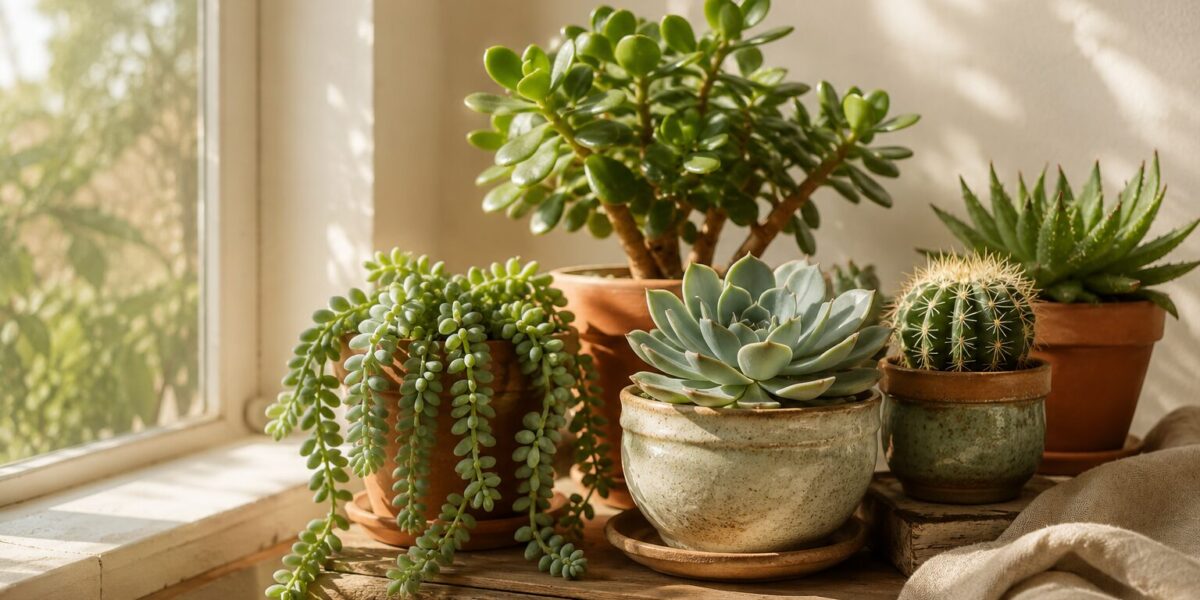
Few plants make a beginner feel as capable as a shelf of happy succulents. Plump, sculptural, and endlessly collectible, they ask for almost nothing and forgive the busy, the forgetful, and the chronically over-scheduled. The secret to good succulent plants care is understanding that these are desert survivors: give them strong light and let them dry out, and they reward you for weeks of benign neglect. Get those two things right and everything else is a detail.
This complete beginner’s guide walks through the seven simple rules that keep indoor succulents and cacti thriving — light, water, soil, container, temperature, feeding, and propagation — plus the best plants to start with, an honest word on pet safety, and the handful of problems that trip people up. Whether this is your first echeveria or your fortieth cactus, the goal is the same: plants so healthy they look like they belong in a magazine, with barely any fuss.
What actually counts as a succulent?
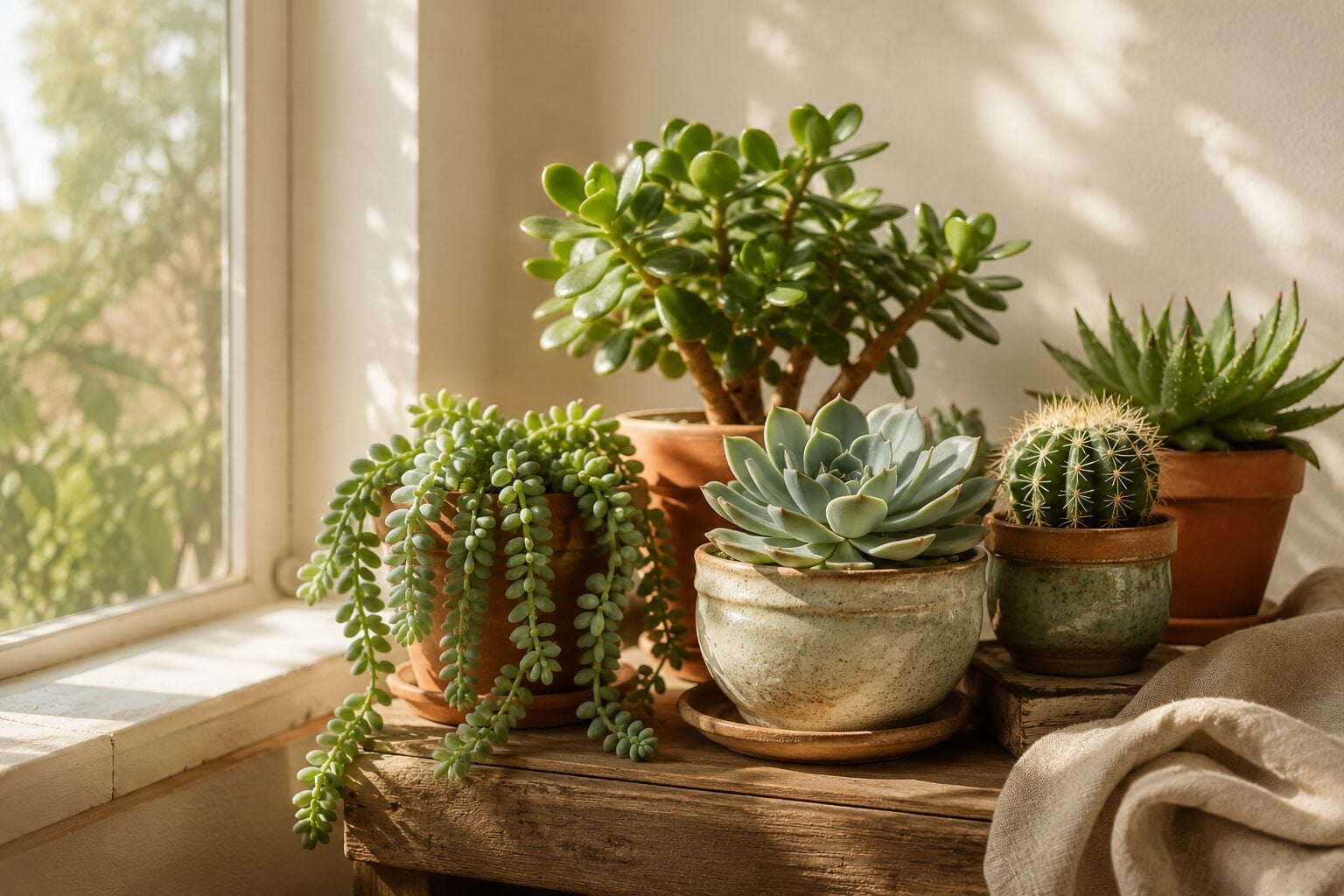
The word “succulent” is a loose umbrella, not a single family. It describes any plant that has evolved thick, fleshy leaves or stems to store water and survive in arid places. As Iowa State University Extension explains, succulents turn up across several unrelated plant families — the stonecrop family (Crassulaceae), the spurge family (Euphorbiaceae), and the cactus family (Cactaceae) among them. One rule worth memorizing: all cacti are succulents, but not all succulents are cacti.
That means the plants on your windowsill are relatives only in lifestyle, not in bloodline. The University of Minnesota Extension groups a lot of household favorites under the succulent banner: the jade plant (Crassula), aloe (Aloe barbadensis), the snake plant (Dracaena trifasciata), the century plant (Agave), flowering kalanchoes, sedums, and the hens-and-chicks (Sempervivum) that ramble through so many gardens. Add echeveria rosettes, spiky haworthias, and trailing burro’s tail and you have the classic beginner’s collection. The University of Minnesota Extension notes that this group spans nearly 2,000 cactus species alone, most native to the Americas, alongside the leafy succulents from Africa and beyond. The happy news for care is that nearly all of them want the same things, which is exactly why they mingle so well in a single dish garden.
Rule 1 — Light: give them your brightest window
If there is one place where beginners go wrong, it is light. Succulents are sun plants, and indoors, light is almost always the limiting factor. Iowa State Extension recommends a minimum of six to eight hours of bright light a day, with ten or more hours being ideal — “bright” meaning strong enough to cast a clear shadow. A south- or west-facing window is usually the winner; the University of Minnesota simply says to place them in a bright, sunny window.
Watch the plant and it will tell you whether it is getting enough. A succulent starved of light stretches toward the window, growing pale and leggy with widening gaps between its leaves — a condition called etiolation. Rotate your pots a quarter turn every week or so to keep growth even and symmetrical. If your brightest window still isn’t bright enough, especially through a dim northern winter, a full-spectrum LED grow light positioned six to twelve inches above the plants and run for fourteen to sixteen hours a day will keep colors rich and rosettes tight.
Rule 2 — Watering: the heart of succulent plants care
Watering is where succulent plants care most often goes sideways, and the mistake is nearly always the same: too much, too often. Because these plants store their own water in fat leaves and stems, they would far rather be bone dry than soggy. Overwatering, not underwatering, is the number one killer.
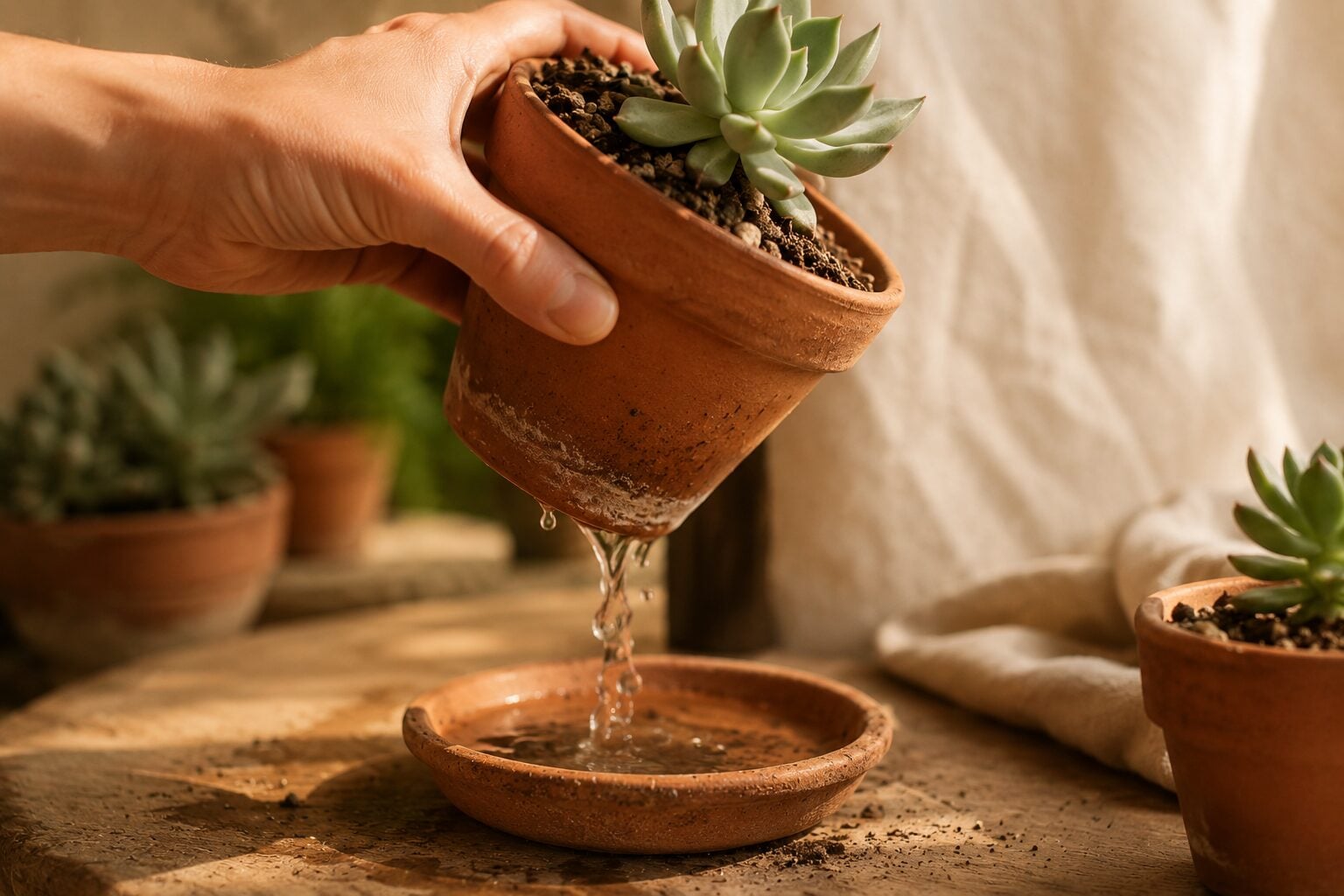
The method the extension horticulturists recommend is the wet-dry cycle. When you water, water thoroughly — wet the entire root ball until it runs freely from the drainage hole — and then let the soil dry out completely before you water again. Iowa State suggests starting at roughly once every two to three weeks, but treat that as a loose guide, not a schedule: check the soil a few inches down first, and if it is still damp, wait a few more days. In the low-light months of winter, when the plants are barely growing, you may water only enough to keep them from shriveling.
It helps to think of watering in seasons rather than on a fixed weekly schedule. From spring through late summer, when light is strong and days are long, succulents grow actively and drink more, so the soil dries out faster and you’ll water more often — this is also the window when the wet-dry cycle genuinely accelerates growth. As autumn light fades and the plants slip toward dormancy, stretch the intervals out and cut back sharply; through the dark heart of winter, many succulents want water only every few weeks, or just enough to keep the leaves from shriveling. If you’re going to lose a succulent, midwinter overwatering is the classic way to do it, so when you’re unsure in the cold months, wait. Front-load your attention in the growing season and ease off when the plant does, and you’ll rarely put a foot wrong.
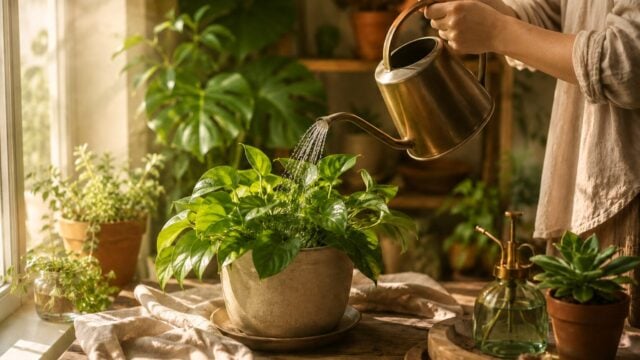
Your plant reports back in the leaves. Wrinkled, puckered lower leaves mean it has gone too dry and is thirsty. Leaves that yellow and turn soft, translucent, or mushy — often with stems going limp — mean the soil has stayed too wet, and root rot may already be setting in. Never let a pot sit in a saucer, sleeve, or cachepot full of water for more than a few hours. A cheap long-spout watering can makes it easy to soak the soil directly without splashing the leaves.
Rule 3 — Soil: sharp drainage is everything
The single most important physical thing you can give a succulent is soil that drains fast and dries quickly. Ordinary bagged potting mix is built to hold moisture, which is precisely what a succulent does not want — it keeps the roots wet long enough to rot. Iowa State recommends a gritty blend of roughly one-third organic material and two-thirds mineral material.
To mix your own, combine one part organic matter (potting soil, compost, coir, or fine pine bark) with two parts mineral matter such as horticultural perlite, coarse sand, pumice, or fine gravel. If DIY isn’t your thing, a bagged cactus and succulent potting mix is a great, foolproof choice and exactly what the extension services suggest for newcomers. There’s a simple field test from the University of Minnesota: moisten the mix and squeeze it in your fist — when you open your hand, good succulent soil should crumble apart rather than hold its shape in a wet clump.
Rule 4 — Container: drainage holes, not decoration
A beautiful pot with no drainage hole is the most common trap in succulent plants care, because trapped water at the bottom rots roots in a remarkably short time. Iowa State is blunt about it: succulents don’t tolerate staying wet, and a “drainage layer” of gravel in the bottom of a sealed pot is not a substitute for an actual hole. If you fall in love with a container that has no hole, use the double-pot trick — grow the plant in a slightly smaller nursery pot that does drain, and set that down inside the decorative one, lifting it out to water.
Material matters too. Terracotta and unglazed clay are ideal because they are porous and wick moisture out through their walls, helping the soil dry faster. Small and shallow pots dry more quickly than deep ones, which suits these shallow-rooted plants perfectly. When you do repot, choose a container only just big enough for the root ball; an oversized pot holds a reservoir of damp soil the roots can’t use. To learn more about matching plants to your home’s conditions, our succulents guide hub collects deeper dives on individual species.
Rule 5 — Temperature, humidity, and airflow
Here is where succulents become gloriously easy: they thrive in the exact conditions most homes already have. Iowa State puts the ideal range at 55°F to 75°F, with some plants tolerating dips to around 45°F and highs near 85°F, and they appreciate the natural drop to cooler nights. The dry indoor air that makes ferns sulk is a gift to a succulent — the University of Minnesota notes many are well adapted to the low relative humidity (10 to 30 percent) found in heated homes, because it helps the soil dry out quickly.
The one environmental factor worth adding is air circulation. Moving air dries the soil surface, keeps humidity down, and discourages the mealybugs and spider mites that occasionally find succulents. Give plants a little breathing room rather than cramming them wall to wall, and if a grouping feels stagnant, a small fan on low nearby does the trick. In summer, many succulents love a vacation outdoors, but move them out gradually and keep them out of harsh midday sun from late morning to mid-afternoon so their leaves don’t scorch.
Rule 6 — Feeding: less than you think
Succulents evolved in poor soils and have modest appetites, so heavy feeding does more harm than good. Iowa State advises an all-purpose or succulent-specific fertilizer applied only in the spring and summer growing months, and even then at just one-quarter to one-half of the strength listed on the label. A gentle liquid cactus and succulent fertilizer used every third or fourth watering during active growth is plenty.
Cacti in particular are minimalists. The University of Minnesota recommends feeding them only once or twice a year, during late spring or summer when they are actively growing, using a houseplant food higher in phosphorus than nitrogen and again diluted to half strength. Skip fertilizer entirely in fall and winter, when the plants are resting — pushing food at a dormant succulent only encourages weak, stretched growth.
Rule 7 — Propagation: one plant becomes many
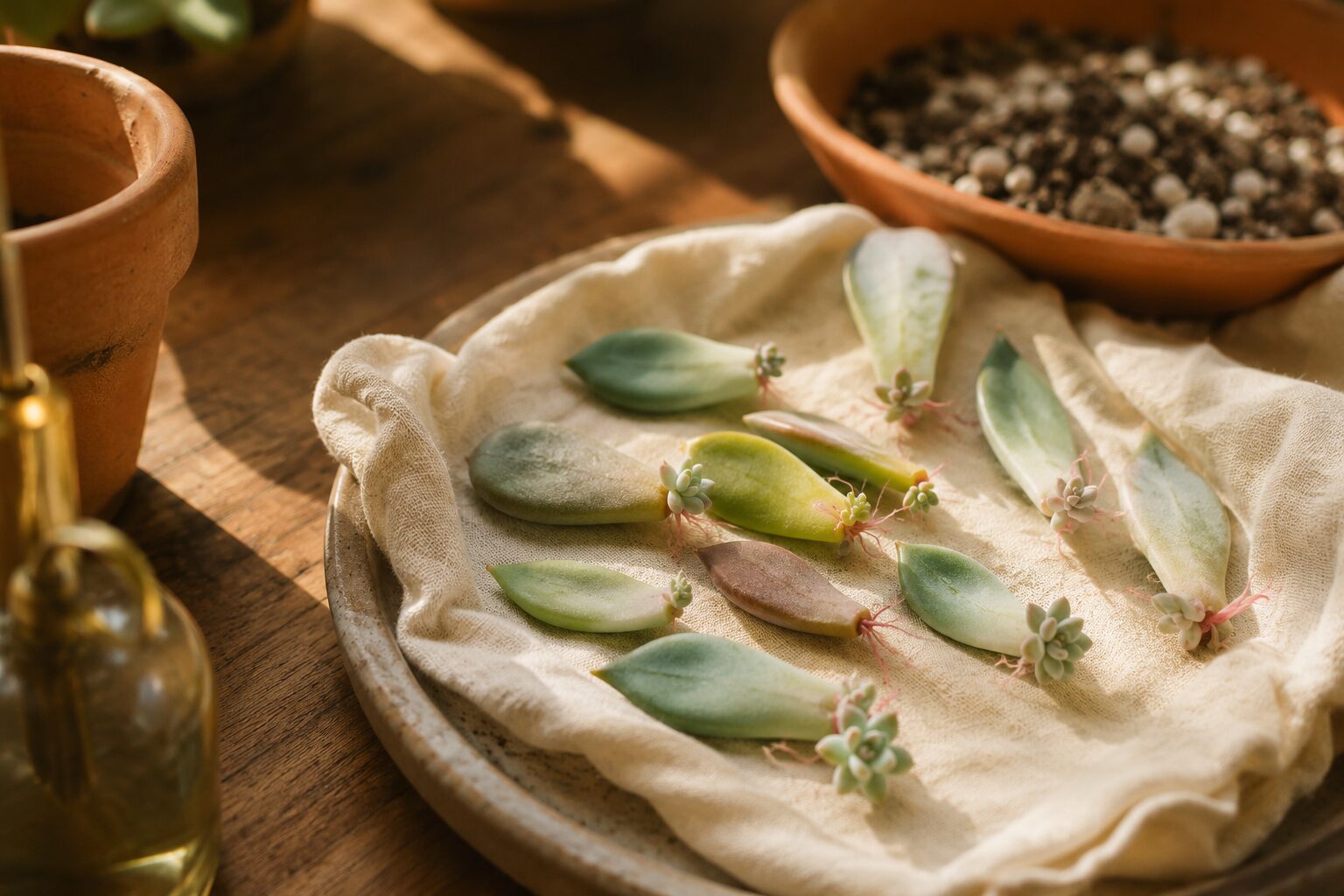
Part of the fun of these plants is how readily they multiply, which is why succulent collections have a way of quietly taking over a windowsill. Most succulents propagate easily from leaf cuttings, offsets (the little “pups” that form at the base), or stem cuttings, and the method depends on how the plant grows.
The technique the extension experts stress is patience with the wound. After you take a cutting or twist off a healthy leaf, let the cut end air-dry and callus over for a day or several before it touches soil — planting a fresh, moist wound invites rot. Then set the calloused cutting into slightly moistened, gritty mix and water sparingly, since moisture retention is exactly what you don’t want while roots form. Once new roots take hold, pot it up in your regular succulent mix. A pair of clean plant snips and a shallow tray are all the equipment you need to turn one plant into a windowsill full of gifts.
The best succulents for beginners
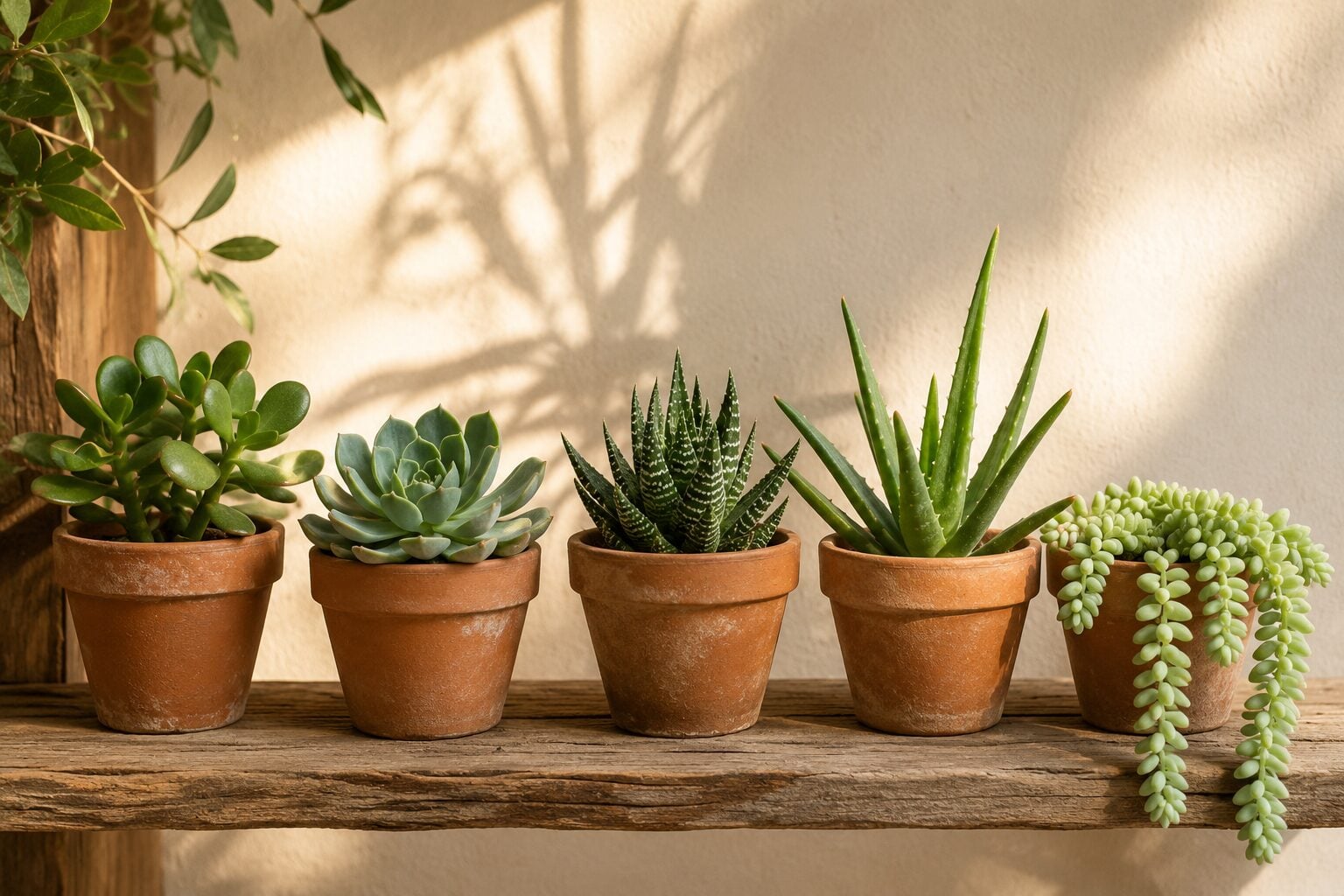
Some succulents are far more forgiving than others, and starting with the sturdy ones builds confidence fast. The jade plant is a classic — a slow, thick-stemmed shrublet that lives for decades. Echeverias form those photogenic pastel rosettes everyone loves, while haworthias are small, tough, and surprisingly tolerant of less light, making them good for a spot that isn’t your brightest. Aloe earns its keep as both a houseplant and a burn remedy.
For trailing interest, the burro’s tail (Sedum morganianum) spills its beaded stems over a shelf edge, and sempervivum (hens-and-chicks) pumps out offset after offset. The nearly indestructible snake plant belongs on this list too; if you want its full routine, see our dedicated guide to snake plant care. And if you’re brand new to indoor plants altogether, the fundamentals in our plant care basics pair perfectly with everything here. Start with one or two of these and you’ll have a thriving little collection before you know it.
Are succulents safe around pets?
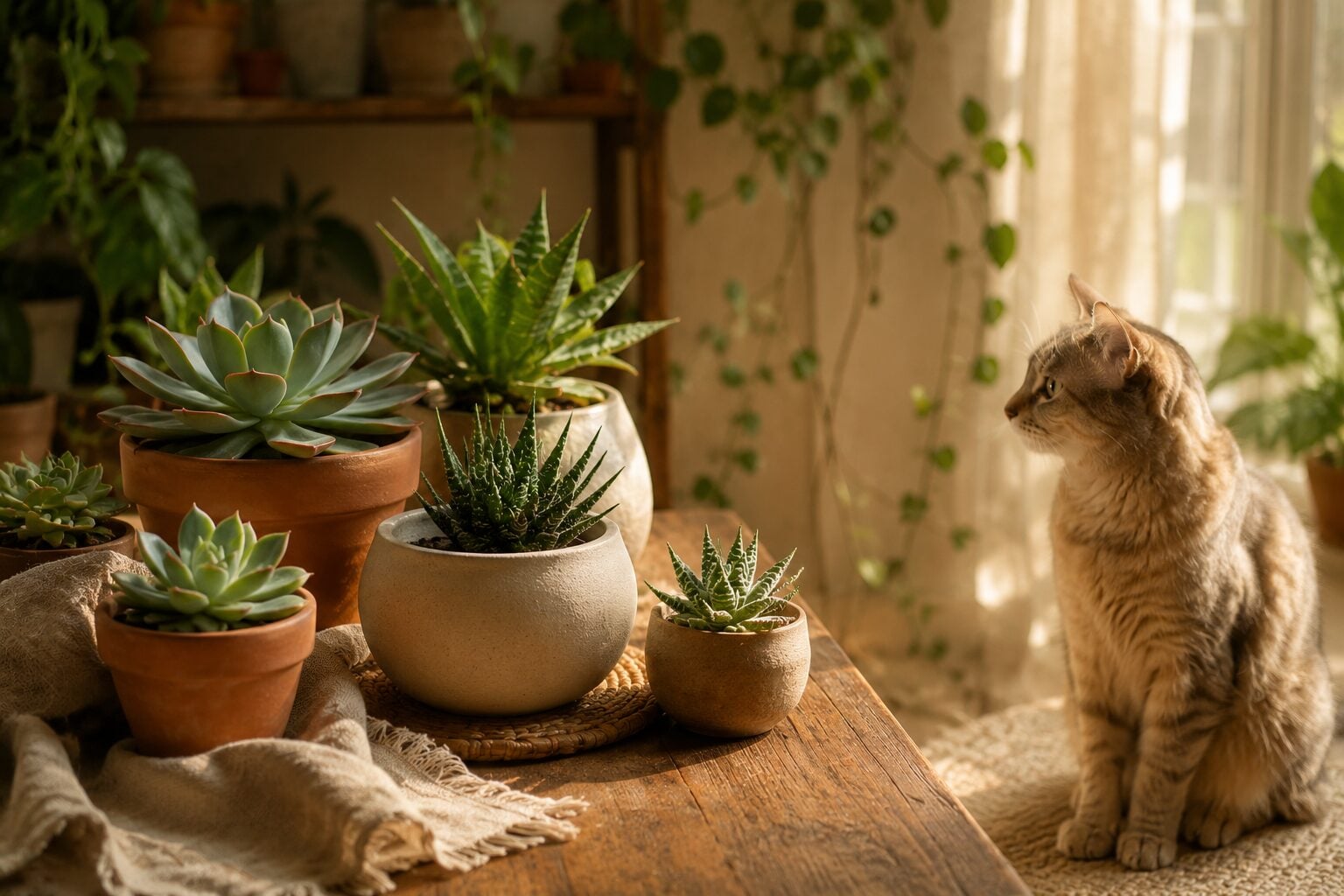
This is the part of succulent plants care that too many guides skip, and it matters if you share your home with a curious cat or dog. Not all succulents are pet-friendly. According to the ASPCA, several popular ones are toxic: aloe vera can cause vomiting, diarrhea, lethargy, and changes in urine color; the jade plant brings on vomiting, incoordination, and lethargy; and kalanchoe is toxic as well. Keep these up on high shelves or out of reach entirely.
The good news is that many beautiful succulents are considered non-toxic and are safe choices for pet households — echeveria, haworthia, hens-and-chicks (sempervivum), and burro’s tail among them. When in doubt, look the specific plant up before you buy, and if you suspect your pet has eaten a toxic one, call your veterinarian or the ASPCA Animal Poison Control Center at (888) 426-4435. Choosing pet-safe species from the start lets you build a collection you never have to worry about.
Common problems and quick fixes
Most succulent troubles trace back to two things: too much water or too little light. Soft, yellowing, translucent leaves and a mushy base mean root rot from overwatering — unpot the plant, cut away any black or slimy roots, let it dry, and repot in fresh gritty mix. A plant that has stretched tall and pale with spaced-out leaves is etiolated from too little light; move it somewhere brighter and, if you like, behead and re-root the leggy top.
Pests are rare on succulents, but mealybugs (little white cottony tufts in the crevices) and scale do show up occasionally. The University of Minnesota’s remedy is refreshingly low-tech: wipe them off with a cotton swab dipped in rubbing alcohol, and keep conditions bright and well-drained to prevent the fungal and bacterial rots that follow overwatering. Good airflow and restraint at the watering can prevent nearly every problem on this list. For broader indoor-plant troubleshooting, our houseplants section covers the issues succulents share with the rest of your collection.
Quick-care cheat sheet
| Need | What succulents want |
|---|---|
| Light | 6–8 hrs minimum bright light, 10+ ideal; south or west window; rotate weekly |
| Water | Wet-dry cycle: soak fully, then let dry completely; ~every 2–3 weeks; far less in winter |
| Soil | Sharp-draining: 1/3 organic + 2/3 mineral, or a cactus & succulent mix |
| Container | Must have a drainage hole; terracotta is best; small and shallow dries fastest |
| Temperature | 55–75°F ideal (tolerates ~45–85°F); cooler nights welcome |
| Humidity | Low home humidity (10–30%) is perfect |
| Feeding | All-purpose or succulent food at 1/4–1/2 strength, spring–summer only |
| Propagation | Leaf cuttings, offsets, stem cuttings; callus the wound, then barely water |
| Pet safety | Aloe, jade, kalanchoe are toxic (ASPCA); echeveria, haworthia, hens-and-chicks are non-toxic |
Master succulent plants care and you’ve unlocked one of the most rewarding, low-effort corners of the plant world. Give them a bright window, sharp soil, a pot that drains, and the discipline to let them dry out between drinks, and these desert survivors will hand you years of sculptural, easygoing beauty in return. Start with one forgiving plant, get comfortable with the wet-dry rhythm, and let the collection grow from there — that’s exactly how most of us fell down the succulent rabbit hole in the first place.
The succulent starter kit
- GYTF Halo Plant Grow Light, 6000K White LED Full Spectrum Growing Lamp… — LED grow light
- Japanese Long Spout Watering Can for houseplant Ornamental Plants… — long-spout watering can
- Miracle-Gro Indoor Potting Mix for Cactus & Succulent, 8 qt. (2-Pack) — cactus and succulent potting mix
- Succulent Fertilizer – Liquid Plant Food for Vibrant, Compact Growth,… — liquid cactus and succulent fertilizer
- Riare 2QT Organic Perlite for Plants, Horticultural Perlite Soil… — horticultural perlite
Opens Amazon’s cart confirmation page — you review the list and prices there, and nothing is added until you approve it. Prefer to pick and choose? Every item above links to its own product page.
Leave a Reply